
Harper College will be closed on Monday, September 7, in observance of Labor Day.

Jackson Zinck (left) and Billy Maloney, members of Harper College's Roads and Grounds
crew, encourage collaboration in taking care of trees on Harper's Palatine campus.
The college recently earned its first Tree Campus Higher Education recognition from
the Arbor Day Foundation.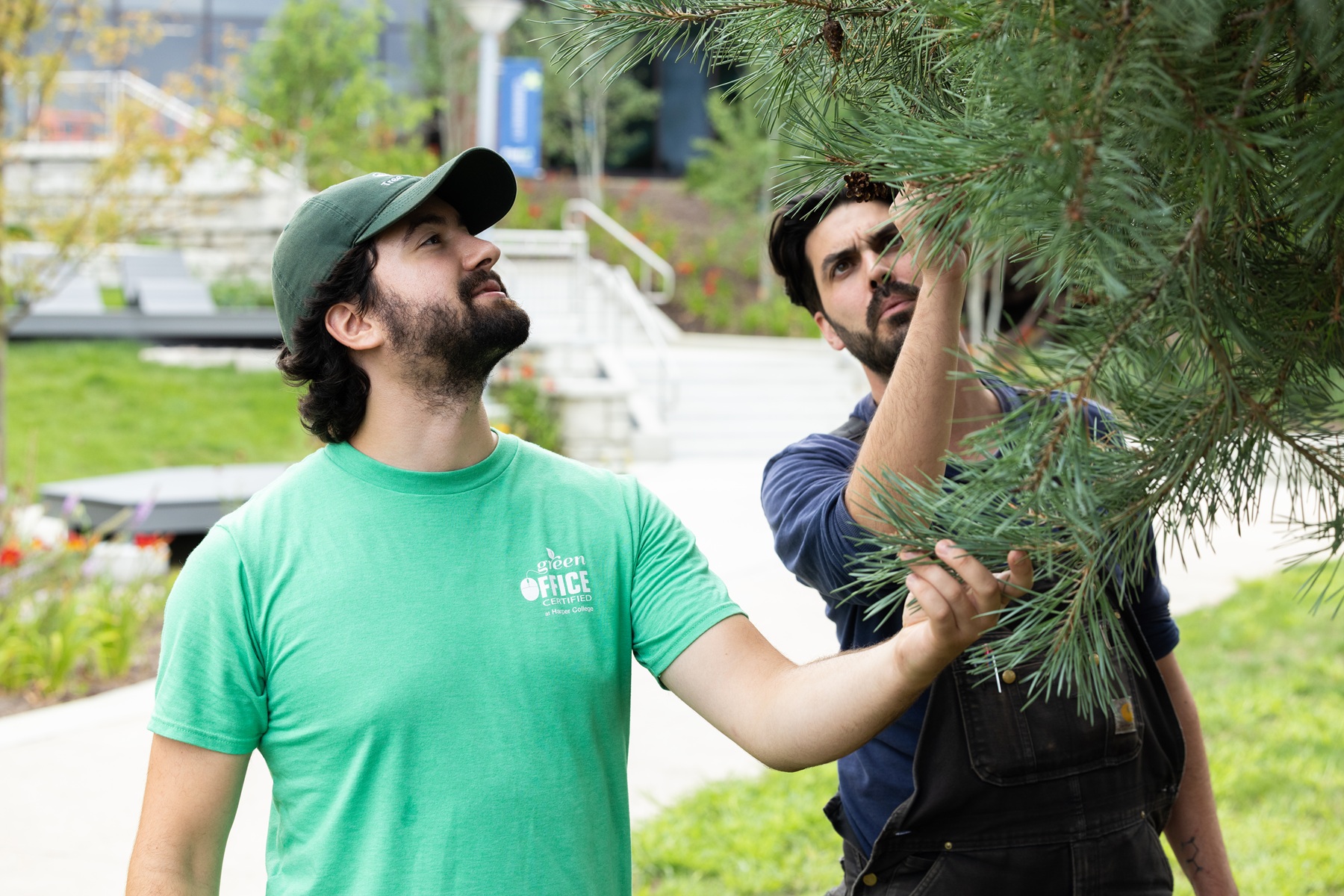
Harper College recently earned its first Tree Campus Higher Education recognition from the Arbor Day Foundation, acknowledging the college’s commitment to caring for its campus trees and involving students in environmental stewardship.
The recognition comes as Harper expands its sustainability efforts, including plans to establish a microforest containing 20 native tree species near the college’s orchard on the northwest side of the Palatine campus.
Harper Sustainability Manager Nicole Keeler said that the Tree Campus recognition builds on ongoing tree care and sustainability efforts that benefit Harper and the surrounding communities.
“Our goals are to restore or create areas that promote resilience for both the existing plantings and the buildings, as well as cooling the campus, reducing heat gain and improving air quality,” she said. “Anything that we can do to be better environmental stewards for the greater community is a big win.”
Keeler collaborated with the college’s Sustainability Committee, Facilities Management and stakeholders across campus to earn the designation. She said the work already being done by Roads and Grounds Supervisor Billy Maloney and his crew provided a strong foundation.
“To establish the tree campus distinction, you declare that you have a good tree care plan in place,” she said. “When I came on board, we established that the health of the campus is strong. Billy is an environmentalist by nature, so he has a keen sense for biodiversity, ecosystems and environmental stewardship. He’s very in tune with the impact of human activity and how to help protect and restore habitat.”
Maloney said that he works with employees, students and local vendors to provide regular tree maintenance across campus.
“We try to be proactive in terms of preventing diseases or solving problems before they arise,” he said. “We also have groundskeepers on staff who are former arborists, so they bring a lot of knowledge. I have one crew member who is really good about doing regular inspections, and another who really enjoys planting, and he’s done a great job of planting trees on the south side of campus.”
Roads and Grounds Supervisor Billy Maloney (left) works with members of his crew,
such as Harper alumnus Jackson Zinck, to ensure the health of trees on campus. A new
microforest is planned for the northwest corner of Harper's Palatine campus.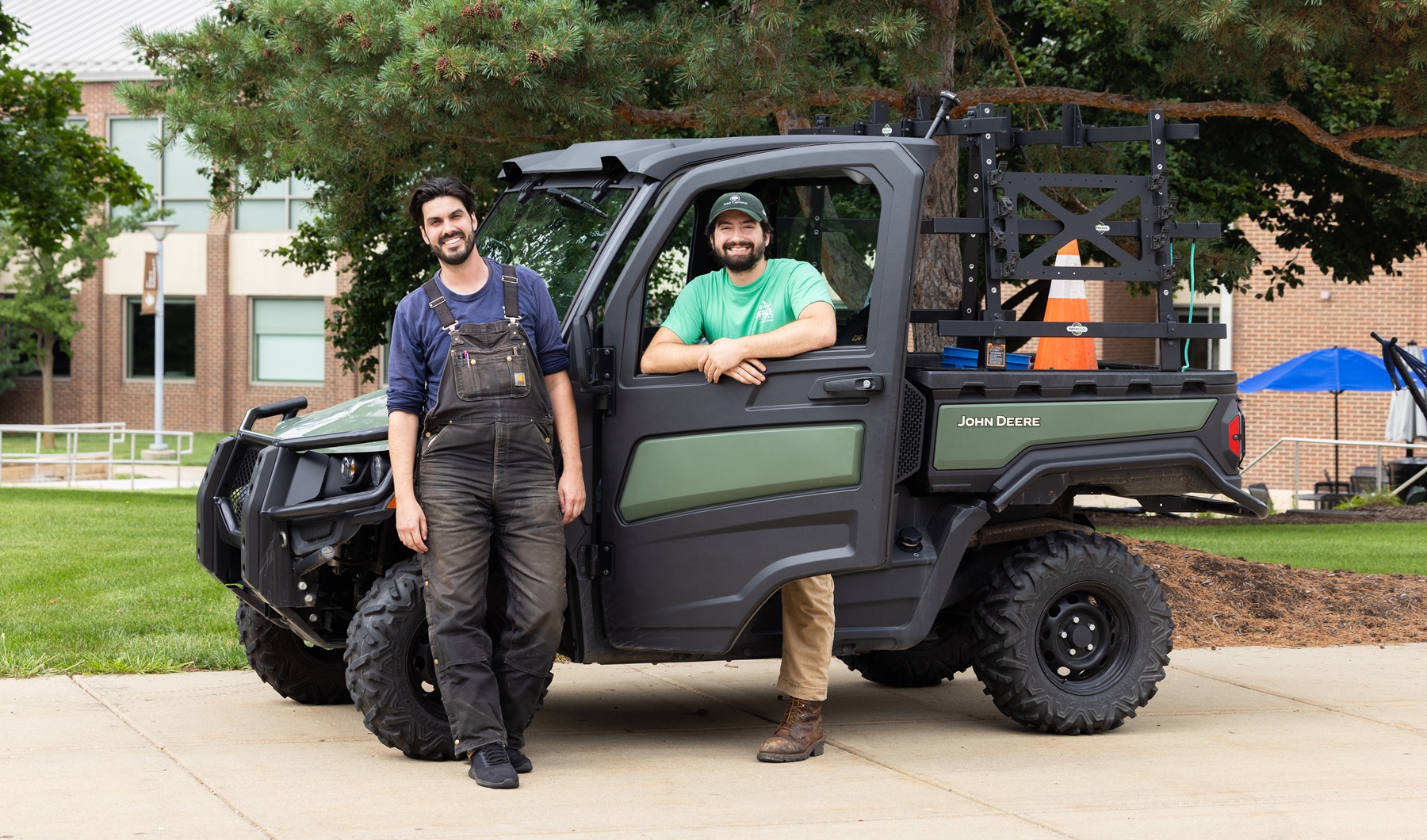
Jackson Zinck studied wildlife and conservation biology at Harper and earned an Associate in Science degree last spring. The 24-year-old Deer Park resident began as a student intern and now works with the grounds crew to care for Harper’s trees and advance sustainability initiatives, including removing invasive buckthorn. He’s currently developing a survey to identify surface-temperature hot spots on campus where additional trees could provide shade.
“We get volunteers to go out on specific days and take the surface temperatures,” he said. “The goal is to locate and determine where we can add more shading to reduce these surface temperatures, ultimately with the goal of keeping staff and students safer during heat waves, keeping our campus cooler, and also reducing energy waste and extra cost.”
Earning a Tree Campus designation is just the first step toward creating a greener and more sustainable campus. That commitment will take root in the new microforest planned near Roselle Road and Euclid Avenue.”
“It will be a habitat for biodiversity,” she said. “The trees will be specifically native to our region in northern Illinois. There’s a waterfall effect that happens by continuing to increase our shade canopy. It could reduce the quantity of lightning strikes, for example, by cooling the campus. These microforests also become self-resilient.”
Keeler said that Harper’s tree care plans also support the sustainability initiatives in the college’s current strategic plan.
“They give us the opportunity to incorporate more interactive engagement with plantings and trees on campus into the students’ experience and their curriculum,” she said. “This is another way that we can create a living lab.”