
Harper College will be closed on Monday, September 7, in observance of Labor Day.

Alessandra McNamara, a Harper College nursing instructor, donated her bone marrow
to a stranger in another country in the hopes that it will give that person a new
beginning. “It changed me as an educator and as a human being,” she said.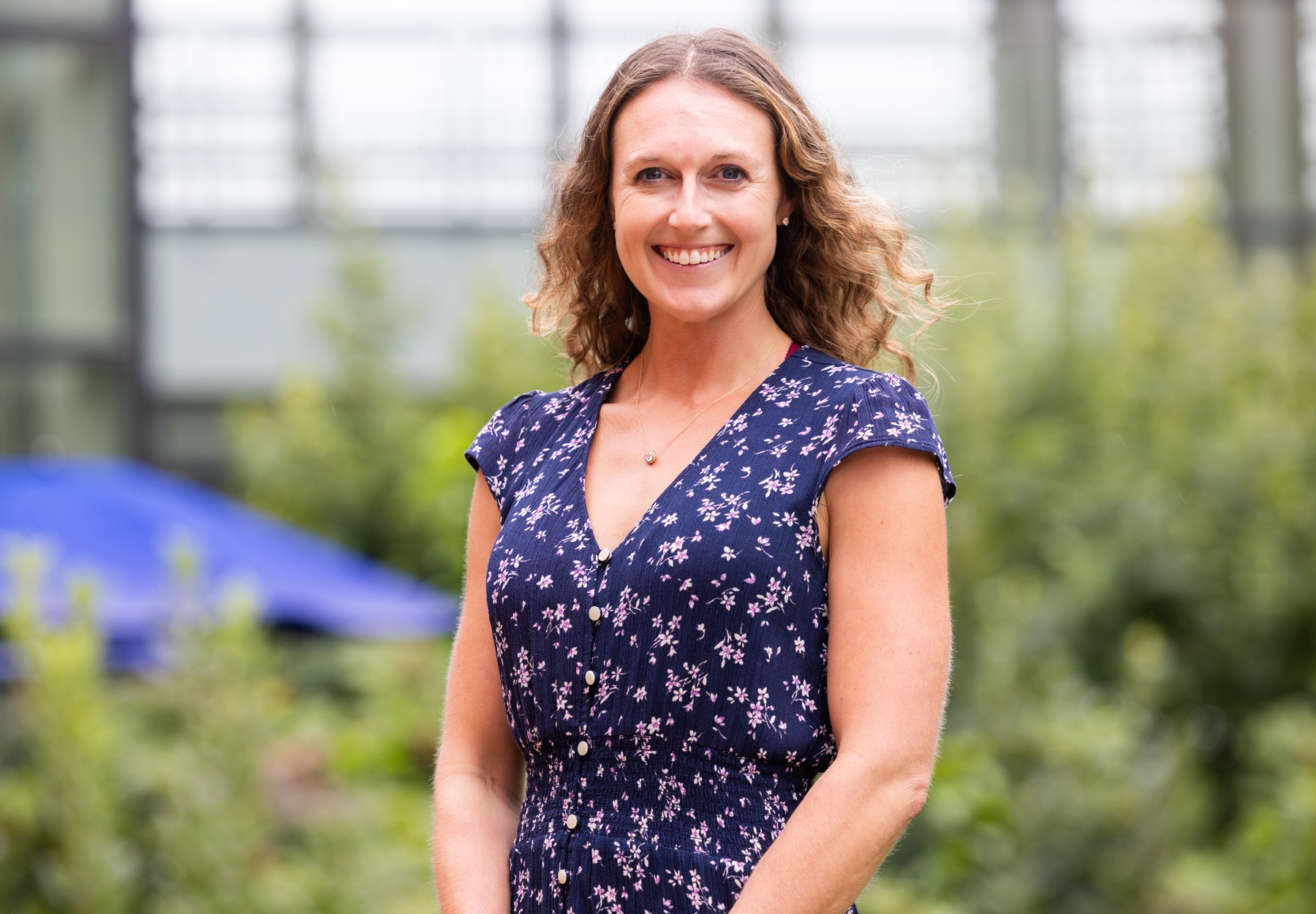
When Harper College Nursing Instructor Alessandra McNamara received a message in January saying she might be a bone marrow match for someone in need, she barely remembered joining the registry.
Alessandra had signed up a decade earlier while attending nursing school, when she encountered a National Marrow Donor Program registry table on campus and provided a DNA sample. Now, she learned she might be able to help a teenage girl from another country with severe aplastic anemia, a rare condition in which damaged bone marrow stem cells stop producing enough new blood cells and platelets.
For Alessandra, the decision to move forward was simple.
“How would you say no?” she reflected. “This is that person’s second chance at life.”
What followed was months of phone calls and questions, blood draws, testing and a physical examination to determine whether Alessandra could safely donate. She didn’t receive final clearance until about two weeks before the procedure.
In April, Alessandra traveled with her mother-in-law to Washington, D.C., where doctors at MedStar Georgetown University Hospital removed 900 milliliters of bone marrow – the maximum amount allowed for her size and about one-third of her total blood volume.
As a nurse, Alessandra understood the procedure and its potential risks. Still, she acknowledged that she underestimated the recovery. After eight hours of bed rest following surgery, she returned to her hotel and flew home the next morning. The first several days were difficult, and getting completely back to her usual routine of running and working out took longer than she anticipated.
Less than a week after surgery, however, she was back at Harper to facilitate a course final.
“My colleagues were very supportive,” Alessandra said, singling out Derek Leiter, dean of Harper’s Health Careers Division. “Right before flying out, I was getting nervous. They said, ‘We’re here for you. We’re proud of you.’ That helped alleviate some of my anxiety.”
Alessandra joined Harper as a clinical supervisor in 2021 and became a full-time instructor three years ago. She teaches mental health nursing courses and clinicals as well as physical assessment. Her path to the classroom began with a biology degree and eventually led to a master’s degree in nursing from Rush University. After working in behavioral health, she began teaching part time and discovered how much she loved nursing education.
Derek Leiter (left), Harper's dean of Health Careers, recognized Alessandra's bone
marrow donation as something that speaks to her as a nursing instructor and colleague.
"She does not just teach the profession," he said. "She embodies it.”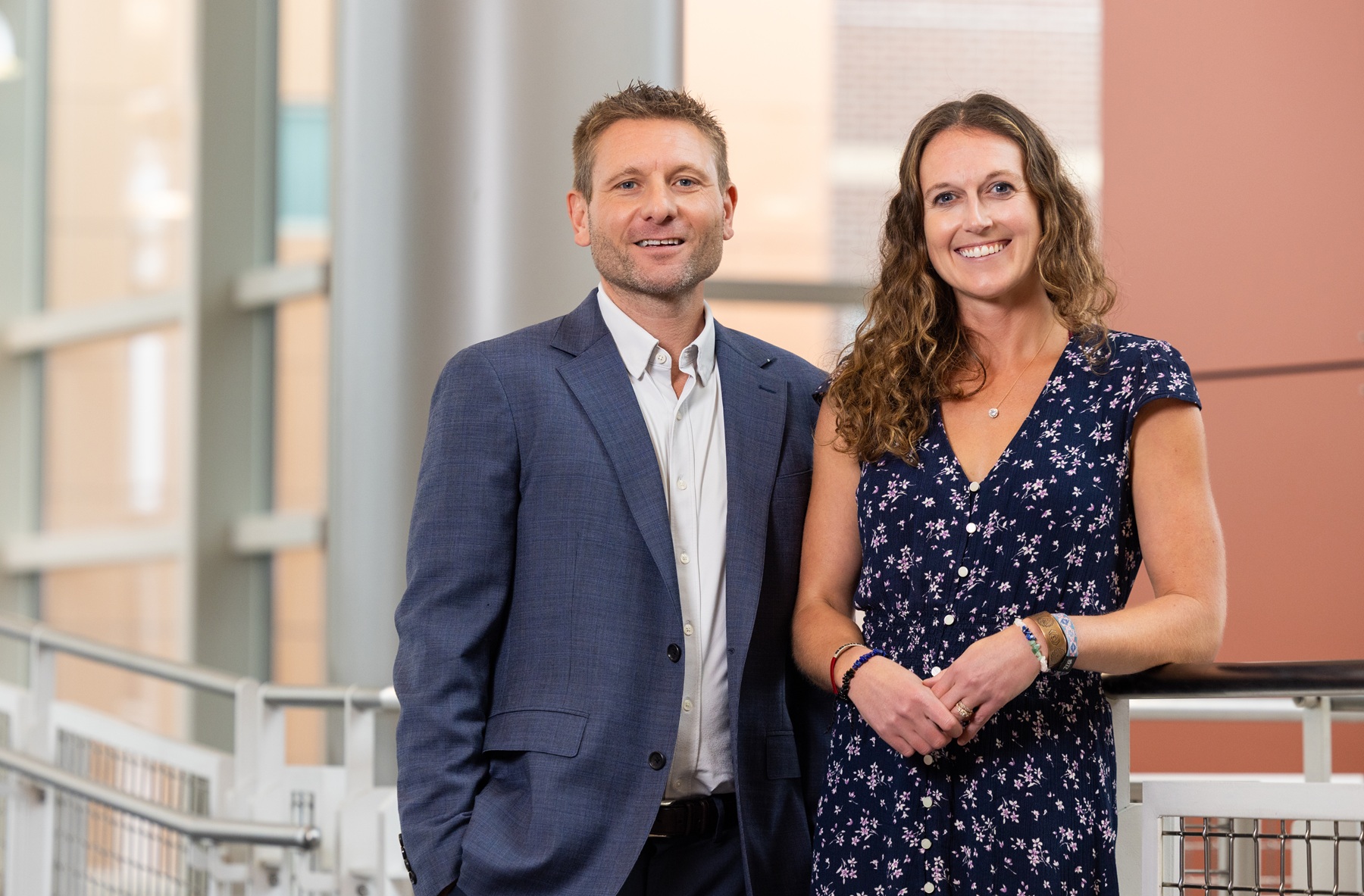
For Derek, Alessandra’s dean, her donation exemplifies the values she brings to that work. With her permission, Derek sent an email to everyone in the Health Careers Division and submitted a campus-wide Points of Pride nomination to share her experience and how it moved him.
“Alessandra teaches her students what it means to be a nurse. Through this donation, she showed them and all of us what that truly looks like when it is lived beyond the classroom,” he wrote. “She does not just teach the profession. She embodies it.”
The experience also carried deeply personal meaning for Alessandra. Her sister died unexpectedly in April 2021, five years to the month before Alessandra underwent the donation procedure. She said that loss added another dimension to what the opportunity to become a donor meant to her.
“I couldn’t help her. I couldn’t save her,” she said. “But I can save someone else’s life.”
Alessandra knows little about her recipient beyond her age, gender and diagnosis. Registry rules initially keep donors and recipients anonymous, and she said knowing the eventual outcome or making contact isn’t what motivated her.
“I trust what I did will help her,” she said. “I trust that it gave her more time.”
For Alessandra, the experience reinforced something fundamental to nursing and to the way she wants to teach: Caring for another person can take many forms. She hopes her story encourages eligible people to consider joining the bone marrow registry, but she recognizes that such an opportunity is extraordinarily rare. Donating blood, volunteering or simply showing genuine concern for another person can matter, too.
“I acknowledge not everyone is going to have this unique experience,” Alessandra said. “There are things people can do on a day-to-day basis to spread more love.”
The donation, she said, has made values she already held feel more immediate. It has especially impacted how she and her husband parent their niece and nephew, who began living with them last year. She said it illuminated the outsized importance of small moments of patience and kindness.
And for an instructor whose job is preparing future nurses to care for others, being a donor is something Alessandra carries with her every day.
“It changed me as an educator and as a human being,” she said. “Who do I want to be? It’s made me more empathetic. More loving. More patient. More compassionate.”
Those interested in becoming a bone marrow donor, or supporting those who do, can visit nmdp.org.