
Harper College will be closed on Monday, September 7, in observance of Labor Day.

Harper Alumna Mariana Alcantara Gonzales (third from right) is one of the nearly 100
recipients of the Rotary Club of Schaumburg-Hoffman Estates Fishing Well Scholarship,
which supports students age 24 and older. Harper College students who receive the
scholarship are mentored by a Rotary Club member. Alcantara Gonzales is now pursuing
a bachelor's degree while working at Northwest Community Hospital.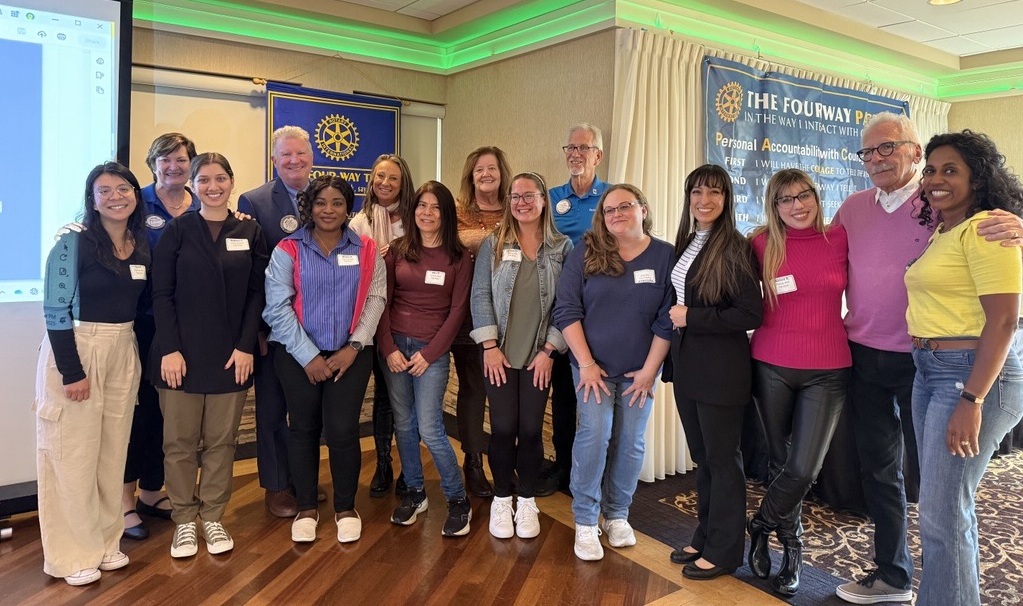
This year marks the 10th anniversary of the Rotary Club of Schaumburg-Hoffman Estates Fishing Well Scholarship, which helps Harper College students age 24 and older quickly reskill, upskill or change careers. The need-based scholarship, created to support individuals living in Schaumburg Township and experiencing hardship, helps students complete their studies and start careers where they can earn more.
Fishing Well recipient Mariana Alcantara Gonzales used scholarship funds to cover expenses during her final semester of Harper’s nursing program after her mother was diagnosed with triple-negative breast cancer.
The 27-year-old Schaumburg resident earned an Associate in Applied Science—Registered Nursing degree at Harper in 2025. She is currently completing her Bachelor of Science in Nursing at the University of Illinois Chicago and working in the medical observation unit in the emergency room at Northwest Community Hospital in Arlington Heights.
She credits the Fishing Well Scholarship with helping her complete her education.
“It was just my father and me working, and I wasn’t working full-time. It just wasn’t enough,” Alcantara Gonzales said. “If it were not for the scholarship, I would have had to quit and leave everything behind. Now, I’m a registered nurse who is serving our community. As things get better, I plan to give back to help someone at Harper who is in the same situation I went through. I would love to do that in the future.”
Over the past decade, the Rotary Club has invested nearly $500,000 in the Fishing Well Scholarship. Recipients can receive up to $4,000 each and are required to complete volunteer service. They are also paired with Rotary Club members who provide one-on-one mentoring. Since the program was established, nearly 100 scholarships have been awarded. The scholarship has an 86% advancement rate, with 38 degrees and 56 certificates earned since the program’s start. The average scholarship recipient is 40 years old.
Recipients of the Fishing Well Scholarship are required to perform volunteer service
in the community, which also helps to connect Rotary Club members (such as Debbie
Schmidt, left) with Harper students (such as Mariana Alcantara Gonzales).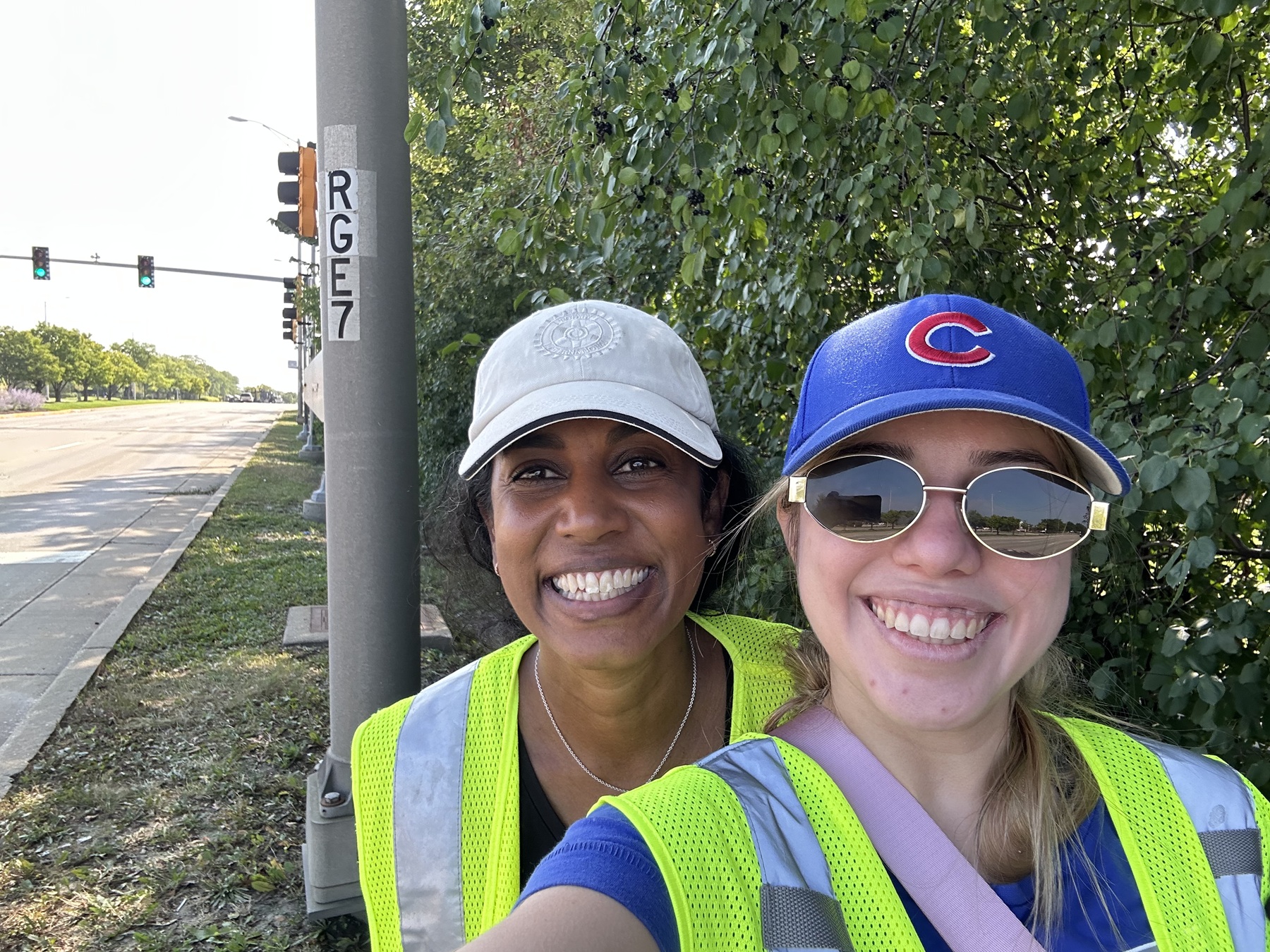
The Fishing Well Scholarship is one part of Rotary’s broader support for Harper. In September, the Harper College Board of Trustees approved naming Building H the Rotary Career and Technical Education Center. The naming recognizes more than $1 million in cumulative giving from over 20 area Rotary clubs, including more than $800,000 from the Rotary Club of Schaumburg-Hoffman Estates.
Heather Zoldak, Harper’s chief advancement officer, said that since the scholarship was established in 2016, many recipients have improved their families’ quality of life.
“One Fishing Well recipient shared that she was able to buy a home,” she said. “We talk about economic mobility, and here is someone who was able to get her degree from Harper because of Rotary’s investment, and now she’s investing back in the community by buying her own home. It’s really been a celebration.”
Brenda Escutia, manager of scholarships and special projects at the Harper College Educational Foundation, said the scholarship focuses on career programs like nursing, dental hygiene, HVAC and information systems, where students can begin work immediately.
“Some adult learners are in a job, and they need additional credentials to move up,” she said. “Many recipients work two or three jobs, have family responsibilities, or are parents putting their children through school. Getting the scholarship allows them to work fewer hours and helps to cover books, tuition and transportation.”
Eileen Higginbotham, chair of the Rotary Club Fishing Well Scholarship Committee, led the committee that created the program. The idea emerged after a Rotary Club member’s relative needed to learn new skills in their 40s. Discovering few scholarship opportunities available to adult students, a donor helped launch the program.
The goal, Higginbotham said, is to give students a “hand up.” The scholarship was named Fishing Well because it helps students learn career skills that can serve them throughout their lives. Mentoring was added after her husband, a college professor, observed that many of his adult students balance their education with parenting, caregiving responsibilities and financial pressures.
“We saw the need to give them a connection to our mentors and let them know somebody else out there cares about their success,” she said.
Escutia said that mentoring also supports recipients in areas such as time management and résumé writing, while required community service encourages them to get involved and give back.
“For the Rotary Club, it’s important that they're able to give back,” she said. “It’s nice because it also develops the relationship between the students and the club members.”
Higginbotham said Harper has been an essential partner in developing the scholarship into a lasting program.
“Finding the right people to work with us was a major need and focus,” she said. “We could not have succeeded without the right people in place at Harper to help make this happen.”