
Harper College will be closed on Monday, September 7, in observance of Labor Day.

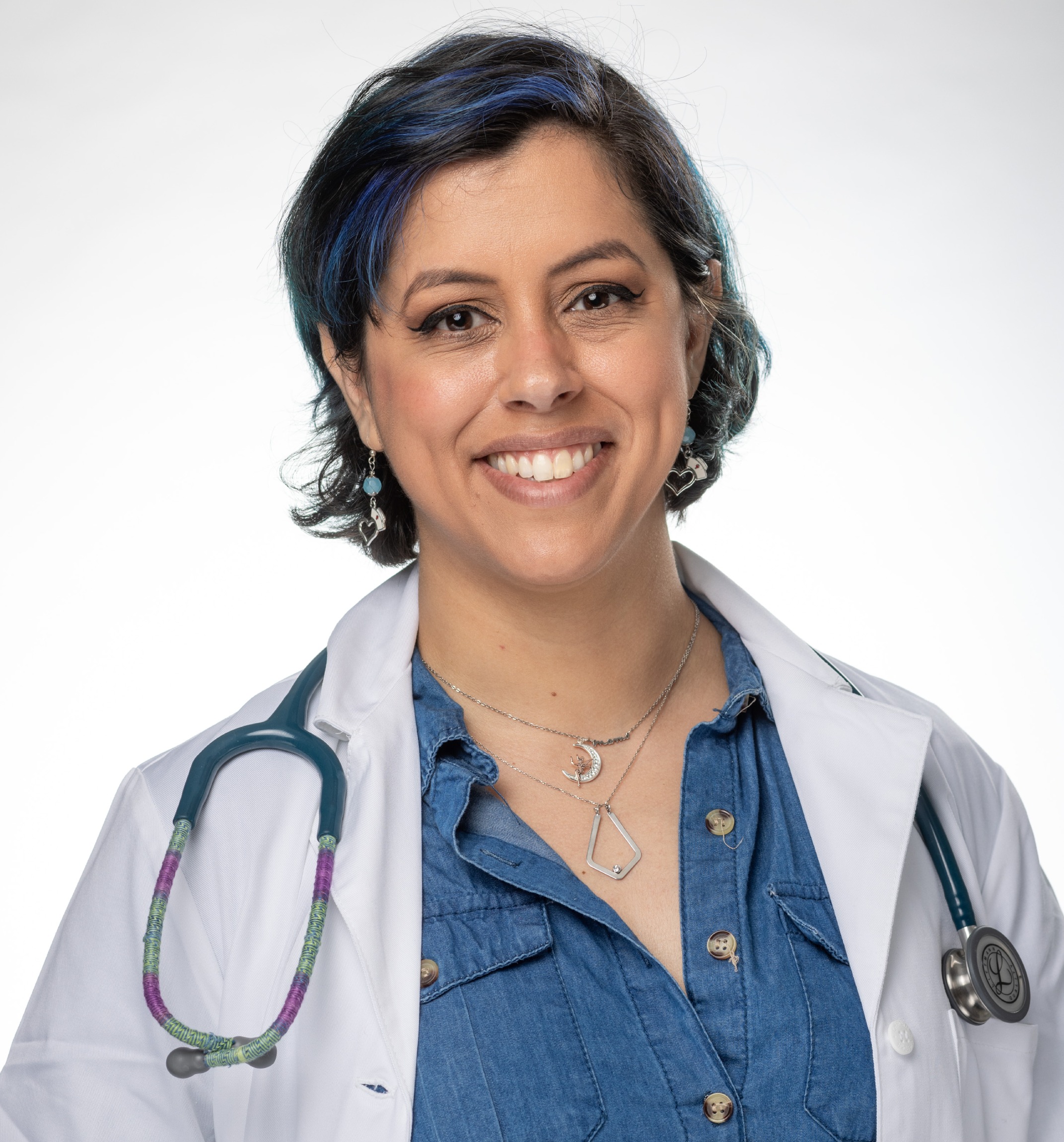
Harper Talks Episode 55 - Elda Holbrook
From toy designer in Venezuela to medical interpreter in the United States and ultimately a neuro ICU nurse, Harper College alumna Elda Holbrook discusses her road to finding her calling on the latest Harper Talks. A 2024 Harper College graduate and HOPE Scholarship recipient, Elda reflects on the financial support, hands-on learning and unexpected opportunities, including studying healthcare in South Africa, that helped shape her path. Today, Elda is a registered nurse in the Neuro Intensive Care Unit at Advocate Lutheran General Hospital and shares how she thrives in the fast-paced environment of the Neurointensive Care Unit, where she cares for patients experiencing some of their most critical moments.
Harper Talks: The Alumni Podcast
Show 55: -- Harper Talks -- Elda Holbrook
[00:00:00.740] - Maham Khan
Hi, I'm Maham Khan, and you're listening to Harper Talks, a co-production of Harper
College Alumni Relations and Harper Radio. Today on Harper Talks, I'm excited to welcome
alumna Elda Holbrook to the show. Elda is a 2024 graduate of Harper College and a
registered nurse in the neurointensive care unit at Advocate Lutheran General Hospital.
From being a toy designer back in her home country of Venezuela to a medical interpreter
in the U.S., she felt called to expand her clinical impact during the height of the
COVID-19 pandemic. Today, we get to hear all about that journey. Elda, so excited
to have you. Welcome to the show.
[00:00:38.830] - Elda Holbrook
Thank you. Thank you. I'm excited about that too. Yeah.
[00:00:41.880] - Maham Khan
So let's get right into it. I'm always interested to hear how someone who has a job,
is doing their job, suddenly feels a shift in their calling. Tell us how you ended
up at Harper College.
[00:00:52.090] - Elda Holbrook
So Um, I remember exactly the time. It was during COVID as you mentioned earlier.
I was a medical interpreter working remotely, so that's why I was able to keep working.
And just seeing all those people suffering in the ICUs, sadly they were dying by them
alone, by themselves.
[00:01:09.780] - Maham Khan
Mm-hmm.
[00:01:10.600] - Elda Holbrook
Their only remind of home was my voice in their own language.
[00:01:15.180] - Maham Khan
Mm.
[00:01:15.870] - Elda Holbrook
That's when I felt like, you know what? I feel like I need to help more. And I started
looking. I was like, nursing is maybe my thing. And it was like God listened in some
point. Like, he just was like, you know what, I got you. So at that time, that week,
I received mail with advertisement from Harper offering nursing. So I just took it
like, hey, this is a sign.
[00:01:42.520] - Maham Khan
Mm-hmm.
[00:01:42.940] - Elda Holbrook
I'll take it. I contact right away. And they told me, actually, you know what? Yes,
come. And we have like all these scholarships. I'm like, okay, yes, I'll take it.
So that's the long story short.
[00:01:54.570] - Maham Khan
And so you're at Harper College, and tell me what you remember most. I mean, this
wasn't too long ago, so hopefully you don't have to pull hard from memory, but what
were your favorite memories at Harper?
[00:02:04.200] - Elda Holbrook
So my favorite things at Harper, um, I will say one, well, when I got my scholarships
like back to back, that's one of the things I can get a lot of the, that financial
restraint, financial problems out of your mind so you can focus on your study. That's
one of the things I really love from Harper. I got that opportunity. And another thing
that I truly love is that I got to have the chance while being in nursing school to
go to South Africa with the nursing program. There was in, I was going to third semester
And the nursing program was able to, with Harper College, with Harlan Community College,
in, by, like, Southern Illinois, they were able to work together and make this project
to study the healthcare system in South Africa.
[00:02:55.810] - Maham Khan
Wow.
[00:02:56.090] - Elda Holbrook
So, um, they were able to plan it, get it together. We did as a humanity class, but
with our teachers from school, and we were like 4 or 5 students that were able to
travel, but it was a wonderful experience. We learned a lot about the healthcare system.
We saw like how different it works there versus how it works here. And of course,
we had the perk that we had one day off, so we took a safari. That was a little extra,
but, um, but yeah, that's the thing that I remember and I love the most. I had the
chance to travel to South Africa.
[00:03:33.620] - Maham Khan
What do you think that taught you and like, how do you use that experience today as
a practitioner?
[00:03:39.090] - Elda Holbrook
So, uh, one of the things, and I tell people like, it was not such a cultural shock
for me when I went to South Africa because of my background as a Venezuelan person.
Like, I was born and raised in Venezuela. The first 25 years of my life, I, I was
there. Uh, Venezuela is a third world country. So I also lived through the difficulty
on with healthcare over there and all of that. Even though I didn't, I didn't think
at all that I wanted to work in healthcare, I saw things happening there.
[00:04:13.420] - Maham Khan
Hmm.
[00:04:14.090] - Elda Holbrook
So it was a little, like a little shock in some ways, seeing it kind of like a reliving
experience in South Africa. I seen that it, it taught me in some way that I was in
the right place, especially with nursing, because it was like a— it was confirming
to me that this is what I really want to do.
[00:04:39.030] - Maham Khan
So you were also a HOPE recipient, a HOPE Scholarship recipient when you were at Harper.
Can you talk a little bit about that? Was it a game changer? How did that help you?
[00:04:48.310] - Elda Holbrook
Yes, that's actually part of what— something that I mentioned earlier that I really
love from Harper. the opportunity that gave me with so many scholarships that I got
back to back. And during the time that I was planning on going to South Africa, I
was also thinking about, I don't know how I'm going to do to afford going to for my
last year of nursing school. I was already like putting my papers to ask for a federal
loan, all of that. And everything was approved actually. And then I received this
wonderful phone call saying like, hey, you've been the recipient of the HOPE Scholarship.
I was so happy. I tried to contain myself over the phone. But yes, that helped me
not only to finish school, but also to start my bachelor's, which I just finished.
And that was a huge help for me and my family, of course, because that meant I was
able to dedicate more of my— most of my time to studying and not working. I did work.
[00:05:46.250] - Maham Khan
Yeah.
[00:05:47.050] - Elda Holbrook
all my time through school, but I knew that at some point I had to start reducing
my working hours and having that scholarship allowed me to do it.
[00:05:55.900] - Maham Khan
That's awesome. I'm glad that that was able to support you. Now I have a, I teach
journalism, so I believe in asking the questions that get to the truth. And so this
is what I call the moment of truth. And I always talk to people who come back. And
so here's the moment of truth question, right? Did Harper prepare you for the work
that you're doing today? And in some ways, if it didn't, what were those ways?
[00:06:20.190] - Elda Holbrook
Yes, that's the short answer. The reason why I'm saying this is because nursing school,
first, is one of the best ones in the country so far. At least that's what I know.
At least in the state, I think it's really close, like really high up there. I had
this interaction with people from different hospitals, and they always tell that they
love Harper students, they love Harper graduates, at least with nurses, because how
well we are prepared. I did give a suggestion at the time that I talked with these
people because we also had people from the school, like teachers and professors and
everyone involved in that conversation. And I told them, even though we have all these
skills, all these practices, all this information that's given to us, is they need
to also get us a little more ready, which is kind of difficult in like really high
stress, quick thinking kind of situation, because everything can be ready in the hospital,
but then everything can also just turn really quick. You have a patient coding, you
have a patient, like all of a sudden they start like dropping with the vital signs
out of nowhere.
[00:07:35.710] - Elda Holbrook
It's just that thing, especially for me, that I didn't do basic nursing, to call it
like that. From the beginning, like, I didn't go to med-surg.
[00:07:45.720] - Maham Khan
Mm-hmm.
[00:07:46.190] - Elda Holbrook
Med-surg is normally what they tell people to start going through at the beginning.
Like, you need to do like 1 or 2 years of med-surg and then go to ICU. I went straight
to ICU. That's what I wanted. So, I went straight to ICU, and that was also during
school. I was still taking classes because I went straight for my bachelor's. So it
was a little problem for me to adapt in that way, but I think I finally got it. So
that's cool. Um, but other than that, something that I do have to say is that me being
involved also with the SNA, the Student Nurses Association, that also helped me to
make the right contacts so I could get really well prepared for the job.
[00:08:33.410] - Maham Khan
The SNA at Harper College?
[00:08:34.850] - Elda Holbrook
Yes.
[00:08:35.210] - Maham Khan
Okay.
[00:08:35.740] - Elda Holbrook
So one of the things that they do, um, that I— I'm sorry, no, they do like— so one
of the things that I learned because of the SNA is that several hospitals in the area
do offer an externship. So an externship, people tell me, oh, that's an internship.
Like, no, totally different. So an internship is a— I have no idea what it is, but
sometimes they don't even pay you. Externship, one, they do. Which is a plus. 2, it
puts one foot in the hospital that you would like to work. 3, they train you as a
nurse.
[00:09:05.160] - Maham Khan
Hmm.
[00:09:05.990] - Elda Holbrook
So, it's more clinical hours that, yes, we do a lot here, but at the same time, in
my case, I felt like I needed more of that experience. And they put you one-to-one
with one nurse, and you see firsthand without having to do all the reports that we
do after every clinical, to know exactly how it is to be in the unit that you want
to be. Yes.
[00:09:37.270] - Maham Khan
That's incredible. I want to talk more about then how— what you're doing now. So,
tell me what your day is like today and the work that you're doing right now.
[00:09:45.070] - Elda Holbrook
So, right now, as you mentioned, I am— I work in the neuro ICU at Advocate Lutheran
General Hospital. I'm a nurse. That's my position. I work with cases that can be really
difficult, as cases that can be, like, really easy. People that comes with a stroke,
that's most of our cases. Sometimes when they come to us after they administered this
really heavy medication to help to, like, really— not really, to destroy a blood clot
that they may have in the brain, that medication most of the times works really well
in our patients because time is brain. They tell you, okay, we need to have— we need
to know exactly when did you start having the symptoms, because just an FYI for everyone
that is listening, you have 4.5 hours to get these medications since you start having
symptoms of the stroke. So, that's why it's so important to know when did you start
having symptoms. So, we call it brain is time. We need to know those things. The faster
that the person is able to get the medication, if the person qualifies to have the
medication, because there are different things that affect, like there's a higher
chance for the person to go back to their baseline.
[00:10:52.900] - Elda Holbrook
Or if they need an intervention or whatever. So, when the medication works really
well, the patient comes to our unit just for monitoring. The patient is fine. But
of course, we also have times where we have a patient that comes to our unit because
something happened, just monitoring because the patient was able to go back to baseline,
but then all of a sudden, that patient can stroke again. Like, it's really fast, and
that's why that person ends up in our unit because— we are keeping a close eye on
every little thing that can happen. It's really high stress. I love it. That's why.
That's why I cannot do like med-surg. I feel like I'm going to get bored. I do like
ICU and emergency, like those kind of like high stress environment. It's so rewarding,
you know, like it's— I feel so good being able to help people, being able to make
them feel calm. So, that makes me feel happy, and especially when they're happy endings,
in a way that you see a person that comes to the unit with sometimes, like, a really
bad prognosis, and you see all that recovery. So, when that happens, I'm like, I'm
so happy.
[00:12:01.020] - Elda Holbrook
It just gets me happy to see, like, oh, sometimes we talk, hey, you remember, like,
this patient that we had, like, in this unit, like, a long time ago? They're like,
yeah, of course I remember. And I say, actually, he just came walking. I said, wow.
That patient was not walking at all. That patient, we didn't think he was going to
be able to walk or even being able to breathe by himself. And then he comes just walking
to say thank you or something like that. So, it's really, it feels amazing to see
that.
[00:12:26.320] - Maham Khan
Yeah, I would imagine because I've never, I haven't met a lot of people who love stress
the way that you do. And so, one of my questions, you beat me to it, which was like,
how do you stay positive? 'Cause this could be a really emotionally taxing job, right?
To see people get so sick and deteriorate and find, ways to have to cope. So it sounds
like you are staying focused on the positive and focus on the happy recoveries. Is
that what you would tell nursing students today who are thinking about the emotional
tax?
[00:12:52.980] - Elda Holbrook
Yes. And also something else that actually this question was asked to me in an event
that I came here for multidisciplinary event where they had different professionals.
for in the healthcare area. And one of the nursing students asked me that question,
how do you do? Like, how do you deal with all of this? And yes, it's focus on the
positive. Also, keep learning 100%. Keep checking the researches, keep reading. If
something calls your attention, we have Google. No, it's like, you don't go— no, don't
take medical advice from Google. I just want to clarify that. I like that disclaimer.
[00:13:33.680] - Maham Khan
Yes, please.
[00:13:34.900] - Elda Holbrook
Like, go in that way, like, it's easier to search in that way because it will give
you like, okay, like, there's a link to this specific study that's been done, all
of that. But something else that I did mention to them was we do have a dark humor.
Like, it's a way to cope, it's a way to survive. I sometimes— also disclaimer, I'm
a married person even since before I came to Harper. I have my family and sometimes
I talk with my husband. He's like, whoa, whoa, whoa, whoa, that was too, like, really
dark humor there. I was like, I'm so sorry. This is how we deal, how we cope. We have
to develop that, some kind of resiliency that we develop, because if not, it can bring
you down. And it's really difficult to go back up if you let that bring you down.
[00:14:21.690] - Maham Khan
I can't believe how affirming it is to hear you say that, because I tell students,
my nursing students that I teach, is that you have to be able to laugh at the darkness,
otherwise, you know, you lose yourself, and it's not insensitivity, but coping to
be able to, you know, life can't take your smile away, so you can choose what you
laugh about. And so, thank you, because I also have a dark sense of humor, and so
I needed to hear that this is perfectly healthy.
[00:14:45.670] - Elda Holbrook
Yes, it is.
[00:14:47.140] - Maham Khan
So, you touched on this a little bit, but if you could expand about the ways in which
you wish there was more preparation for nurses today, what are the things that we
should be teaching that we might not be?
[00:14:58.330] - Elda Holbrook
I will say, again, even though graduating in 2024, in some way it feels like it's
been a long time, but it's just been 2 years. So it's not that far away. But I do
remember some things. They didn't affect me as much. So maybe it's how I am. Maybe
because, again, like, I like high-stress environments. I keep my chill during high
stress. People think that I am not concerned about what is happening, but that's my
brain. Just like, I'm just thriving. That's my brain just keeping the chill, assessing
every little thing, everything kind of slows down in my brain. But during simulation,
people, I think we should be pushed a little more, to be honest. There is potential.
On that, I didn't get that stressed. In some way, they try to break you in because
they teach you, they try to teach you how to deal with stress.
[00:15:46.550] - Maham Khan
Mm.
[00:15:47.320] - Elda Holbrook
And for me, I do have a strong therapeutic communication with family and with patients.
So, it didn't go that strong for me. But at the same time, I know some people, they
are unable to, like, completely go through it. I do recommend people to always ask
questions, and especially when you're a new grad, always ask questions. If you have
a nurse next to you that's telling you, hey, whatever you need, just let me know,
use that person to help you.
[00:16:14.890] - Maham Khan
Hmm.
[00:16:15.700] - Elda Holbrook
And because nurses can sometimes can be like mean girls in high school, and I'm going
to refer that to the movies because, yeah, back in my country it wasn't like that,
but apparently in this country it is. Sometimes you can— You can face those mean girls.
Sometimes in nursing world can also be like that, but you cannot let yourself go down
because of that. Just find your people in your unit, find your people also in school
that you can lean on. I have these amazing people that are still my friends. We went
through nursing school together and we're still friends. Not a long time ago, we went
to a wedding of one of them, like all of us together. So— seeing, like, supporting
each other, still being in contact with each other. Nurses, we just stay strong and
stay together because we trauma bond in some way. Like, we go—
[00:17:03.080] - Maham Khan
Right.
[00:17:03.550] - Elda Holbrook
Yes, we go through so much, and that's how we start trusting each other. But the strong
part, the difficult part is after graduation to try to keep that bond together because
it's not the, as we call it, the trauma bonding of all the nurse stress that we go
through nurse school. It's also then afterwards, find the time, try to talk, like,
trying to see like, hey, by the way, how are you doing? Is everything okay? Again,
my friends, we all work in different hospitals right now, and we're still together.
And I also have another friend who graduated a semester before me. Every once in a
while, I keep an eye on her kids, and she does the same for me. So it's that bond,
is try to keep it close.
[00:17:44.580] - Maham Khan
So build your network, your support system. That sounds really important. What skill,
if you could hone in, I mean, you go through the nursing program, you learn how to
give people shots and check for vitals and all of those important skills. What might
be some soft skills that you really want to tell today's nursing students to be prepared
with when they come into the field?
[00:18:03.450] - Elda Holbrook
I'm a huge advocate for people to speak up. I was telling, actually, that this was
a morning conversation with my husband today, that a coworker of mine told me, oh,
I cannot do that to this nurse, one of our coworkers, because she's so nice. I was
like, wait, but you can do that to me? She was like, you're not that nice. And she
told me, it's not because I am mean is because sometimes I'm straightforward. I do
not have a filter sometimes. I do not disrespect people. I just go straightforward
when something is not clear or something I feel like it shouldn't be. But yes, communication
is so strong, again, with everyone, with your partner in life, with your friends,
with your coworkers, with providers, with your same patients and family. Just Be honest
and don't be afraid of it.
[00:18:53.710] - Maham Khan
So, communication skills, other personality things that they should work on, what
helps us become good nurses?
[00:19:02.780] - Elda Holbrook
I also will say, well, it's all part of communication. If you're able to have good
communication, you should be able to listen, like, listen with an intention to see
how can I help you? How can I solve this? How can I be better? Like, also having that
incentive of giving that extra step for someone else, that I feel like that can help
so much. So, I think the other word I was looking just that having some kind of initiative
because in nursing, it's not only just go to school and done. You need to keep learning
every day, every time. I just need to keep looking what else is there for you.
[00:19:41.520] - Maham Khan
Keep learning. I love that. So, I teach intercultural communication and my students
are predominantly mostly nursing students. It is now a required course for them. And
so I have to take this opportunity to ask you, you know, how much do intercultural
communication skills come up in your job?
[00:19:59.700] - Elda Holbrook
Every day. That's an everyday situation. This is a country made by immigrants for
immigrants. Everyone here is an immigrant. Myself, I'm one of the new ones. I came
to this country in 2015. My life has changed so much since then, starting with I used
to be a designer back in my country. I came here, I tried to be a designer, but everyone
here is a designer, so I had to change paths. So I started being a medical interpreter.
I got my certifications and everything. And as a medical interpreter, that made me
open my mind more towards the Hispanic culture. Even though I am Hispanic, even though
I am Latina, the type of Latina that I am is not the common that is in this country.
[00:20:41.690] - Maham Khan
Mm-hmm.
[00:20:42.160] - Elda Holbrook
In this country, it's mostly Puerto Ricans, Mexicans, But now it's been more open
towards more Southern America, which is like Venezuelans like me or Colombians or
Peruvians, like people from other countries. So as a medical interpreter, I saw, I
started seeing all these different cultures, how they talk, how they express themselves,
and that gave me a little extra step when I became a nurse because in the hospitals,
You have people from India, you have people from Poland, you have people from Russia,
Ukraine, Mexico. Like, you have so many different cultures. And it's not only the
culture from where they live, it's also religious-wise. Those are things that we need
to take into consideration. Again, just, sometimes I like to talk by examples.
[00:21:30.860] - Maham Khan
Mm-hmm.
[00:21:31.390] - Elda Holbrook
Not a long time ago, I had this patient. She is from India. And when I went to check
on her to give her medication, I noticed that while she's doing the rosary over the
phone online with some other people, so I recognized her right away. And I told her,
okay, I'll be back in 5 minutes so you can finish this, because I was not going to
interrupt. I mean, I can allow to give the 5 minutes. So I retired, I put myself outside
the room, I wait for the time. And when I went back in to give her the medication,
she was so appreciative that I gave her the time. She was like, thank you so much
for respecting my culture. And allowing me to finish this. It's something I do appreciate.
I'm not saying change your culture, but being able to open yourself and trying to
understand how the— what the other people is going through, how they've been raised,
and the cultural differences. It also helps you to be a better nurse. It also helps
on how the patient is going to treat you because it makes them feel they're understood
in some way.
[00:22:30.190] - Maham Khan
So it's not just about how you treat Patients. It's how patients will treat you as
a professional. I have never thought about it from that perspective. That's incredible.
If you open your mind, they too will open and build trust with you so that they can
find their healthiest selves.
[00:22:45.890] - Elda Holbrook
Yes. And it's what you say is they, like the keyword trust, they start trusting you
more, which it means that if something wrong happens, they will tell you, which is
what I, again, that's what I do. I try to open myself a little more to the patients
and they appreciate that.
[00:23:00.430] - Maham Khan
That's so insightful. I'm personally so thankful to you for sharing that. Now, I hear,
Elda, that you were nominated twice for the Daisy Award. Our listeners might not know
what the Daisy Award is, so could you explain a little bit about what that is and
then what that meant to you?
[00:23:16.600] - Elda Holbrook
Yes. So, the Daisy Award is this award that is being given by patients to the nurses.
This is something that I'm not saying like, oh, it's a big deal. It does make you
feel big.
[00:23:27.500] - Maham Khan
That's okay.
[00:23:28.040] - Elda Holbrook
It's like, no, in a way, like, I say, like, it's not a big deal because that doesn't
make you a better person, but it doesn't make you, like, it doesn't give you, like,
a certificate, like, hey, this is you, it's just we saying that you are the best nurse
in the world. But it makes you feel like, wow, what I'm doing is really being seen
by others, and I made an impact to my patients, and this impact was so big that they
remember.
[00:23:52.560] - Maham Khan
So, patients nominate you for the award, and it's basically recognizing nurses who
go Above a million, yes. And so you've been nominated twice?
[00:24:00.330] - Elda Holbrook
Yes, I've been nominated twice. For that one, again, I'm proud because it feels I'm
doing something right.
[00:24:07.160] - Maham Khan
I think thank yous and gratitude go a long way, especially in unrewarding jobs. So
I'm so glad to hear that you are just so in love with what you do. It's so refreshing.
On that note, here's your chance to talk to the current nursing students. We've talked
to them a little bit, but students who might think about becoming nurses or in the
current nursing program feeling overwhelmed, all of these things that we talked about
and the skills and requirements needed. What advice and tip would you give to today's
students about how to prepare in general for life and for the field?
[00:24:41.130] - Elda Holbrook
I will say, take one step at a time. When I went to nursing school, I did a lot during
that time. People ask me, how did you do it? I'm like, I have no idea. Well, I survived.
Again, I was involved with SNA. I had a little kid, like 2 or 3 years old at that
time. I was married. I was also trying to take care of my studies. I have, having
good grades. I was working and I was also trying to go to the gym. Like, something
that people forget is you need to take care of yourself. That's so important. Mental
health, it goes hand in hand with physical health. For me, that was a way to relieve
stress, especially before a test. I used to go to the gym, by the way. I do have to
say the gym that you guys have here at Harper, amazing. So please, people, take advantage
of that. I did free membership while you're studying, so free advertisement right
there. Totally recommend. I used to just come, lift heavy things, make some run, and
then go really prepared and like almost no stress before a test. So that helped me.
[00:25:43.110] - Elda Holbrook
People, again, people forget to take care of themselves before going to school or
while they're going to school. That is something that I 100% recommend. Not only as
a student, but also just in personal life. You need to take care of yourself and recognize
what you're doing and know, like, know your body. Read the signs. Don't let yourself
get overstressed because you focus just on the, I need to do all of this. Try to give
yourself some, some space and some peace and do something for yourself.
[00:26:11.930] - Maham Khan
Wow, that's great advice for everybody. We all need to be taking care of ourselves
first so that we can Better take care of each other. What an insightful and interesting
conversation today. Elda, thank you so much for joining us.
[00:26:25.500] - Elda Holbrook
Of course.
[00:26:26.230] - Maham Khan
Elda is a nursing graduate of Harper College and making an impact for her patients
every single day. If you're enjoying Harper Talks, please subscribe, rate, and review
us so others might find us. Harper Talks is a co-production of Harper College Alumni
Relations and Harper Radio. Our show is produced by Shannon Hynes. This episode was
edited by Coby Pozo. Our online content producer is Blue Bailey. Theme music was created
by Aidan Cashman. And I'm your host, Maham Khan. Thank you for liste