Harper College will be closed on Monday, September 7, in observance of Labor Day.

Throughout the 250-year history of the United States, efforts to maintain the foundational principles of the Declaration of Independence have been a struggle as we seek to align our social realities with the ideals of this renowned statement of independence and natural rights.
Rather than a smooth progression of gradual improvement, this process has been a cycle of intense social crises, grassroots mobilization, and reform. Americans aspire to protect life, liberty, and the pursuit of happiness as an international leader of freedom, but we know that we fall short at home and abroad in many cases and must continually strive to do better.
Despite the stark contradictions between the stated principles of the U.S. Constitution and the ongoing concerns about persistent systemic inequalities and aggressive foreign invasions designed to control resources, many nations around the world still view the United States as a leader in the fight against tyranny and oppression. Morocco, the first country to recognize the U.S. as an independent nation, celebrates our long history of strong diplomatic relations; a visit to the Tangier American Legation, the only national historic landmark outside of the United States, provides insights into Moroccan perspectives on relations with its Western partner (Cornwell).
As the first nation to issue a proclamation recognizing the U.S. independence from Britain in 1777, the Moroccan sultan, Moulay Mohammed ben Abdallah, welcomed American ships to port, hoping for a long-term ally and trading partner (Cornwell). This recognition was imperative as the U.S. ships needed protections from being robbed by pirates, and there was no international maritime law to ensure that (Tangier American Legation—Enchantment Stories). This declaration was followed by a friendship treaty in 1789 to ensure the countries would peacefully settle any disputes that arose (Tangier American Legation—Enchantment Stories).
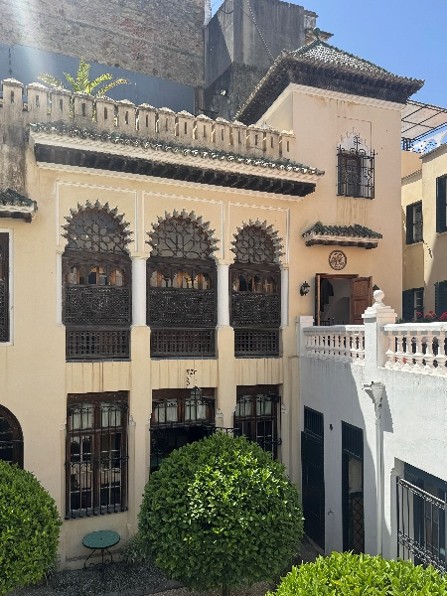
The original building that houses the Legation was given to the United States in 1821 as a rent-free property to serve as a permanent diplomatic post, and it underwent restoration funded by the U.S. Congress in 1926 as well as personal contributions of Maxwell Blake, U.S. consul to Morocco from 1912-1917 and from 1925-1941 who built the Arab pavilion and brought in master craftsmen to do the work using zellij tiles from Fes. Blake also expanded the footprint when he purchased the adjacent property to create a sprawling mansion (Cornwell).
After the property had been vacated in 1961 when the Consulate General moved to a newer facility, it was falling into disrepair; another major restoration occurred as part of recognition of the bicentennial of American Independence in 1975, and U.S. Consul General Harland Eastman along with other diplomats and volunteers took the initiative to create the museum and fund renovations through the establishment of the Tangier American Legation Museum Society (Tangier American Legation—Enchantment Stories).
The Legation has served as a diplomatic residence, a working consulate, a Peace Corps training center, an espionage headquarters, and a museum with a research and cultural center (Cornwell). The center has evolved to meet the needs of the community by hosting community events and educational programs such as youth outreach and language classes (Tangier American Legation).
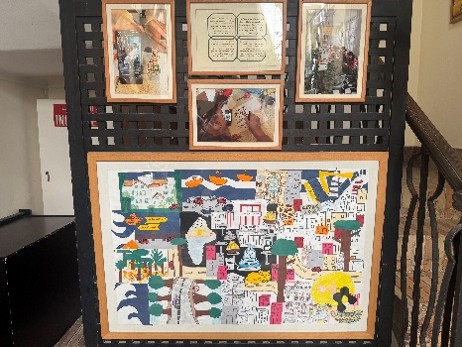
The displays in the museum portray U.S. forces as liberators during the World War II North African campaign, Operation Torch in November 1942, and remind us that sovereignty has been a long and continuing struggle throughout the world (Tangier American Legation).
The United States and its British allies launched this first massive transoceanic amphibious invasion in modern military history, targeting the Vichy French-controlled Morocco and Algeria to trap Axis forces in North Africa followed by an immediate land and air advance into Tunisia to secure the Mediterranean (Tangier American Legation).
After the war ended, the United States played a strong diplomatic role in supporting Moroccan independence from France, which was achieved in 1956. It seems the two nations have taken turns supporting one another. During the American Civil War, the Moroccan King ultimately took the Union’s side in 1862 and stopped allowing Confederate ships access to ports in Morocco, which they had been using for supplies and repairs (Tangier American Legation—The Legation and the Civil War).
The US also continues to support Morocco in their claims to the Western Sahara, which has been a point of tension between Morocco and Algeria as Morocco wants territory recognition that pre-dates colonial interference by France; the US has continued to back UN-led efforts that support Morocco’s autonomy plan by offering the region self-governance under Moroccan sovereignty to resolve the conflict (Abrams).
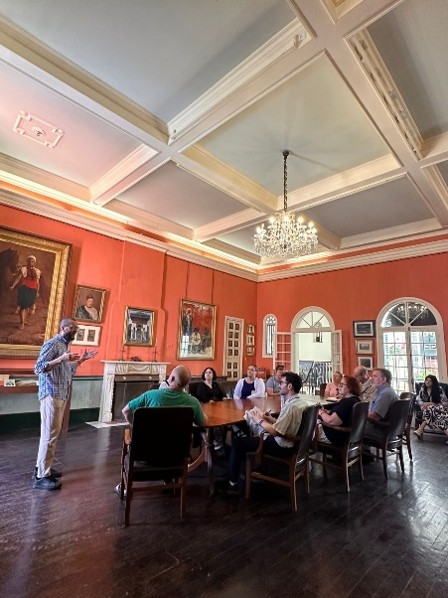
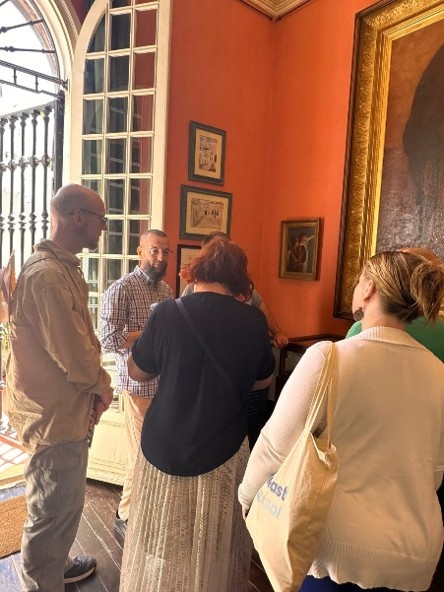
Tangier American Legation’s long-time curator, Mohammed Jadidi, providing history
to the Harper field seminar group A guided tour of the American Legation by Mohammed Jadidi