
Harper College will be closed on Monday, September 7, in observance of Labor Day.

One of the themes that stayed with me throughout the MENA/SWANA Field Seminar was the enduring presence of Al-Andalus across North Africa. Before this trip, I understood Al-Andalus primarily as a chapter in Spanish history. Traveling through Morocco and Tunisia transformed that understanding and made me realize that its legacy extends far beyond the Iberian Peninsula.
My first glimpse of this connection came in Tangier, Morocco. Standing along the Strait
of Gibraltar, I was struck by how close Spain felt. Looking across the water, it was
easy to imagine the centuries of travel, trade, and migration that connected these
two shores. As we walked through the Medina, I found myself slowing down to notice
the details the whitewashed walls, the tiled courtyards hidden behind heavy wooden
doors, the horseshoe arches, and the narrow streets that seemed to invite exploration.
Although I was in Morocco, many of these spaces felt surprisingly familiar and reminded
me of southern Spain.
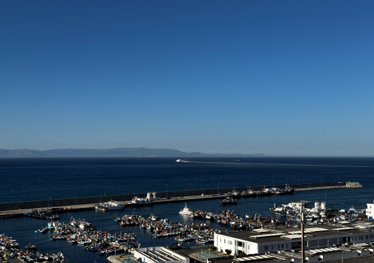
Another detail that stood out to me was how often I heard Spanish in everyday conversations. Whether I was ordering coffee at a café or browsing in local stores, Spanish seemed to be present alongside Arabic and French. As a Spanish professor, hearing Spanish reminded me that a language is not only connected to one country but also to a much larger historical and cultural region. It reinforced the deep connections that have existed across the Strait of Gibraltar for centuries. It was one of those moments when history stopped feeling like something I had only read about and became something I could actually see and hear.
That perspective stayed with me as we later visited Testour in Tunisia. Although the
area has a much older history, the town became closely associated with Morisco communities
in the early seventeenth century, when Muslims, along with some Jewish families, settled
there after the expulsions from the Iberian Peninsula. Knowing this history gave every
street and building a deeper meaning.
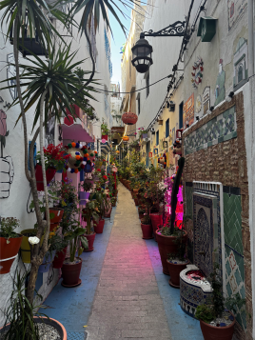
As I wandered through the town, I was again reminded of Andalusia. The whitewashed buildings, clay-tiled roofs, quiet courtyards, and the layout of some streets felt remarkably familiar. More than once, I caught myself thinking that, if I ignored the Arabic signs, I could almost imagine I was walking through a neighborhood in southern Spain. It was fascinating to see how people who had been forced to leave their homeland carried with them not only their memories but also their architectural traditions and ways of life, creating a town that still reflects that shared heritage more than four hundred years later.
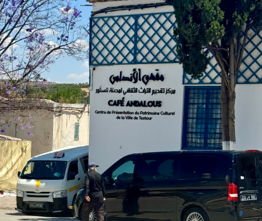
What surprised me most was realizing that the story of Al-Andalus did not end with the expulsions from Spain. Seeing that history reflected in the architecture, language, and character of these places made the connection feel real in a way that books alone never could.
As a Spanish professor, these experiences challenged me to think differently about
the history I teach. Too often, Al-Andalus is presented as a chapter that ends in
Spain. Visiting Tangier and Testour reminded me that it is also a story of continuity.
The movement of Jewish and Muslim communities from the Iberian Peninsula marked the
beginning of new chapters in North Africa, where traditions, architectural styles,
agricultural knowledge, and cultural practices continued to evolve.
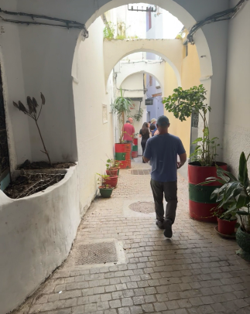
I left Morocco and Tunisia with a greater appreciation for the interconnected history of the Mediterranean. More importantly, I left with a new perspective that I hope to bring into my classroom. Experiencing these places firsthand reminded me that history is not confined to textbooks. Sometimes the most meaningful lessons come from walking through a city, recognizing familiar details in an unfamiliar place, and realizing that cultures separated by water have remained connected for centuries.