
Harper College will be closed on Monday, September 7, in observance of Labor Day.

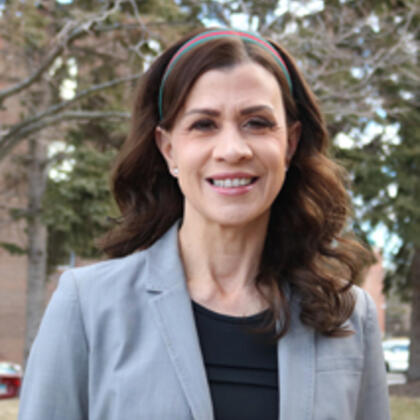
Harper Talks Episode 56 - Dr. Meg Schnoor
One teacher can change a life, and sometimes that impact lasts a lifetime. In this episode of Harper Talks, alumna Dr. Meg Schnoor, superintendent of the Northwest Suburban Special Education Organization, shares her journey from Harper student to educational leader. She discusses the power of empathy, the growing need for special education professionals, and why showing up for students can change lives for decades to come.
Harper Talks: The Alumni Podcast
Show 56: -- Harper Talks -- Dr. Meg Schnoor
[00:00:01.060] - Maham Khan, Host
I'm Maham Khan, and you're listening to Harper Talks, a co-production of Harper College
Alumni Relations and Harper Radio. Today, I'm excited to welcome Harper alumna Dr.
Meg Schnoor to the show. Meg is a 1991 graduate of Harper College and currently serves
as superintendent of the Northwest Suburban Special Education Organization, or NSSEO.
With a decades-long career in education, Meg has made a tremendous impact on students,
families, educators, and schools throughout the Northwest suburbs. Meg's connection
to Harper has remained an important part of her story, and in 2013, she was honored
as a Harper College Distinguished Alumna. Today, we'll get to hear all about her journey
from teacher to administrator and the experiences that shaped her career. Meg, we're
so happy to have you here today. Welcome to Harper Talks.
[00:00:49.400] - Dr. Meg Schnoor
Thank you.
[00:00:50.060] - Maham Khan, Host
So let's get right into it. Tell me how you chose to go to Harper College.
[00:00:54.680] - Dr. Meg Schnoor
Well, I am a 1989 graduate of Conant High School, but I only went there for 2 years.
I moved to the northwest suburbs from Chicago in the middle of high school, which
is a bit of a challenge, as you might expect. And my sister had gone to community
college. We are all, the 3 of us siblings, are first-generation college attendees.
Hmm. And essentially the choice originally to attend Harper was for financial reasons.
My parents were adamant that we were going to go to college, but money was definitely
an issue. And we saw Harper as a way of being able to advance without taking on a
whole bunch of debt.
[00:01:35.500] - Maham Khan, Host
That story doesn't change much over the years, right? It's the right economic financial
decision. So what do you remember about your time at Harper?
[00:01:43.360] - Dr. Meg Schnoor
I just remember being very involved and being very happy here. I would have stayed
here for 4 years if it was the opportunity that you have now with the University Center
and to be able to become a certified teacher without having to leave home. I loved
my time at Illinois State, but I loved Harper more. I was very involved on campus.
I always took at least 18 credit hours. I worked on campus at the box office, and
it was when they first had the Ticketmaster opportunity here at Harper, and we worked
together to implement that. And we also ran all of the shows out of building— I think
it was Building J was the theater.
[00:02:23.800] - Maham Khan, Host
Mm-hmm.
[00:02:24.190] - Dr. Meg Schnoor
And we got to see a lot of famous acts come through, and it just really helped me
to become part of whole workings of Harper, and I spent my day here. It was more—
I didn't go back and forth. We lived in Elk Grove, so it was a little bit of travel
for me. I did, you know, the whole commuter thing, but I most— for the most part spent
my day here. If I had time in between classes, I was always at the library.
[00:02:47.600] - Dr. Meg Schnoor
I took aerobics over in Building M back when we called it aerobics and really made
the most of it.
[00:02:53.390] - Maham Khan, Host
Wow. So were you involved in a lot of student clubs and activities also?
[00:02:57.780] - Dr. Meg Schnoor
I was not involved in a lot of student clubs. It was mostly in relation to the box
office and the events and really trying hard to work in between classes to be able
to support, you know, paying for tuition and books, etc.
[00:03:11.090] - Maham Khan, Host
Yeah, so it sounds like you were involved through work and you were still at the center
of like student life with the events and everything that was going on. Do you have
like a special memory that like has stayed with you?
[00:03:21.210] - Dr. Meg Schnoor
From working at the box office
[00:03:22.790] - Maham Khan, Host
Yeah or at Harper in general?
[00:03:23.840] - Dr. Meg Schnoor
I mean, we got to meet Branford Marsalis, who was a very famous musician, and there
were other famous acts at the time. I don't know that they're famous anymore, but
we ran the concert for Tony! Tony! Tony!, which was sold out of Building M, and it
was just a really great experience. I made a lot of friends, and it helped me really
see Harper as a home.
[00:03:47.210] - Maham Khan, Host
Yeah, those were different times. Those were different times. We got to bring in lots
of artists. So after you did your degree at Harper College, what came next?
[00:03:58.990] - Dr. Meg Schnoor
I left here with an Associate of Arts in May of 1991 and transferred seamlessly because
we had the agreement. There was a, like, a compact agreement, I think they called
it back at the time, with Illinois State that you would automatically enter as a junior.
And I knew from my time here at Harper, one of my teachers suggested going into special
education. I knew I always wanted to be a teacher from the time I was very young,
but the idea of special education was something that, you know, became a realization
when I was here at Harper. His name was Dr. King. I don't know how long he was here.
It wasn't an education course. It was like a history course. But at the time, there
was a glut of elementary ed teachers and gen ed teachers. And he said, you really
should look into special education if you want to get a job when you're done.
[00:04:47.880] - Maham Khan, Host
Okay.
[00:04:48.280] - Dr. Meg Schnoor
And, you know, I've always been very money conscious. And so I started looking into
special ed because that's not something that you should go into lightly and realized
that that was a really good area for me and my skillset because I always had a lot
of patience and a lot of empathy. And when I started looking at Illinois State, they
had a really robust special education certification program. And to be honest, to
this day, I still look for students who have graduated from ISU when it comes to hiring
my own staff. So then I went to Illinois State. I was only there for 3 semesters.
I was actually here longer than I was on campus at Illinois State, which is why Harper
is more of a home.
[00:05:25.870] - Maham Khan, Host
Mm-hmm.
[00:05:26.810] - Dr. Meg Schnoor
And I came home to student teach for a full year. because in special ed, you have
to student teach for a year as opposed to a semester when you're student teaching
for general ed. And then I took a job with District 214 right here, you know, Harper-Feeder,
District 214, in an alternative school that served students who were wards of the
state, or at this time, they referred to the students as youth in care at Maryville
Academy, which was over on River Road.
[00:05:51.630] - Dr. Meg Schnoor
I don't believe it's still there, but they were students who had been removed from
their homes. Mm-hmm. And were educated in a group home, and they came to our school
first, which was an alternative program, and then they moved on to Hersey High School
if their special needs could be met in a more general education setting.
[00:06:10.110] - Maham Khan, Host
Wow. So I heard you say you had to figure out whether you were the right person for
a special education pathway. How do people make a decision like that?
[00:06:21.090] - Dr. Meg Schnoor
I think that you need to make sure that you're able to immerse yourself in the environment.
So that was what I did. I did some observations in special education schools and classrooms,
both in general education buildings and in the more intensive buildings, which are
referred to as alternative ed, and realized that I could be the person who made a
difference for them. And that was really how I made that decision.
[00:06:45.690] - Maham Khan, Host
Wow. It's an important one.
[00:06:47.550] - Dr. Meg Schnoor
Yeah.
[00:06:48.090] - Maham Khan, Host
You have a very big title, and I assume you come with a lot of responsibilities here.
So tell me what your current job entails and what's a typical day like for you.
[00:06:57.730] - Dr. Meg Schnoor
So currently, I am the superintendent of the Northwest Suburban Special Education
Organization. And what that is is a cooperative of 8 different school districts. We
have District 211 High School District, District 214, and most of their elementary
feeders. And the students whose needs are so severe that they cannot be met within
their general education setting.
[00:07:20.950] - Maham Khan, Host
Mmhmm.
[00:07:21.510] - Dr. Meg Schnoor
Those school districts cooperate to provide services for the most extreme students
through my organization, which is NSSEO. So we have the most challenging of the challenging
students, either behaviorally or with cognitive disabilities or with multiple disabilities,
who they need to be able to have their needs met somewhere else.
[00:07:47.420] - Maham Khan, Host
Wow. And so let's talk about what you love about your job and then what challenges
you face. You brought up the word challenges. So what are those challenges that you
guys are facing today?
[00:07:58.320] - Dr. Meg Schnoor
Well, definitely what I love about my job would be the students, the staff, and the
families, especially the families of our students. Our parents of the students who
we serve are always so grateful to have Public Law 94-142 made education for all students
a reality back in 1975. And pre-1975, the students who we serve were probably at home
and did not receive an education. And our parents are cognizant of that. They're so
appreciative. And I think that it's more of a calling than a job in that aspect. And
that's the part that I like the most. The most challenging part is there's a severe
shortage of special education staff. There aren't as many people going into the field
of education at all, let alone special education. Hmm. And special ed with students
who have severe behavior disorders can be a little bit dangerous. And there are people
who are reluctant to go into the field because of that. So that's the hardest part.
We struggle to fill teaching positions that in 1993 would have had 150 applicants.
[00:09:04.090] - Maham Khan, Host
Wow. Well, that's probably something AI won't be able to replace. So if people were
smart, they'd be listening about, can I work on the personality skills and the self-development
to have this incredible opportunity to make a difference? So I hope people are hearing
that, because if that's the challenge, that's a challenge that has a clear solution
if we spread the right awareness, I think, about that.
[00:09:24.350] - Dr. Meg Schnoor
Absolutely. And we actually are starting to partner with Harper. My assistant superintendent
for human resources is working with Harper to make students here aware of what a special
education cooperative is and to bring about awareness of, you know, the positions
that we offer and opportunities that they might have. Because some of the students
will come from Harper and work with us as a teacher's aide. And then if they work
for 2 years, they can get tuition support for, you know, their time beyond Harper
to be able to become certified teachers.
[00:09:55.810] - Maham Khan, Host
So actually, one of the questions I was going to ask you is what role community colleges
can play in this work. And you've kind of answered that already, unless you wanted
to add anything more.
[00:10:05.180] - Dr. Meg Schnoor
No, I think that the— especially Harper being so involved in the community and us
being right next door in Mount Prospect, it's vital that we get in front of your students
and make sure that they know that there are AI-proof Possibilities, because what I'm
hearing about this generation is they feel that there is less hope, and that breaks
my heart.
[00:10:26.650] - Maham Khan, Host
Yeah.
[00:10:27.070] - Dr. Meg Schnoor
Because there's so much need and so many opportunities that they could have an impact.
[00:10:32.120] - Maham Khan, Host
Well, what gives you hope?
[00:10:33.080] - Dr. Meg Schnoor
What gives me hope is, you know, seeing places like Harper thrive and really making
sure that there are opportunities for students that are AI-proof. I love the fact
that Harper is starting with, you know, improving manufacturing opportunities for
students, a lot of hands-on opportunities for students, and the fact that AI doesn't
have to take over the world. I think we need to stop. I'm rambling.
[00:10:56.150] - Maham Khan, Host
Yeah. Well, I mean, it's human jobs, right? And that's the beauty of this. This is
like an actual human job that the demand will never cease. There's nothing that can
replace empathy, human empathy for another, right? When it comes to the world that
we have created, because your journey has been so long, so I'm really curious to hear
from you, the world that we have created for students with special needs and people
with special needs, what grade would you give that world?
[00:11:20.770] - Dr. Meg Schnoor
You know, that's difficult to say because I was thinking about this this morning,
and the opportunities for students with disabilities to attend college 30 years ago
was very, very slim. There was— if you had an IEP, which is an individualized education
program, going to college was not an option because there were no accommodations.
It was either you come in and you can do things the way— it was a mold. If you could
fit the mold, then you would succeed in college. I'm very inspired and encouraged
by the fact that there are now accommodations and disability centers at most colleges.
However, I think that we still need to be doing more to help identify students sooner.
There's a process that we go through called Child Find, and we try to find students
as early as age 3 after they're released from early you know, early services so that
parents know that there are opportunities as young as 3 years old through the public
school district that they are paying taxes for, that they could be getting services
as early as 3 years old. They don't have to wait until kindergarten if they think
that there may be some developmental milestones that their students aren't reaching.
[00:12:36.470] - Dr. Meg Schnoor
So I think we need to do better with that, but I am encouraged with regard to higher
ed and the things that are being done in that realm.
[00:12:43.750] - Maham Khan, Host
Yeah, that's I never even knew that, like, as a parent, that there were those choices
or routes or things that we could look into. Like, what do you think are the obstacles
from the walls to awareness, right? Like, why is that happening? Why are people not
more aware of this information?
[00:12:58.010] - Dr. Meg Schnoor
I think a lot of it is the approach that we are trying to appeal to healthcare, because
that's where hopefully— and healthcare, we all know, is a problem. So if students
aren't or if children aren't getting their regular checkups in the early years, you
know, birth to 3, really our connection is through the doctor's office. We do all
of our outreach and our posters and flyers and things like that that say, if your
child isn't reaching developmental milestones, there are opportunities through your
home district. But at the same time, a lot of the things that we're doing, maybe people
don't even understand what their home district is. They might not know what their
community school is, or if it's the doctor's office isn't in their hometown, and then
they try to call the district that's in, you know, wherever their doctor's office
is, and they say, well, we can't service you, you don't live here. And a lot of people
will give up then because they just assume that there aren't opportunities.
[00:13:57.220] - Maham Khan, Host
And so people don't— they probably go to the schools looking for resources instead
of having their doctors advocate.
[00:14:02.940] - Dr. Meg Schnoor
Sometimes they'll go to the schools or sometimes we just don't get anything until
the student enters kindergarten and we start to see that, you know, that there's some
signs of difficulty learning. And the compulsory school attendance age is 7 years
old, and 7 is a lot older than kindergarten. So sometimes we don't get the kids until
they're 7 years old.
[00:14:24.900] - Maham Khan, Host
Wow, that's so helpful. And I mean, I wish we had more touchpoints to be talking about
these things. On that note, what work do we still really need to be doing then to
create that sort of ideal world for people where it's truly inclusive of those with
special needs?
[00:14:40.560] - Dr. Meg Schnoor
I think that we need to be more cognizant of the need for multiple language communication
to make sure that students who speak 2 languages or 3 languages in the home are getting
their needs met. A lot of students, unfortunately, will come in not speaking English,
and that will unfortunately be diagnosed as like a slow learner, and they are not
a slow learner. They are an amazing learner because they are learning in 2 different
languages simultaneously. So something that we always say is not speaking English
is not a disability.
[00:15:13.040] - Maham Khan, Host
Wow. Wow, that's insightful. So it's more of like an ethnocentric issue where we just
see people not speaking the mainstream language as a flaw instead of a strength that
they're speaking multiple languages. What a takeaway
[00:15:26.500] - Dr. Meg Schnoor
But there is a lot of encouraging development in the schools where if you see that
there's dual language academies where students are brought in and maybe they don't
speak, maybe they only speak English, but they have an opportunity to be in a blended
classroom where the teacher speaks English and Spanish. There's a couple different
languages, but primarily it's Spanish, and the students end up being bilingual, and
by the time they graduate, they're eligible for International Baccalaureate, which
is super exciting. So District 15, which is a feeder into District 211, has a lot
of dual language academies.
[00:16:03.110] - Maham Khan, Host
So I know we're talking about it from a special needs angle, but in general, you work
in the, in the field of education and child development. So we have a lot of those
majors here at Harper, people who are studying. What advice would you give to those
students who are thinking about coming into education, who are prepping for a career
in education, What skills should they be developing? What mentality should they be
developing as they come in?
[00:16:28.750] - Dr. Meg Schnoor
I think when they come in, and this is part of the advisory that I sit on here at
Harper, they need to immerse themselves in the actual job. We talk about at the advisory
that there's students who are maybe reticent to make the phone call and make the appointment
to be able to get into a classroom and see what it's actually like. So I would encourage
them to do that. And if they're struggling with just making that connection, I'm sure
that there are people here at Harper That would be able to help them make that connection
because we need the help so much. We need substitute teachers, we need classroom aides,
we need certified teachers. There are jobs and there are ways if you are concerned
about paying for your tuition, there are jobs that will help you pay your tuition.
So even looking for something that has that added benefit would be my recommendation
and encouragement.
[00:17:22.150] - Maham Khan, Host
Wow. What's something that stays with you when times get tough in this role?
[00:17:26.710] - Dr. Meg Schnoor
When I first started teaching, like I said, I was teaching high school students who
were youth in care at Maryville Academy. It stays with me that even though I struggled
very much with this one particular female student, we were, you know, really not getting
along. And she was not behaving as well as we would've hoped, despite all of our interventions
and things like that, what stuck with me is that she needed to know that I was gonna
stick with her.
[00:17:57.980] - Maham Khan, Host
Mm-hmm.
[00:17:58.590] - Dr. Meg Schnoor
And that I wasn't gonna be someone, another person in her life who was going to leave
her. So over time, really putting in the time and the effort was definitely worth
it. And at one point she said, I wish you were my mom. And that does stick with me.
So when we're talking about Harper students who are considering a role or a career
in education, just know that it is very fulfilling and something that happened 30
years ago can still stick with you today.
[00:18:25.640] - Maham Khan, Host
Wow, that's, that is touching. What incredible work that you're doing. It's so inspirational.
And thank you so much for sharing all your thoughts and ideas with us today.
[00:18:35.490] - Dr. Meg Schnoor
Thank you for having me.
[00:18:36.610] - Maham Khan, Host
Absolutely. Meg is a graduate of Harper College and has made an impact on thousands
of students in the Northwest suburbs. If you're enjoying Harper Talks, please subscribe,
rate, and review us so others might find us. Harper Talks is a co-production of Harper
College Alumni Relations and Harper Radio. Our show is produced by Shannon Hynes.
This episode was edited by Coby Pozo. Our online content producer is Blue Bailey.
Theme music was created by Aidan Cashman. And I'm your host, Maham Khan. Until next
time, thank you for listening.