Harper College will be closed on Monday, September 7, in observance of Labor Day.

Today was a day that I felt truly opened everyone's eyes on the everyday lives for most of Panama's population. We spent a large part of our day at a chocolate farm led by a Panamanian indigenous tribe. The farm was located on an adjacent island to the one we were staying at, so we were transported via boat to get there. What stood out when we got close to our dock was seeing a crowded plot of land occupied by the banana industry, specifically the brand Chiquita. As we were approaching the dock, you could see vast ships and the massive storage carts for as far as the eye could see. The banana industry was a controversial topic we briefly covered at various points throughout over trip in Panama. We did get to see the hard work behind banana plantations, but I think being able to see the behind-the-scenes of the shipping and profit process would have been very educational and more truth-setting. This whole sighting of the industry led to a discussion between my peers and I about different types of fruit companies and the sad truth of the companies and their hard workers. We discussed the blood, sweat, and tears that the workers of Dole go through despite only getting paid seventy-four cents an hour. This discussion sets the tone for what we were about to see at the chocolate farm.
Massive ship carrying Chiquita bananas, ready to be shipped out.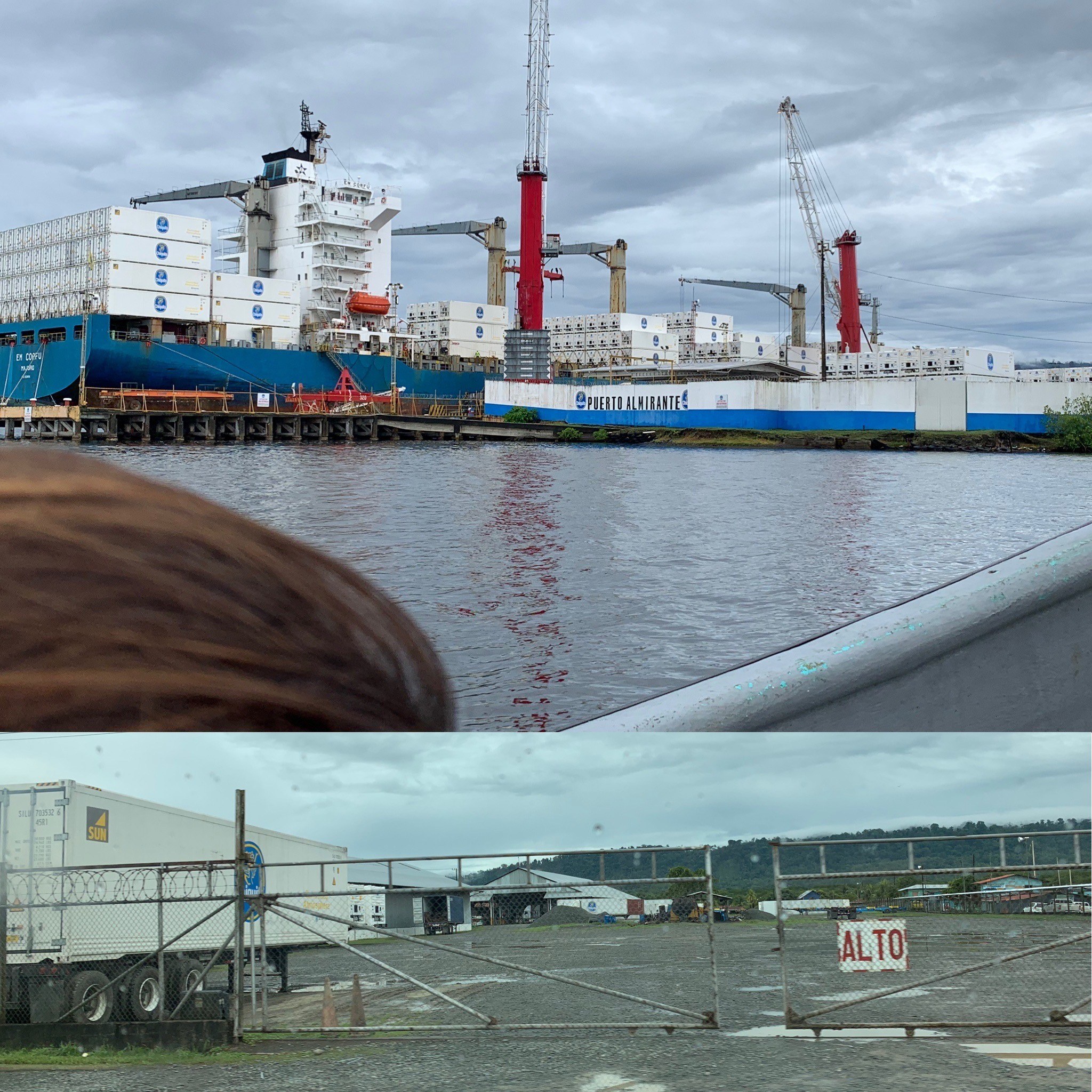
Moving on to the chocolate farm, this experience was definitely information heavy. The first thing that stood out to me was how they greeted everyone. At this indigenous tribe farm and at the NASO community, we were all welcomed with happy faces and open arms. I think that it brought everyone a sense of comfort to be in such a welcoming environment. It was really heartwarming to hear these people really enjoy what they do but at the same time, it was difficult to hear how badly they get scammed for doing the most work out of everyone in the cacao business.
The sign by the chocolate farm, welcoming guests from all around the world.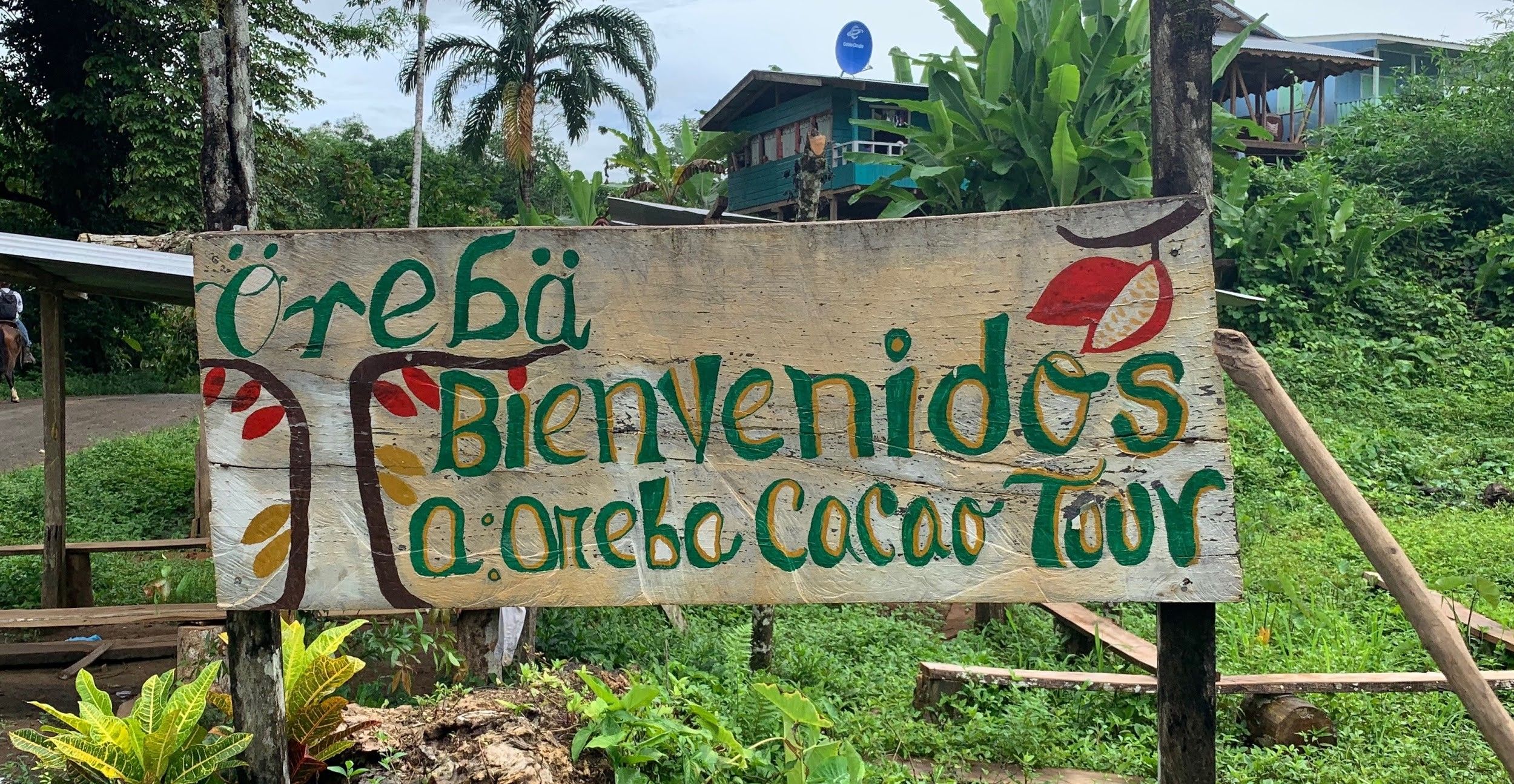
The native people have their heart in the right place when it comes to their business more due to the fact that they do not look at what they do as a business at all. They see it as their way of life and culture. Panama has seven tribes, each with their own culture and beliefs. The tribe that we visited is called the Ngöbe tribe. They speak their own language and have different lifestyles. This community's main focus is the cacao farm. The type of farming they uphold is called diversification farming. The reasoning behind their practice of diversification farming is the Ngöbe's value put on the circle of life and natural life in general. With a farm that is very biodiverse, many useful insects, birds and animals naturally reside within. For example, the farm has a special mosquito that pollinates the cacao plants, which is key to their farming success. In addition, with a biodiverse farm, they get to grow everything so that they don't need to go out as much to buy anything from the Local market. Instead, they get the benefit of having many things to sell at the market and have a variety of income sales. Coming from the United States where almost all farms are monoculture, seeing a farm that was booming with many different livestock and plants was refreshing. It just expressed more on how much they value the earth and its natural form.
The plant on the left is an infected cacao plant, while the plant on the right is
a fit, healthy cacao plant.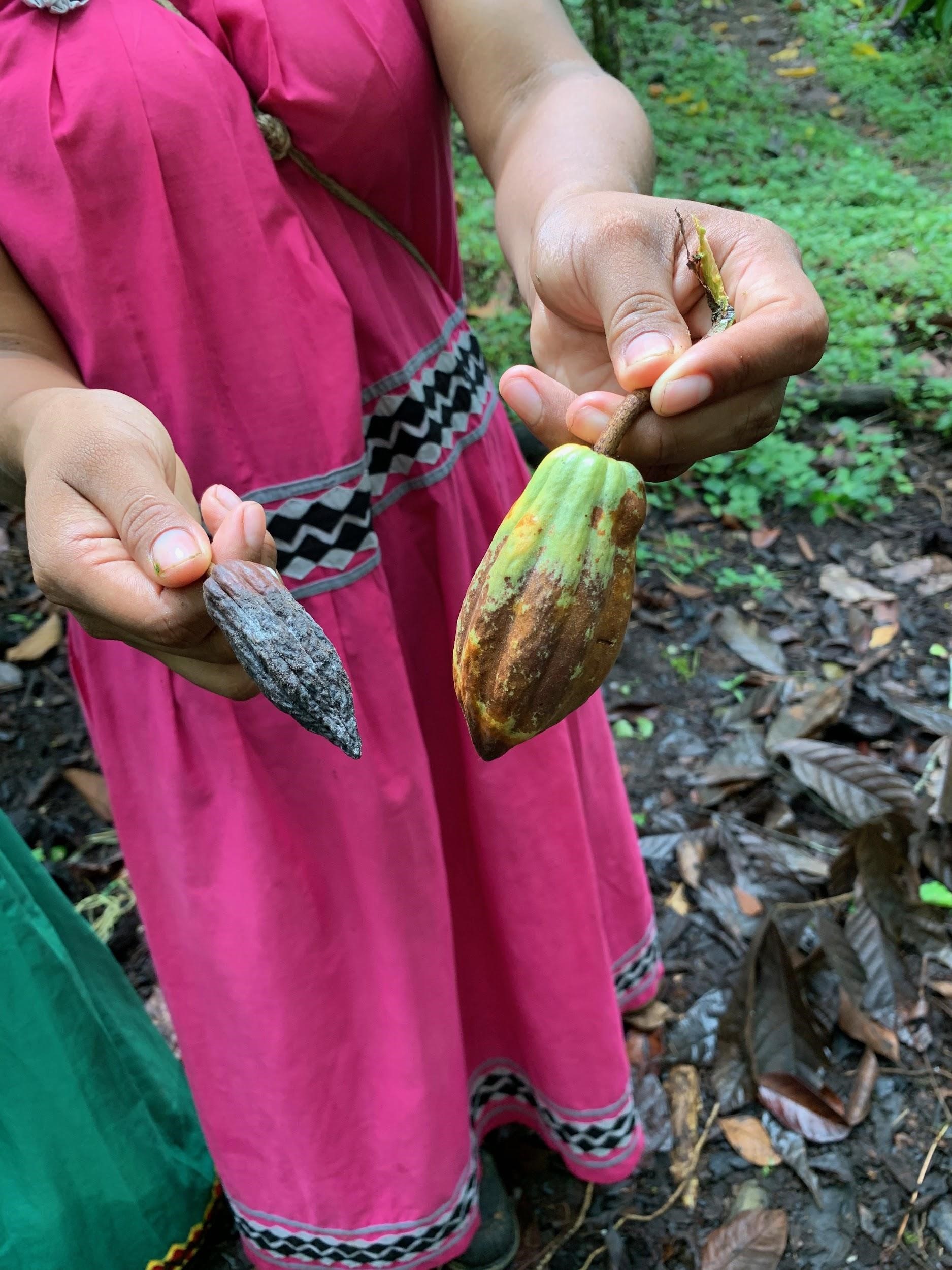
The Ngöbe tour guide emphasized that the more hard work you put into something, the more you’ll get out of it. After hearing the details, work and patience they go through; learning how much they earn for pure, organic chocolate seeds gave me a heightened perspective on how much these people are taken advantage of. For every pound of cacao seeds they produce, they receive 85 cents in return. According to the guides, on average it takes about 12 cacao fruits to make a pound; this being about half of what the average tree produces. They went on to discuss how important and thankful they are for us to join them since they rely on tourism for a good source of their income for the community. Another reason why I was taken aback by the information is how they specified there’s a middleman that makes most of the money when exporting their produce to Europe. That information made me think that in every industry we studied on this trip (the banana and chocolate farm), there’s someone doing no work and receiving most of the profits. All the while the Panamanians are being underpaid and can't afford a secure and comfortable lifestyle for themselves.
Ngöbe tour guide showing the inside of the cacao fruiting body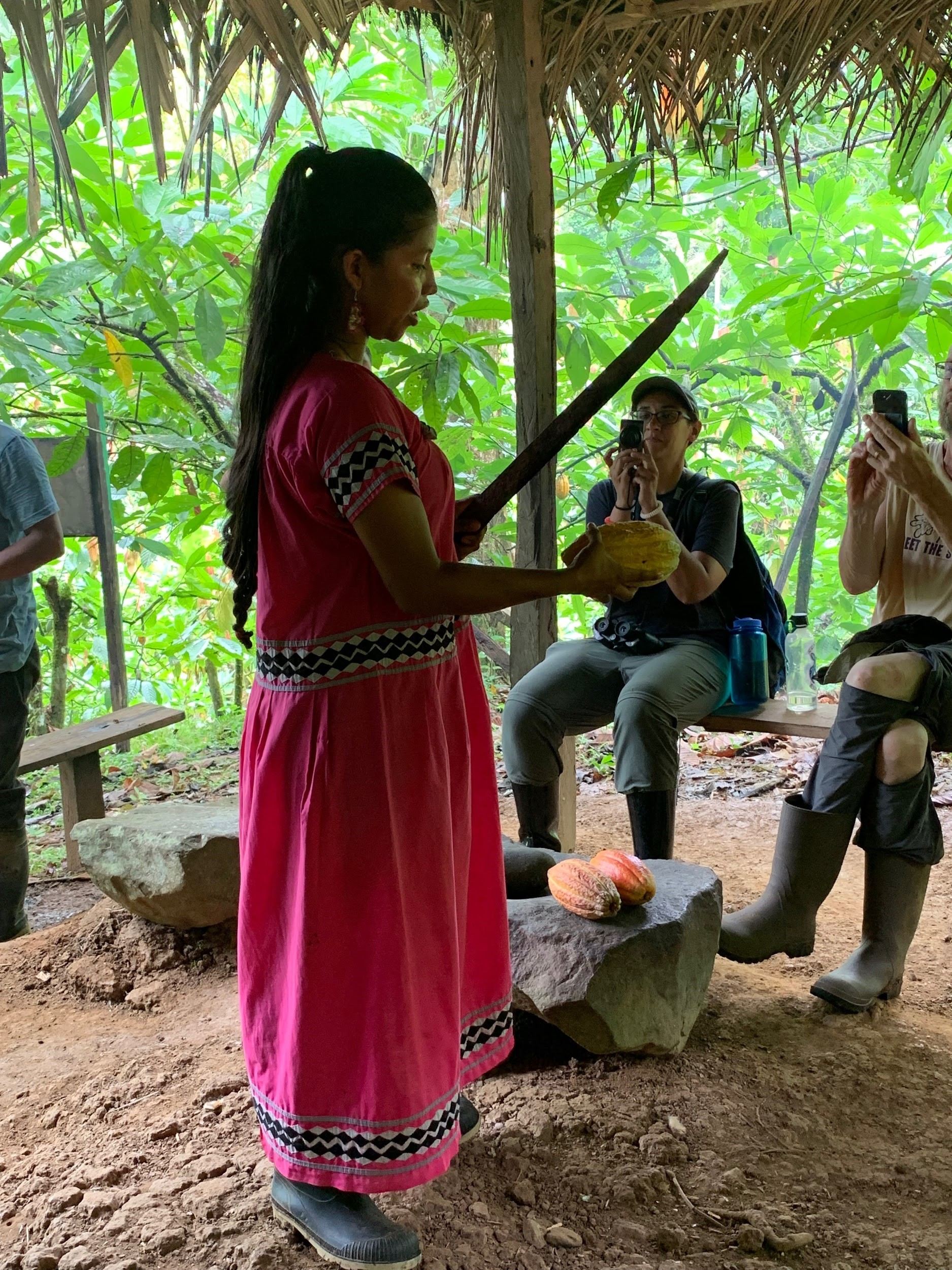
In the end, the comment the Ngöbe instructor said that most stood out to me was that, at the end of the day, they get a glass of hot chocolate and it is all worth it. I felt so grateful for all the knowledge they shared with us and the awareness they explained when it comes to the reality of business in countries like Panama. All in all, the good energy and passion they gave off is a feeling I, like most, won’t forget. As for the awareness and information they share, I look forward to passing along.
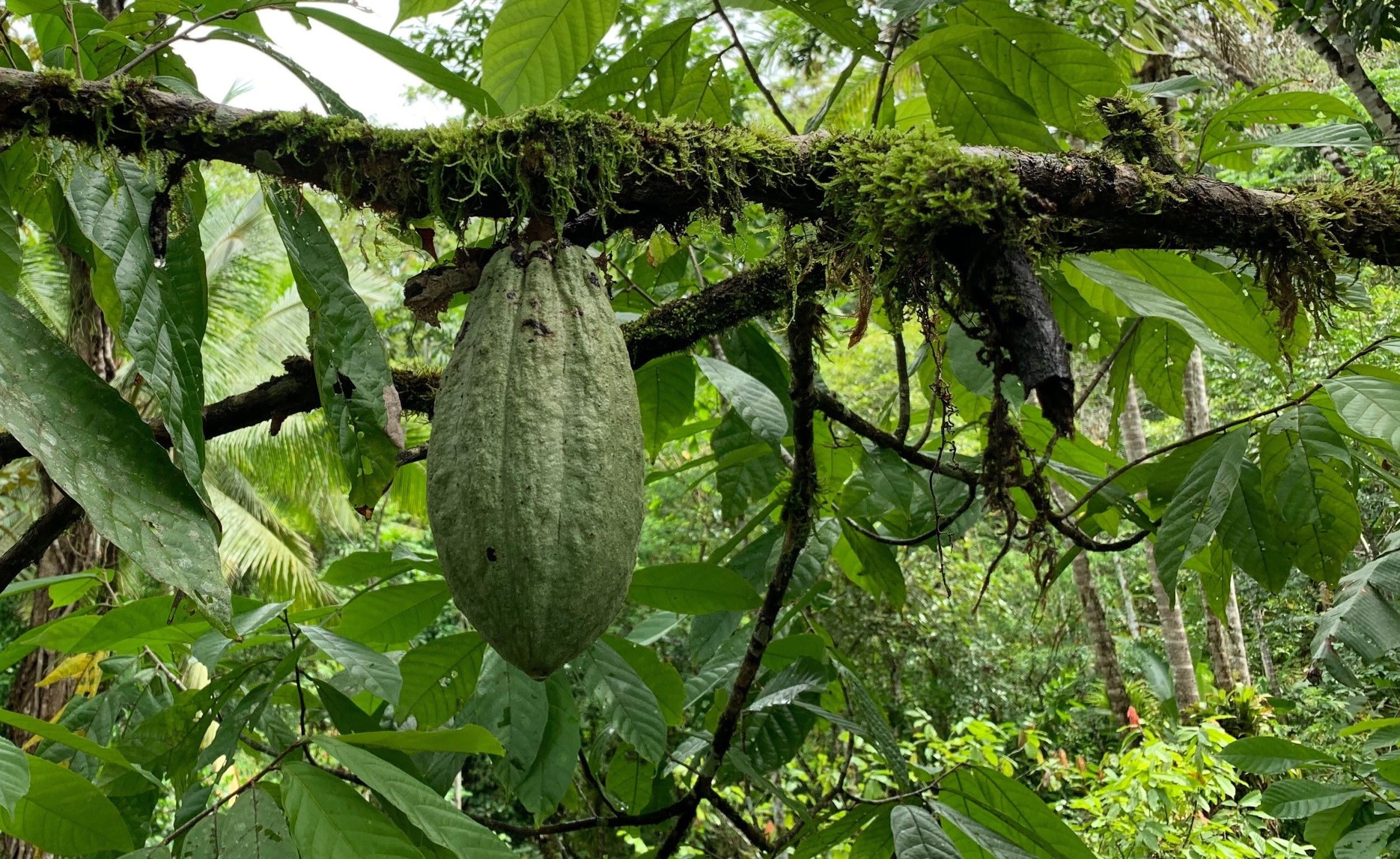
Healthy cacao fruit growing on a tree branch