
Harper College will be closed on Monday, September 7, in observance of Labor Day.

June 15, 2019, the last full day we spent in Panama. It was a rough morning, having to be ready for the day at 6:45 am sharp. We grabbed breakfast around the corner at a place called Tantalo. Afterwards we quickly got our stuff and met up with our tour guide JJ with whom we’d spend the day exploring Panama City. Our first stop and one of the most influential spots was the Panama Canal. As we took a step in the building, seeing the size of the Canal took our breath away. Taking up 10 miles of Panamanian land, it was an astonishing piece of infrastructure. The Panama Canal has made a great impact in the history of Panama. From the start of the building process to the actual works of the Canal itself. The Canal officially started to be built in May 1904 and was finally finished January 1914. Walking through the museum it was unbelievable how rich the history is in continuous efforts to build the canal. The canal was a global economic advancement allowing all trade to have easier access between both the Atlantic Ocean and Pacific Ocean.
A large boat passing through the lock system from the Atlantic side before entering
the Canal. 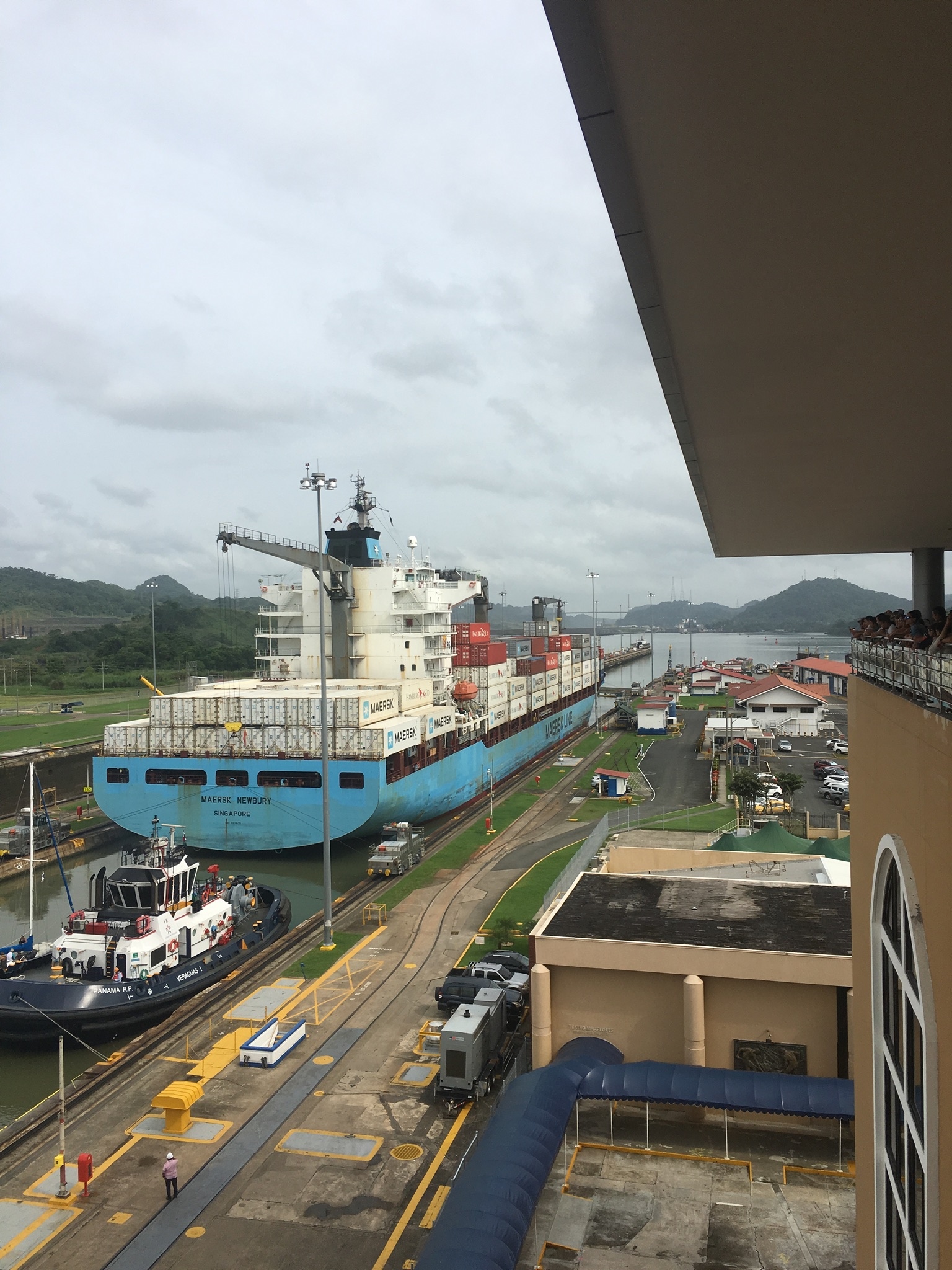
Next stop of the day was Panama Viejo, the remaining part of the old Panama City. After exploring the ruins, which includes a climb to the top of the old Cathedral tower for excellent views of the surrounding area, we proceeded to the museum. The displays and descriptions provide very informative information about the Spanish establishment of Panama and the subsequent invasion by pirates.
This section illustrates the ruins in Panama Viejo along with the Cathedral tower
that has a view of both the new and old city.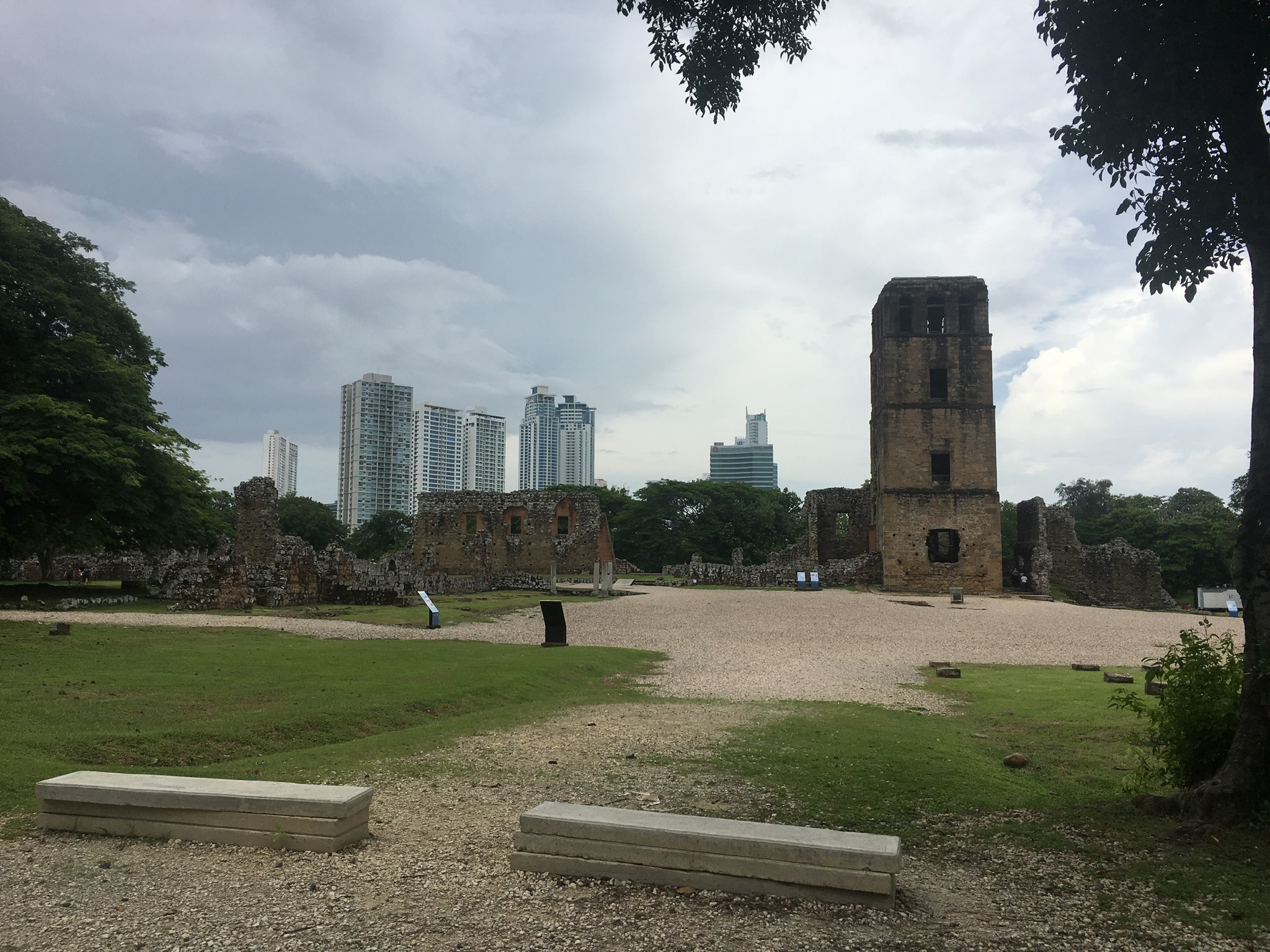
Lastly we made our way to a large fish market. When you first walk in that fishy smell overcomes you. There were stands ear to ear containing massive amounts of fish stacked on top of each other ready to be sold. All this hard work is produced by the Panamanian fisherman yet most the money made goes directly to the middleman. We saw a similar situation at the cocoa farm. They only receive eighty-nine cents for every pound of cocoa shipped, and they don’t know how much that chocolate is actually worth. Most workers in Panama only receive a fraction of the money actually made from the products produced in Panama. This has become a real issue because natives in Panama continue in poverty and other countries take advantage of the amount of work put into making the goods.
This is a stand filled with fish ready to sell to consumers. 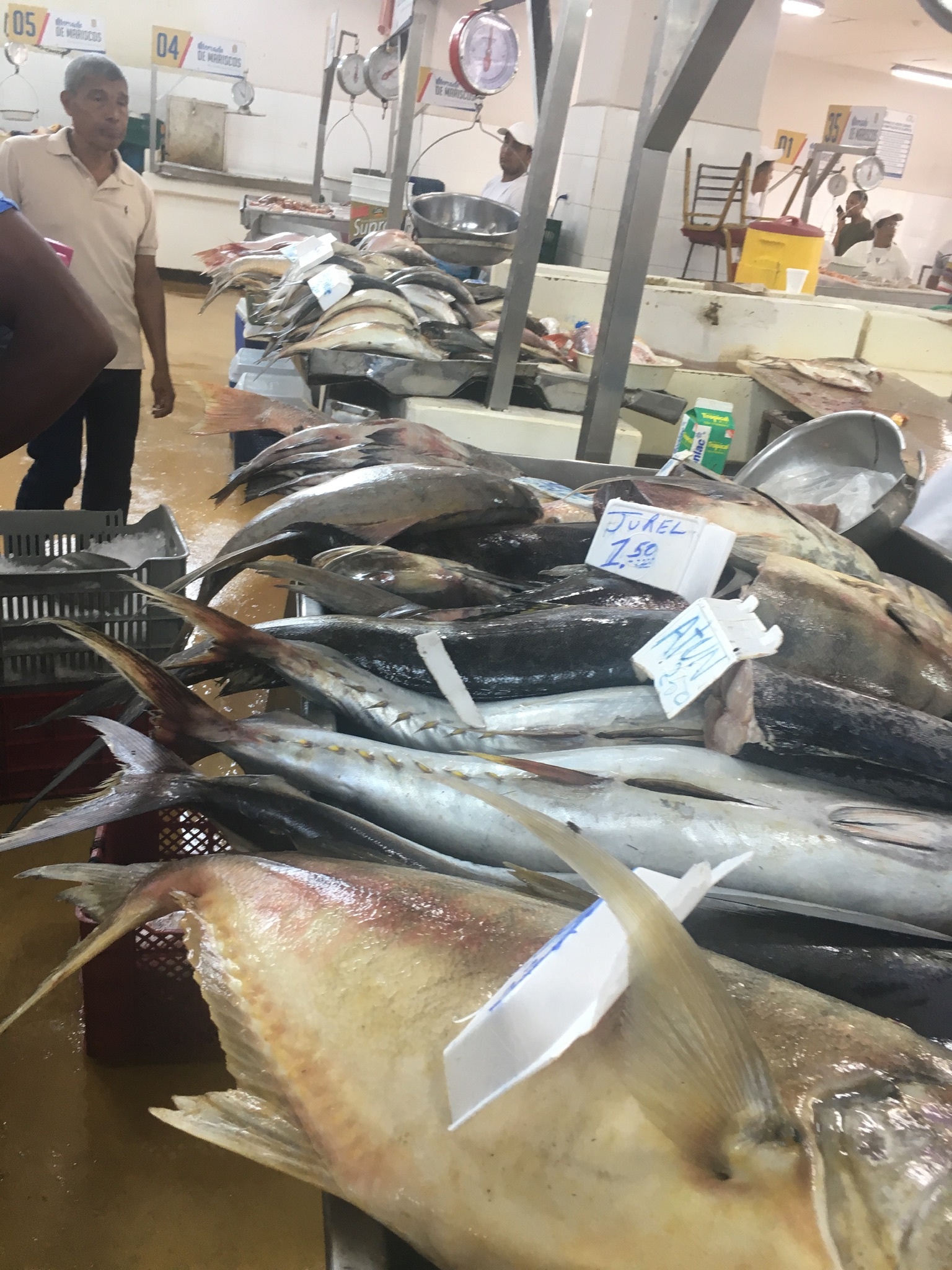
Panama City is worth visiting to learn its history and how it impacts the people living in Panama today. Even though Panama advanced economically with projects such as the Canal, many businesses continue to make only the bare minimum because they’re not the primary sellers. Being more aware of the restricted economic opportunities residents of Panama has made me think of the privileges and freedom we have to become whatever we want and to start a business of our choice.