
Harper College will be closed on Monday, September 7, in observance of Labor Day.

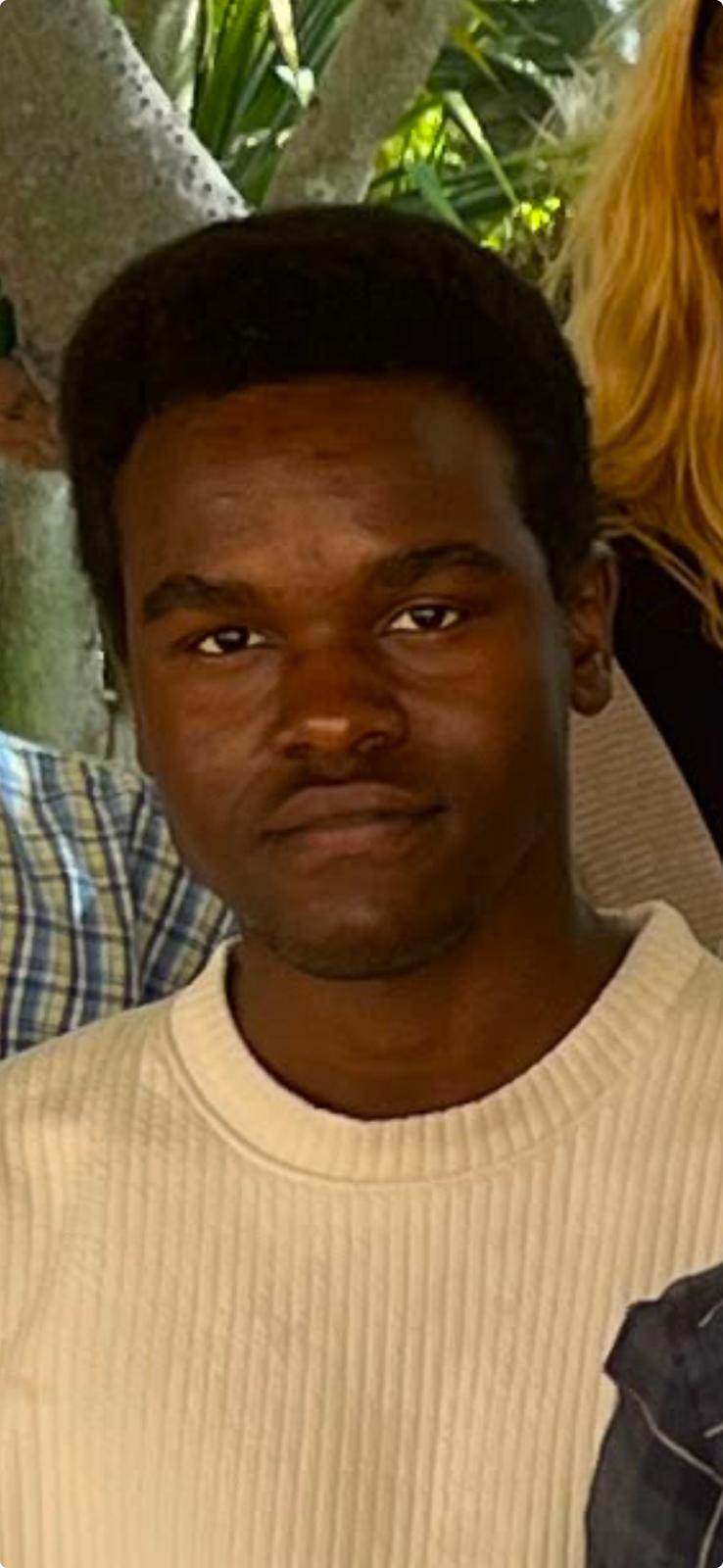
On a hot morning in mid-April 2024, Amir Ali woke earlier than usual, anxious about his treatment for a congenital heart condition. Once a month, the 15-year-old from El Fasher, Sudan made the 15-minute walk to the hospital for a painful and exhausting injection. Amir shared breakfast, the usual biscuits and tea with milk, with his mother and brothers. As he walked out of the house, his mother advised him, “Take care of yourself.”
There was a military presence in the streets to the hospital; armored vehicles and uniformed soldiers carrying machine guns guarded against the threat of an RSF attack. Sudan was caught, yet again, in a civil war, as it has been almost perpetually since gaining independence 1956.
Yet Amir’s walk to the hospital was calm and routine. He received the injection which required up to two hours of recovery before he could walk home. He lay down in a hospital bed, surrounded by the bustle of doctors, nurses, and patients, with a drawn curtain providing some privacy.
He lay there suffering the pain, trying to suppress it with daydreams of teaching himself English. A few minutes passed, and he was ripped away from his thoughts by an explosion in or near the hospital. He fell to floor. The RSF launched a 3-hour assault of constant gunfire, mortars, and artillery that exploded all over the city. Below the curtain Amir saw the faces of the others taking cover on the floor. Fear replaced the pain.
When the sounds of battle ended, he rushed home. Thinking only of his mother and brothers, he hardly noticed the fires, destroyed buildings, and artillery craters. He approached his house. Struck by an artillery round, it had completely collapsed. Dark smoke emanated from the rubble. He started to run in, but a neighbor grabbed his arm and said, “Here there are no survivors.” Any remaining strength left Amir’s body. His vision blurred, and his body collapsed alongside his home. He would never see it or his family again.
We met Amir, now 17, in Morocco at The Foundation Orient-Occident, an organization that supports migrants from Central African countries. He told us his story. A few weeks after the attack, he fled Sudan. Like many migrants, he calculated that it was more dangerous to stay than to leave. And having lost his family, there was little reason to stay. He likely calculated correctly. In October 2025, the RSF captured his hometown El Fasher and massacred an estimated 60,000 to 150,000 residents.
But the 8-month journey that ultimately led him to Morocco was also dangerous. He was held at gunpoint in South Sudan. In Algeria he lost consciousness while trying to evade the border police and awoke handcuffed in a hospital bed. These are just a few of the hardships he shared with us.
For now, Amir is safe in Morocco, but challenges remain. Since leaving Sudan his heart condition has worsened. The doctors say he requires heart surgery, but in Morocco there is no pathway for him to receive this level of care. Immigrating to Canada is his best hope. The United Nations High Commissioner for Refugees (UNHCR), which supports The Foundation, told Amir that after he turns 18 later this month, they will start the immigration process. Meanwhile, his heart condition prevents him from working, and it’s difficult to survive on the 500 Dirham monthly stipend he receives from The Foundation.
There are other difficulties. While many Moroccans are welcoming to immigrants and refugees, others are not. Nearly daily Amir is insulted with racial slurs. He is now an officially recognized refugee with his paperwork in order, but there are stories of the police deporting legal refugees. He hears how people talk about immigrants and refugees. They don’t socially adjust. They take jobs from Moroccan citizens. They won’t work and only want government handouts. They are criminals. Such anti-immigration tropes are echoed in other countries.
I am writing from Costa Rica, where nearly 300,000 Nicaraguans have arrived. While they boost the local economy in many ways (including performing the arduous and dangerous work of picking coffee beans), there are challenges, both real and perceived, and many Costa Ricans have an unfavorable view of these immigrants. It was a factor in the election of the populist president Rodrigo Chavez in 2022.
Yet a large sample of any grouping of people reveals a range of behaviors, including relatively rare ones, like crime. This explains the inherent contradiction in claiming that immigrants both steal jobs and are looking for a free ride. Applying broad generalizations from relatively few examples (the fallacy of the lonely fact) distorts reality by ignoring complexity. This kind of thinking allows the mind to overlook the stories of individuals, like Amir, and to disregard the suffering of our fellow human beings.
The human story is one of migration. We are all descendants of migrants. The oldest known fossil of our species, Homo sapiens, was discovered in the Jebel Irhoud site in Morocco and is dated to 315,000 years ago. Our subsequent global expansion was driven by changing climates, the pursuit of food, our predilection for exploration, and, like Amir in 2024, to avoid human conflict.
There are forces that push people from their homes and pull them to new places. These forces brought Amir to Morocco, which is not his new home, but a staging area for the next leg of the journey. His future is uncertain. For now, he spends his days studying English, reading, drawing, and writing his story. Some of his drawings are below. Thank you, Amir, for sharing it with us.
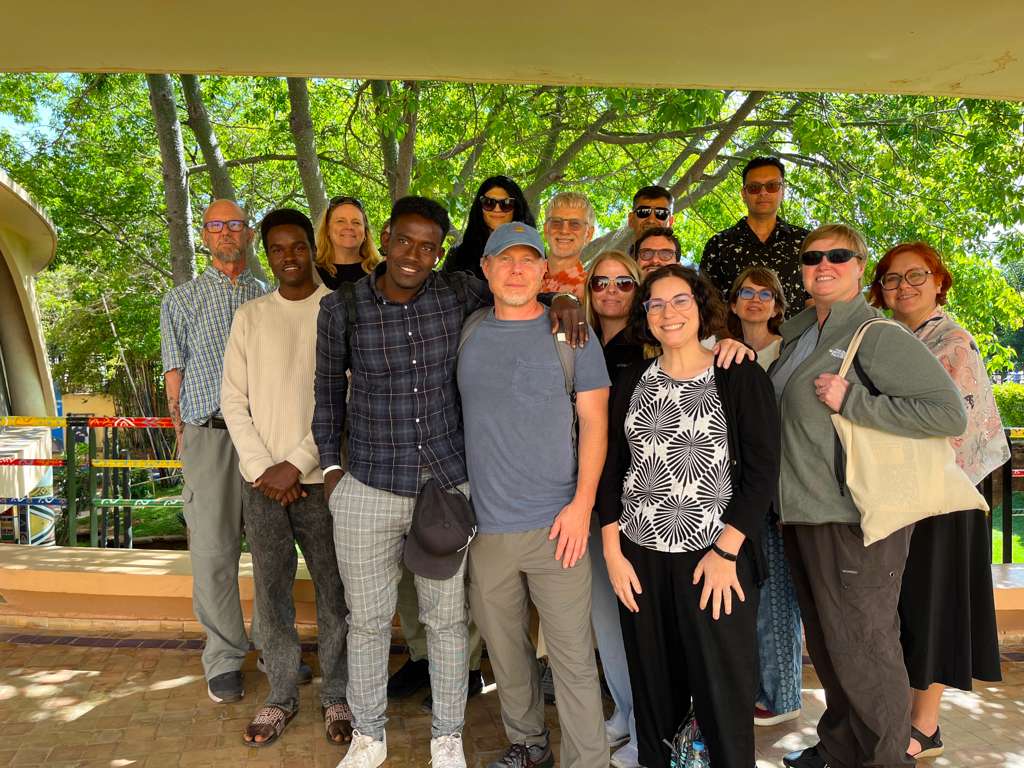
A drawing done by Amir Field Seminar Cohort with Amir, second from the left in a white sweater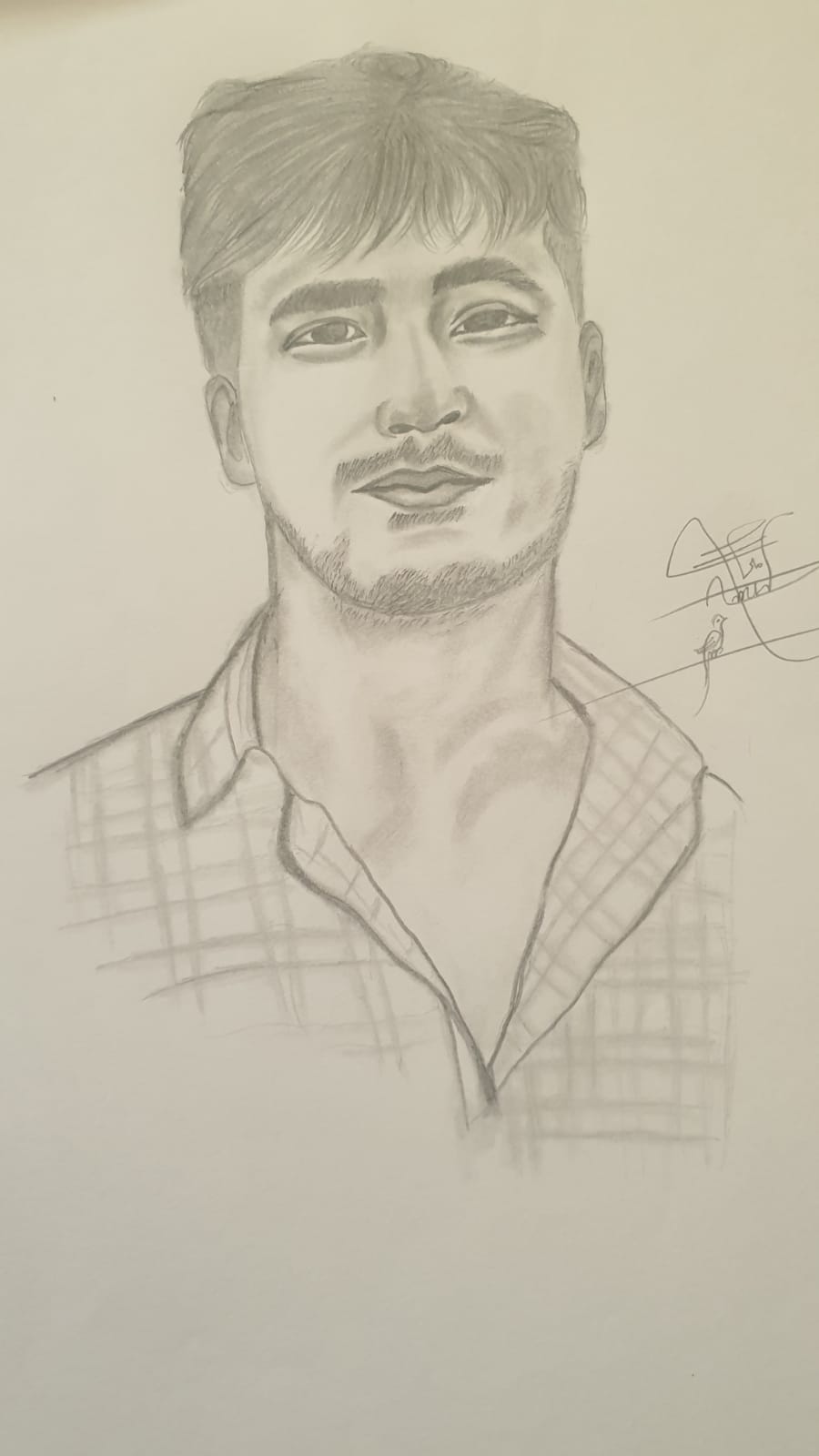
You can help refugees globally by donating to the UNHCR. To donate directly to The Foundation Occident-Orient or to learn more about Amir and migration in North Africa or Central America, contact me at aj12739@harpercollege.edu.
For further reading I highly recommend Everyone Who Is Here Is Gone: The United States, Central America, and the Making of a Crisis by Jonathan Blitzer.
For a detailed description of Amir's perilous jounrey to Morocco, read the following blog post "Forced From Home" by Bhaskar Moorthy