Harper College will be closed on Monday, September 7, in observance of Labor Day.

The faculty field seminar provided ample opportunities for Harper faculty to experience the art historical past, living craft traditions, and contemporary art scene of the Maghreb.
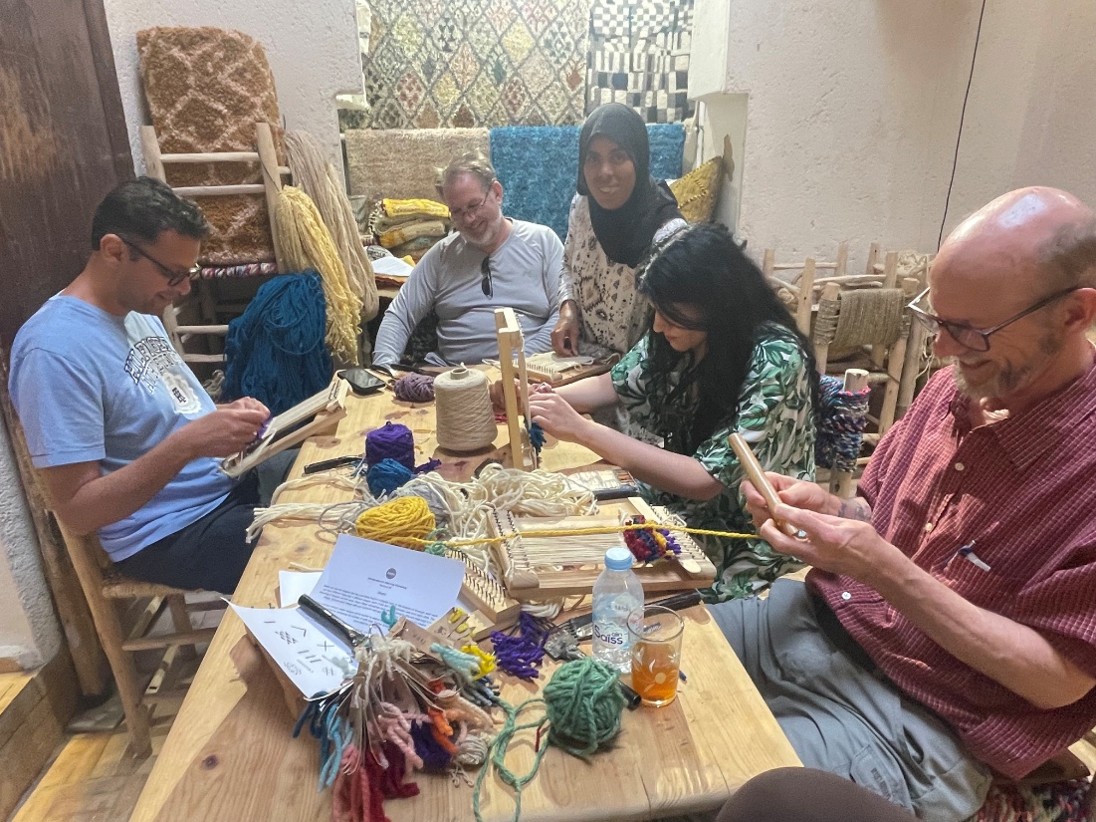
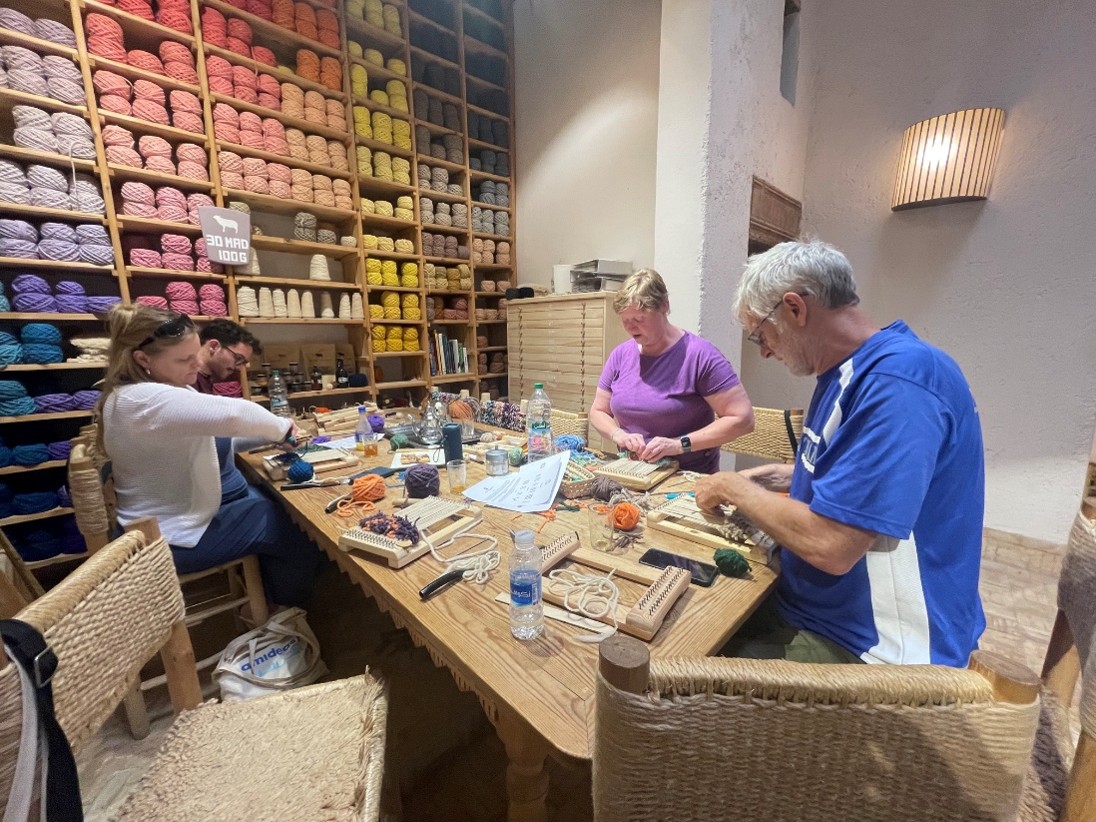
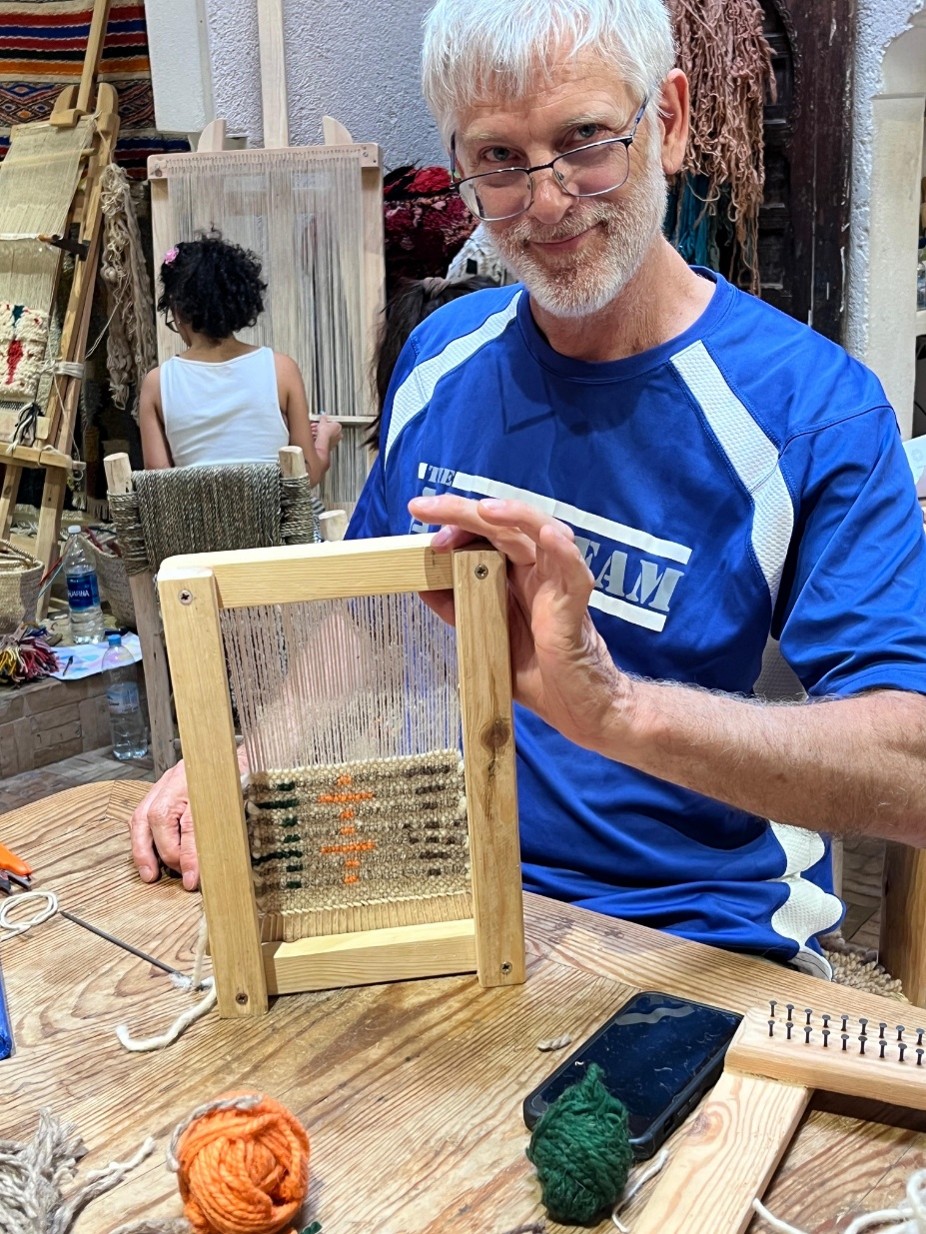
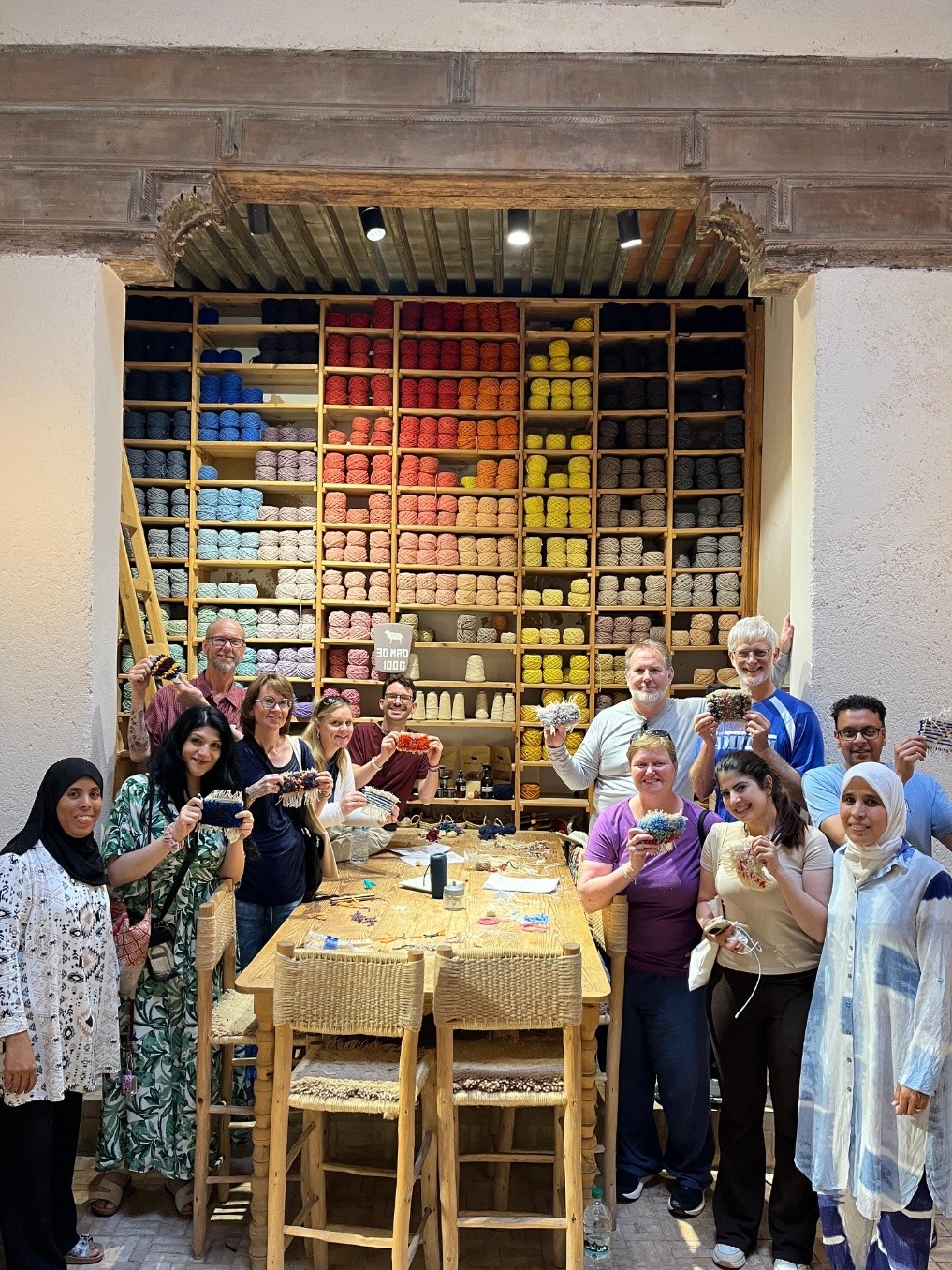
On Friday, May 22, 2026, Harper faculty participated in a half-day pile weaving workshop at the Anou Cooperative in Fez, Morocco. Owned and operated by an artisan community of weavers, the Anou coop organizes workshops and sells their work at fair trade prices, allowing them to support themselves and their community while maintaining and passing on ancient Amazigh craft traditions. (The Amazigh, sometimes referred to as the “Berbers,” are the indigenous, pre-Arab people of the Maghreb.) Harper faculty were provided simple, hand-made mini looms that held taut the vertical warp threads (in this case, string), under and over which we interweaved the horizontal weft yarns that had been previously hand-dyed on the building’s roof using non-toxic methods. We were then instructed how to hand-tie symmetrical knots under and around the weft threads to create the pile (or plush) surface of the “carpet.” We could choose to copy simple Amazigh motifs or—for the adventurous—invent our own composition. The process was absorbing and contemplative, time consuming, and for some, fraught with frustration and aching shoulders. Yet we gained an appreciation for slowing down time, being in the present moment with a community of like-minded craft workers engaged in a shared activity, and creating an object using ancient methods passed down locally for thousands of years. At the end of our workshop, most of us had produced a miniature woven “rug,” and, in the process, developed a tangible understanding of the time, effort, patience, and skill needed to produce a large-scale carpet.
The mini loom with warp strings visible. Harper faculty hard at work at their pile weaving projects, complete with Moroccan
mint tea. (No one spilled). 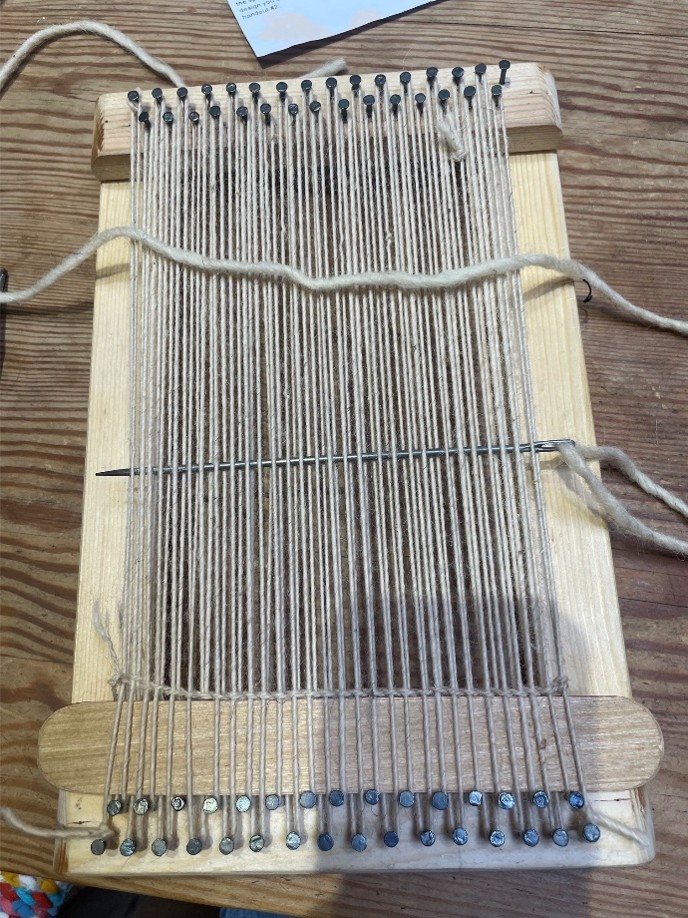
David Antonides shows off his exceptional weaving skills with a solid mini-“rug”.
Our craft-making education continued on Friday, May 22, 2026, when Harper faculty participated in a factory tour of Fes Mosaic and Pottery in Fez, Morocco, a local coop of pottery and mosaic artisans. Our tour allowed us to view all aspects of the creative process for both artforms, starting with ancient pottery traditions. Here, we were able to observe traditional methods of shaping a clay vessel by hand while using a foot-powered potters’ wheel. Nearby, painters created intricate, traditional designs on already-formed vessels. In another area of the “factory,” artisans worked on various stages of zellige mosaic production. Zellige describes a type of mosaic-work produced in North Africa and Al-Andalus beginning in the 10th or 11th Century. Today, Morocco is the only place in the world that continues to practice the traditional craft of zellige. Zellige mosaics are formed of thick ceramic tiles glazed in bright colors, whose shapes have been hand-cut using an adze-like hammer into small, pre-determined geometric pieces. These pieces are then laid upside down and fitted together, rather like a puzzle, and coated with plaster to bond the pieces together. The results are a myriad of complexly beautiful geometric patterns for which Islamic art is known.
Operating the foot-powered potter’s wheel. 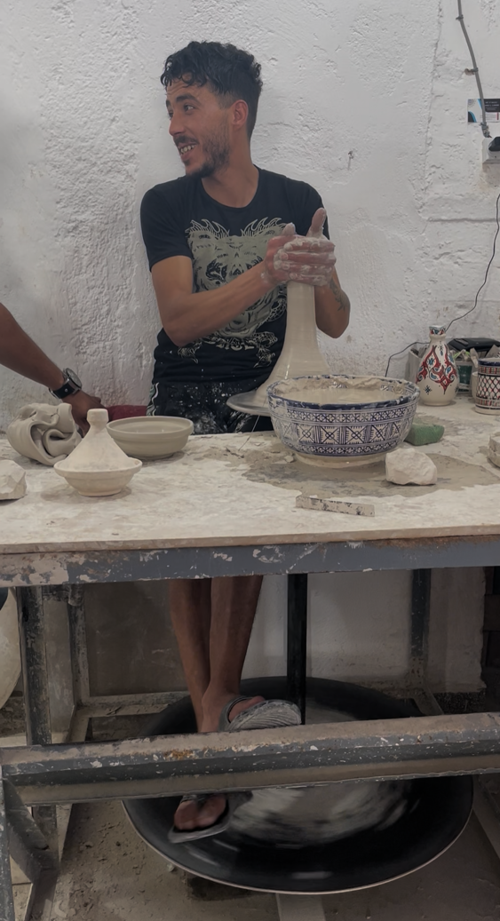
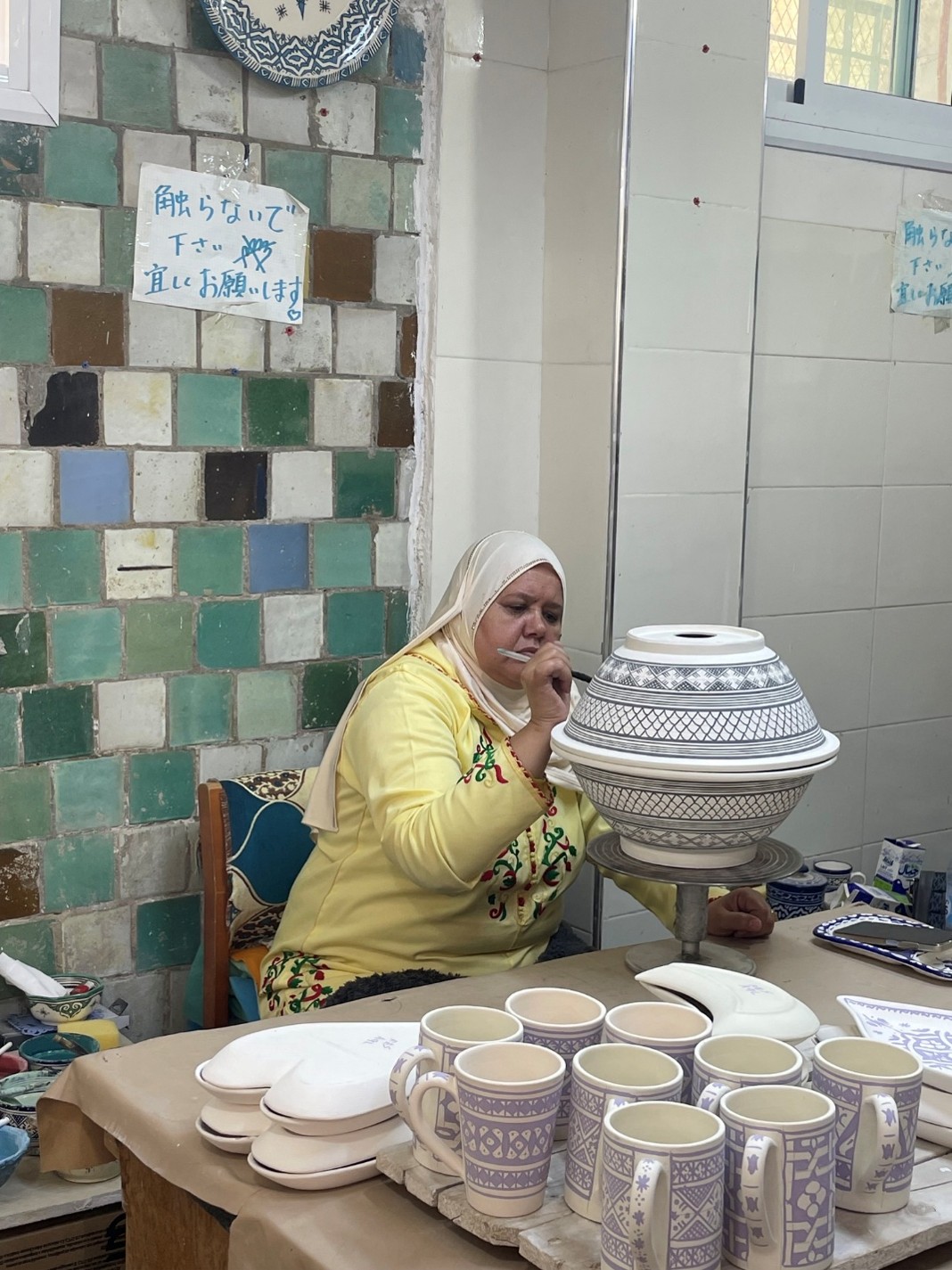
Artisans cut ceramic tiles into zellige shapes. 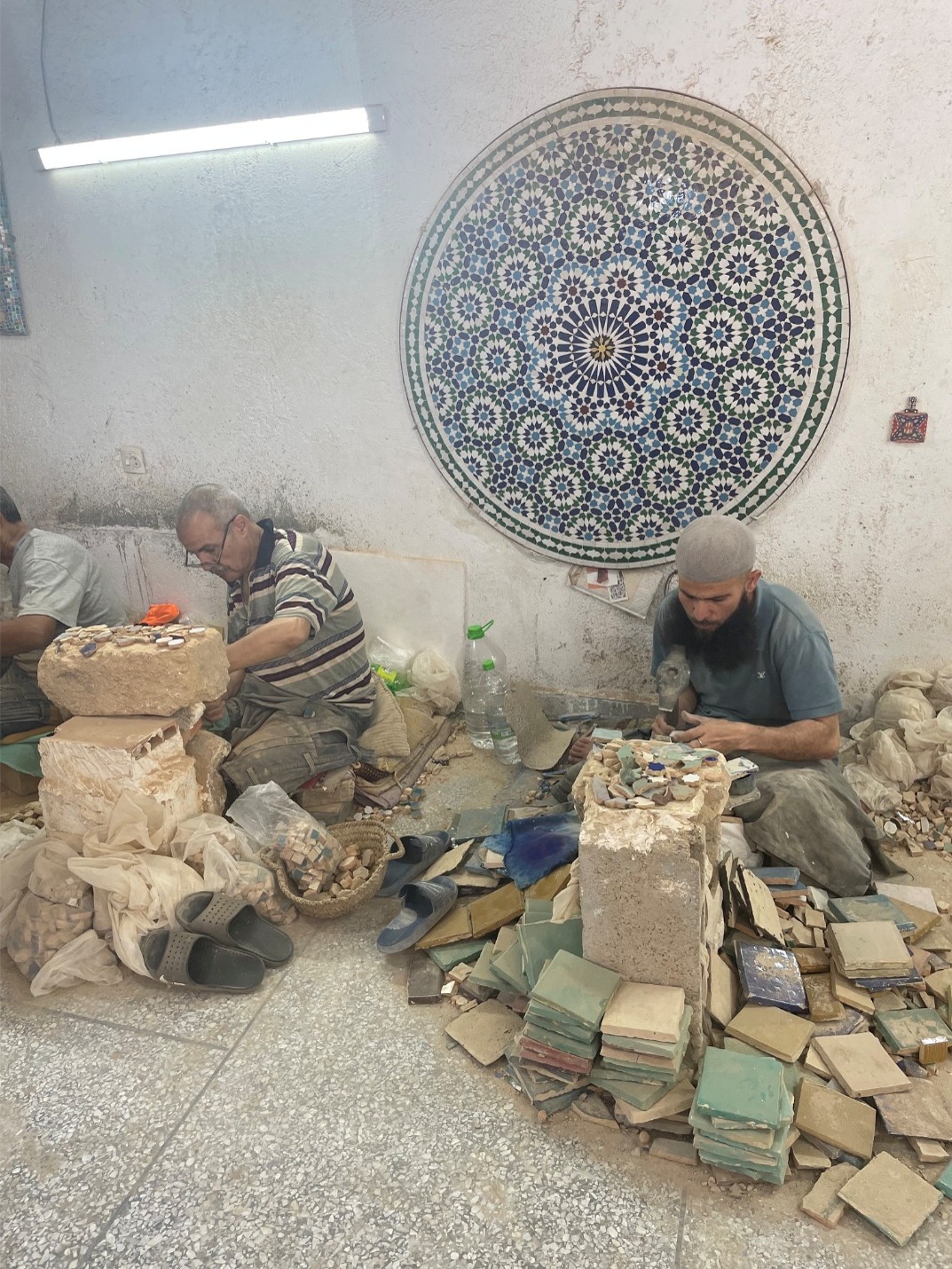
Our lesson in zellige tilework laid the perfect groundwork for our visit to the Bardo Museum in Tunis, Tunisa, a couple of days later on Sunday, May 24, 2026. Originally a 19th Century Beylical palace, the building was later renovated and expanded to become a national museum dedicated to the art and cultural heritage of Tunisia. Comprehensive in scope, the Bardo Museum’s collections include Punic, Numidian, and Islamic art, but it is best known for having one of the largest collections of ancient Roman mosaics in the world, with well-preserved examples excavated from ancient Roman archeological sites such as Carthage and Dougga. The Roman mosaics, with their naturally-colored, roughly-square shaped stone tesserae, mythological and Christian subjects, and focus on the (often nude) human and animal, served as a natural foil for the geometric tiles and non-representational patterns of the ceramic zellige tilework. Other galleries and courtyards showcased Islamic architectural mosaics and finely carved stucco featuring calligraphic inscriptions and geometric patterns. Some rooms allowed visitors a glimpse of the Beylical family’s original royal apartments and furnishings.
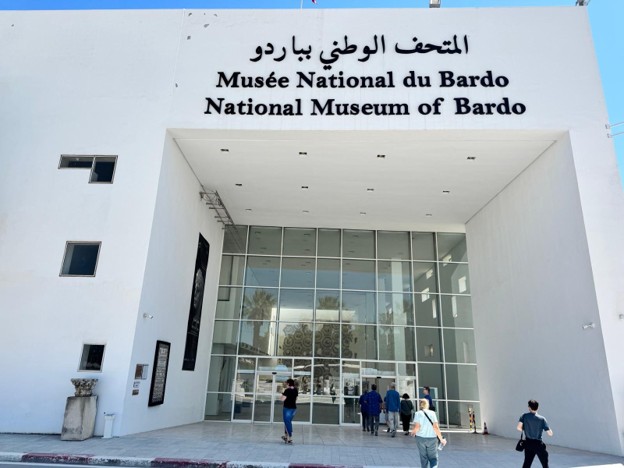
One of the Roman museum’s icons, The Triumph of Neptune, is prominently displayed
in the museum’s atrium. 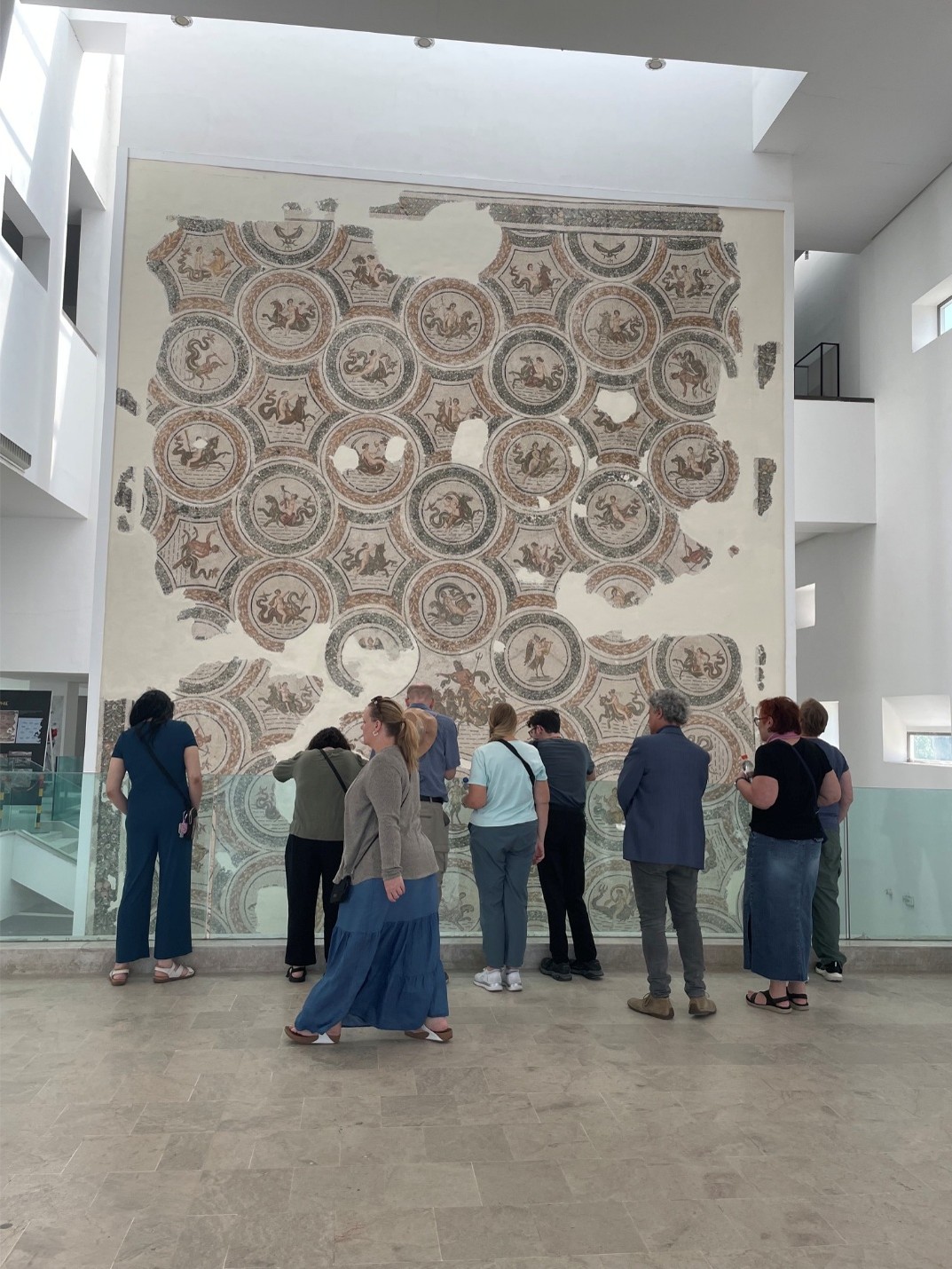
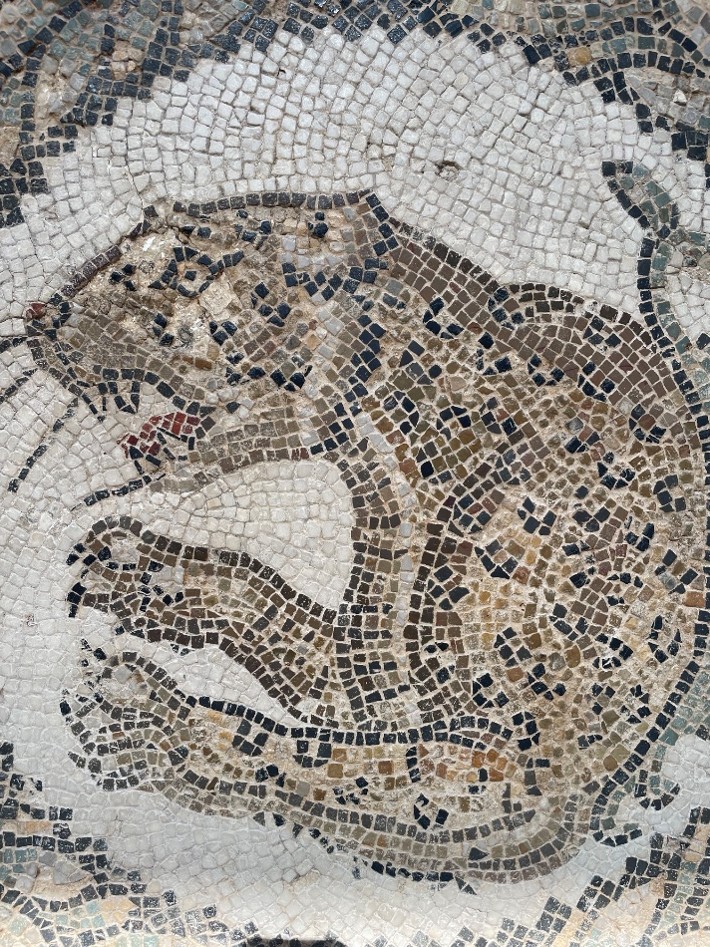
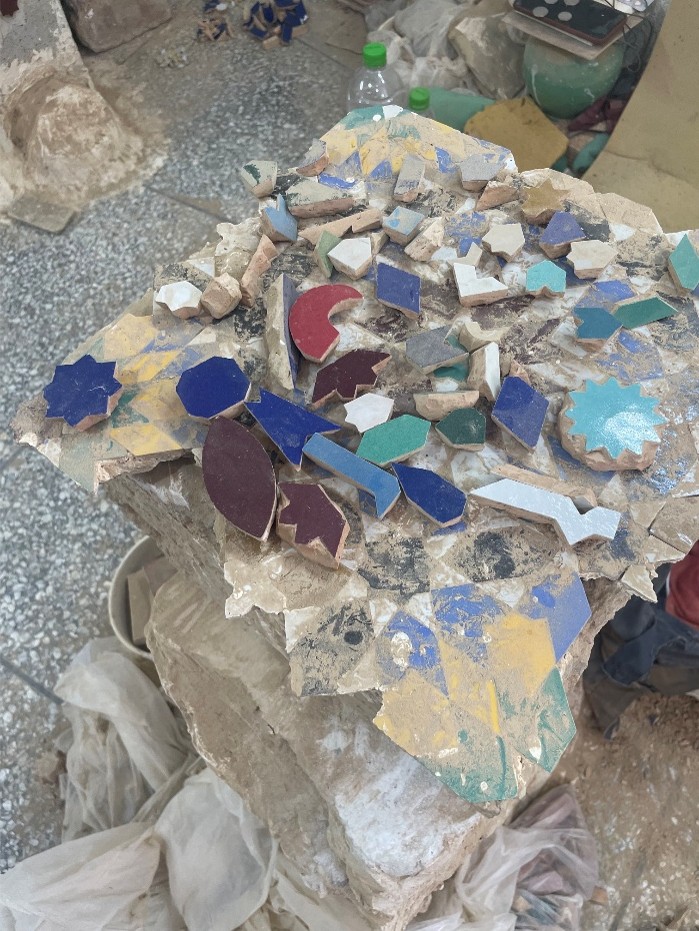
(Above: Contrasting mosaic techniques - Roman stone tesserae versus zellige ceramic tiles cut into geometric shapes.)
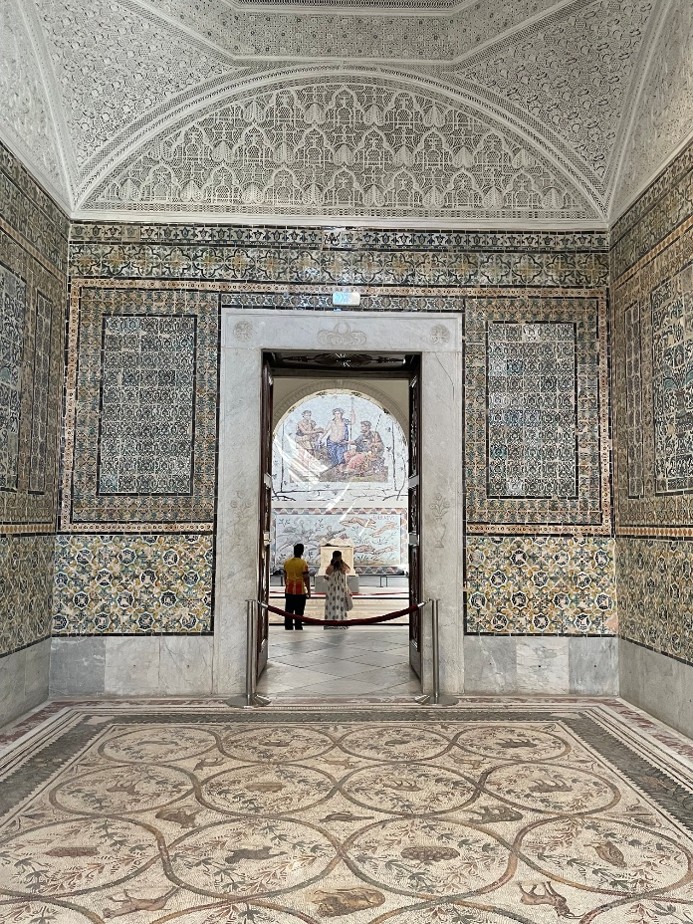
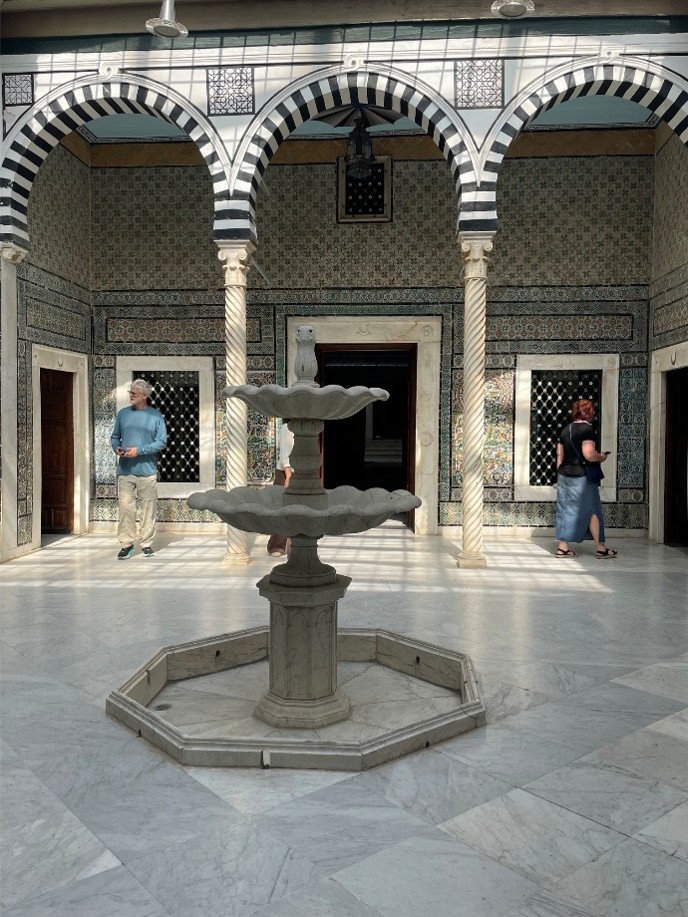
(Above: A diversity of cultural artistic traditions juxtaposed at the Bardo Museum.)
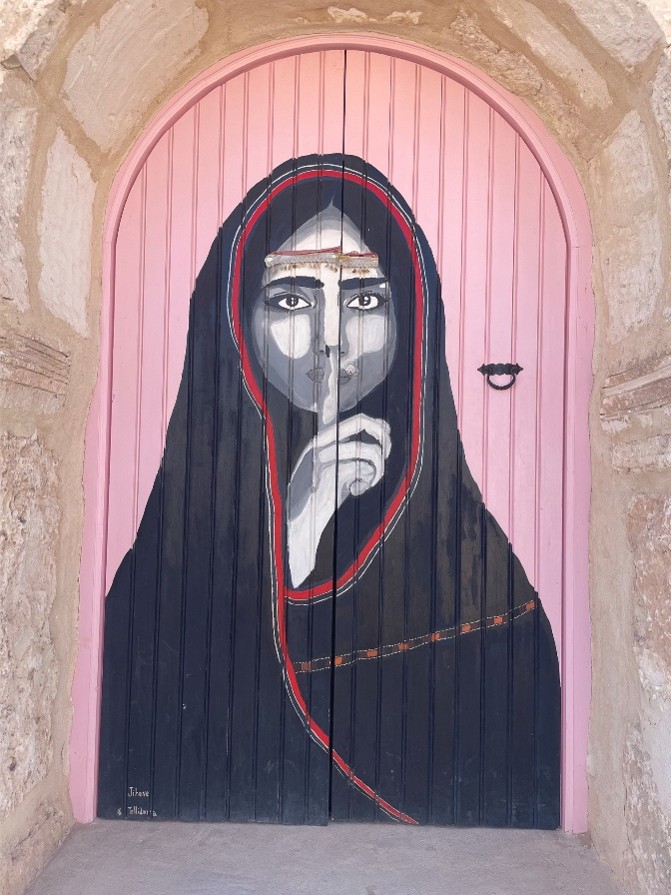
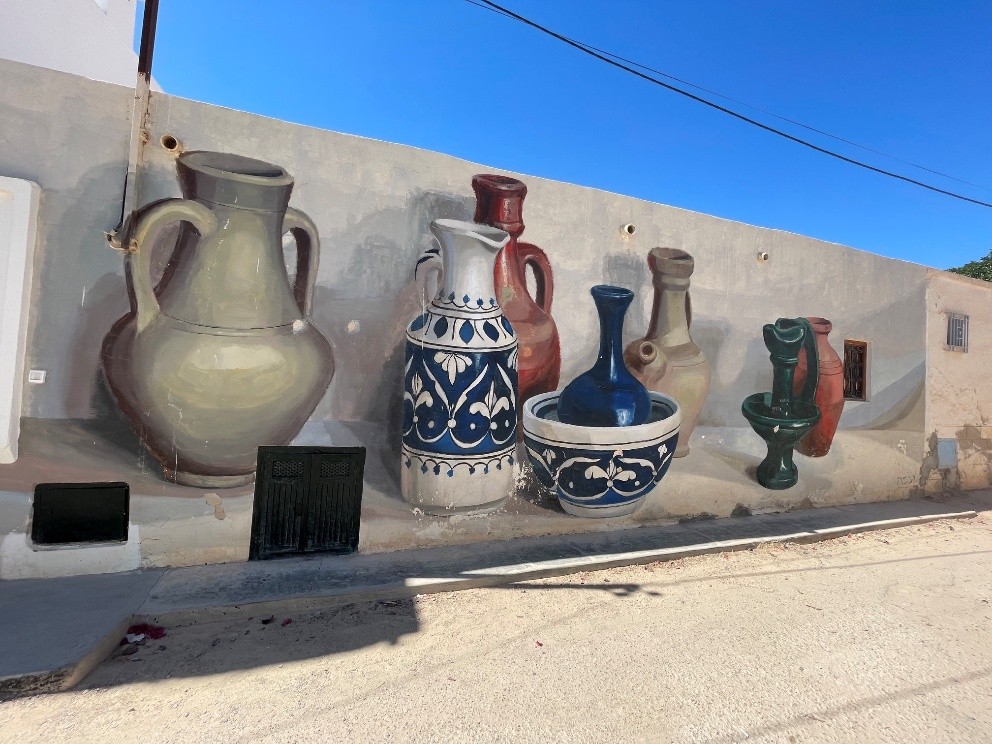
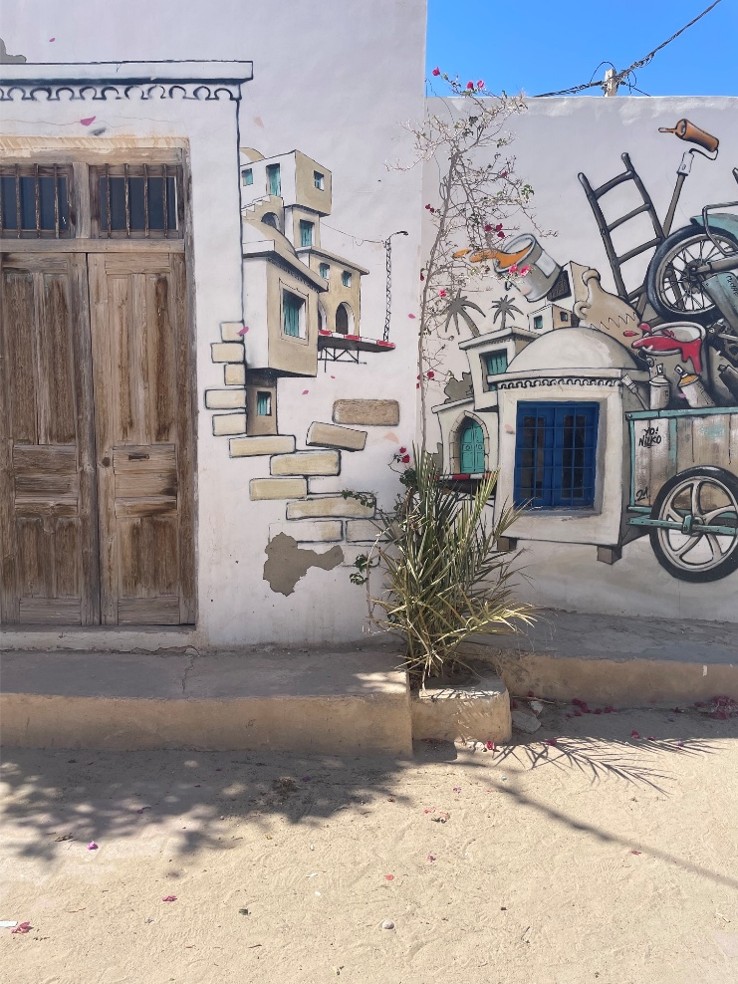
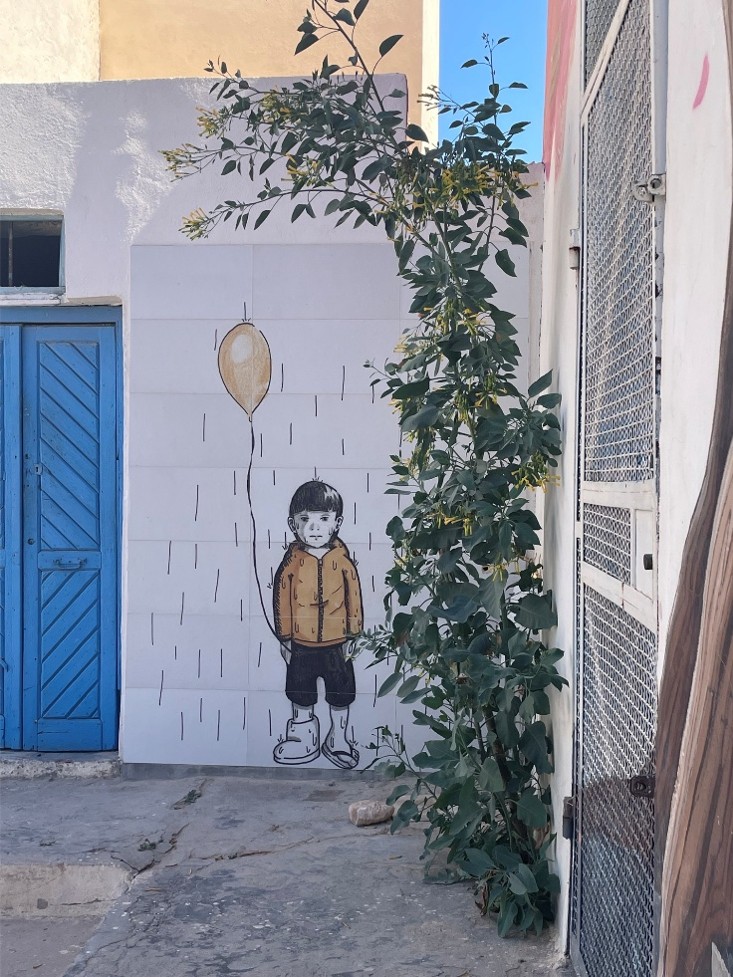
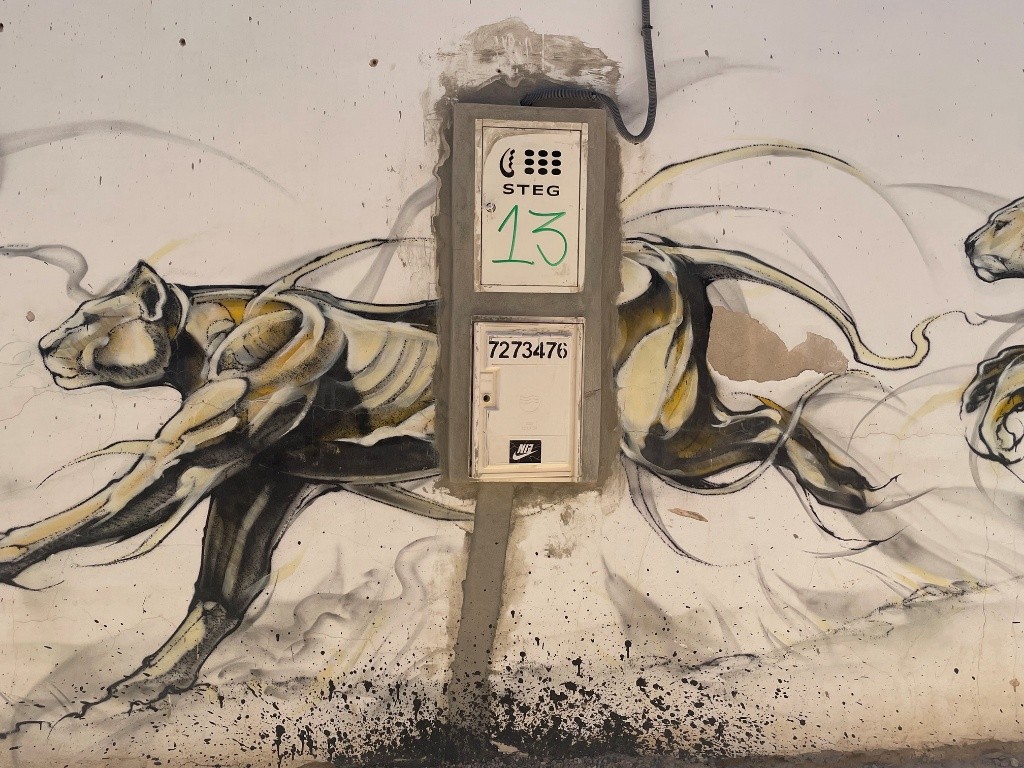
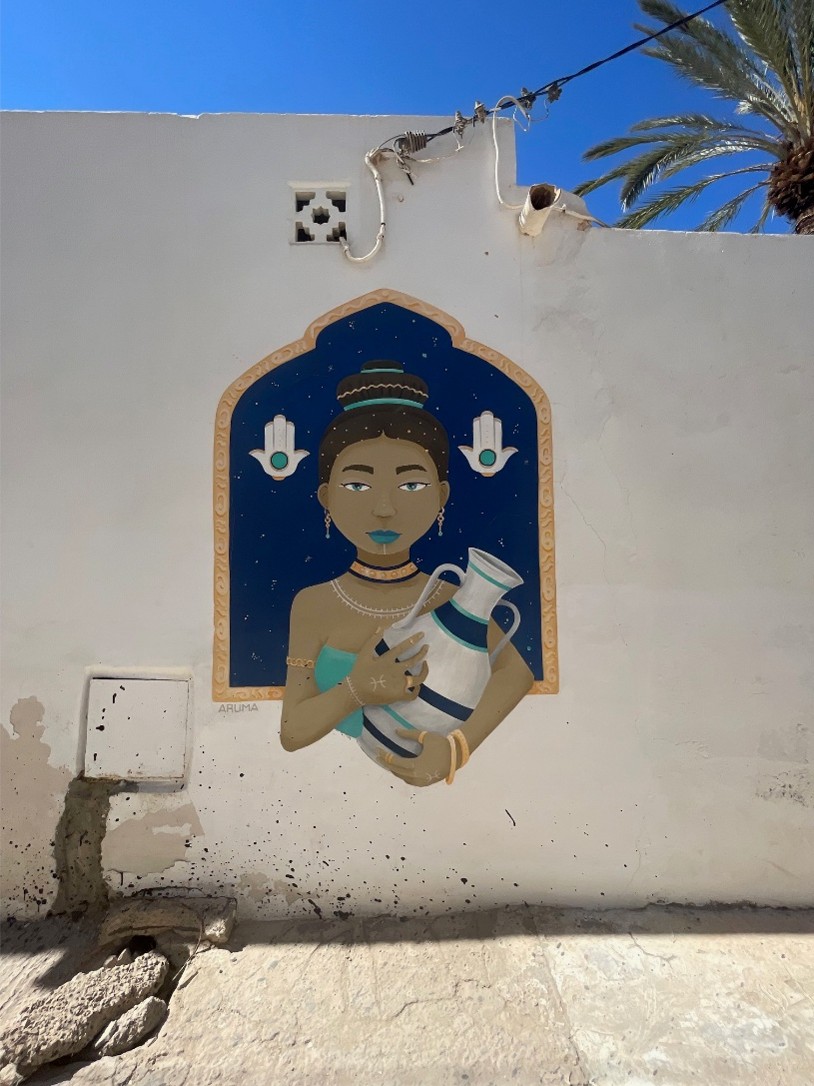
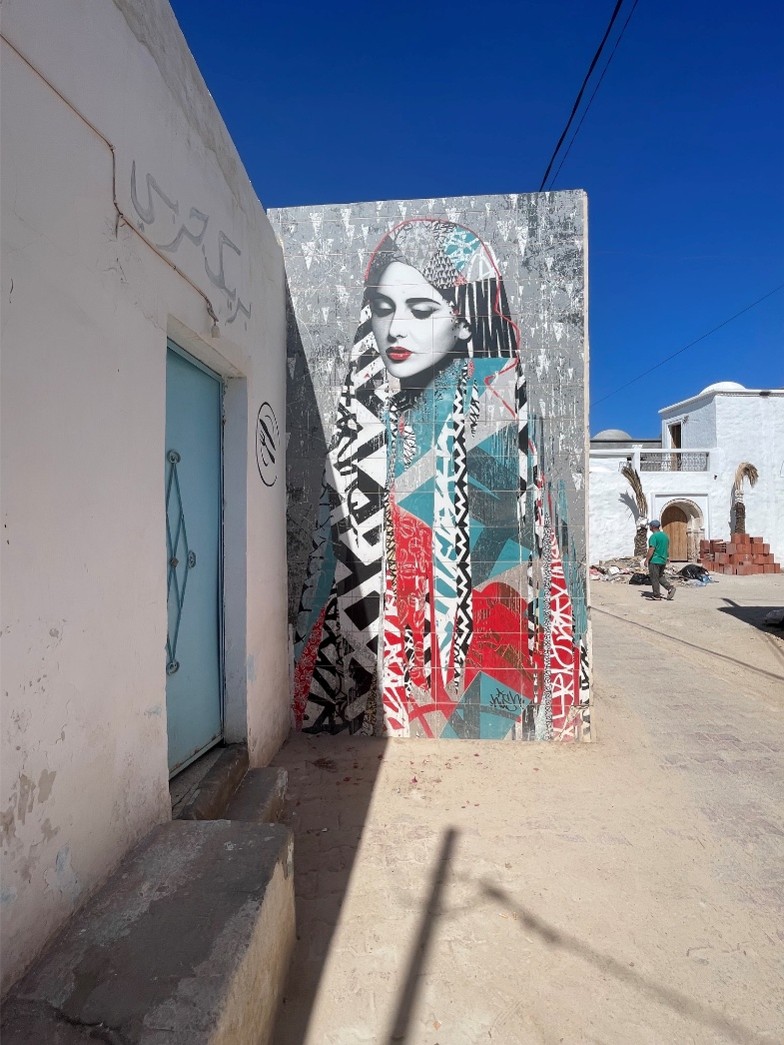
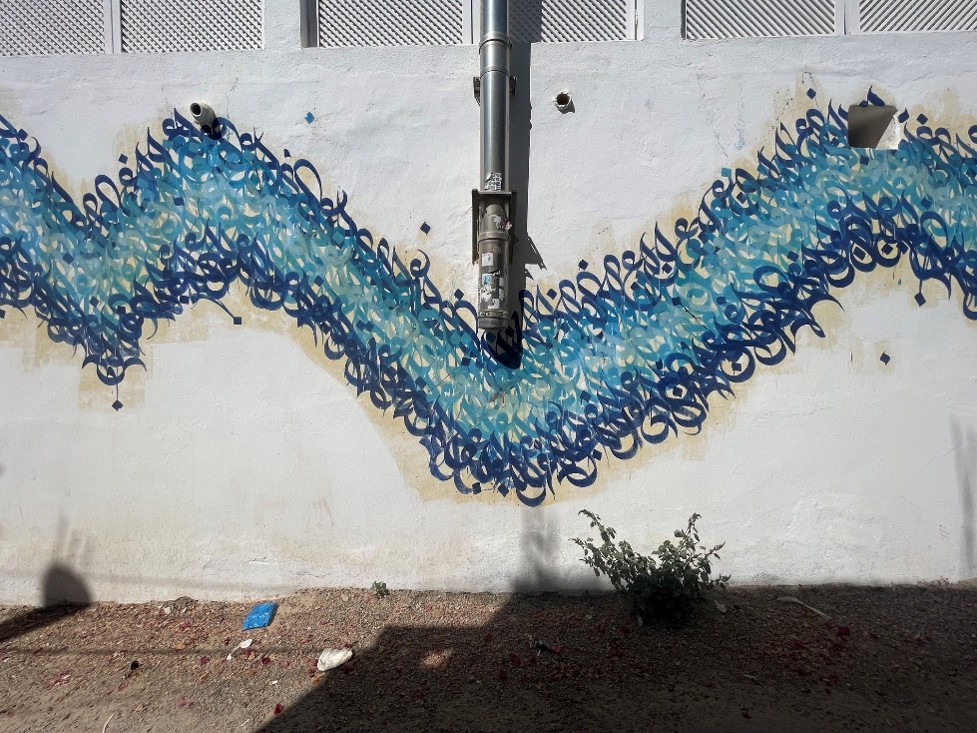
The faculty field seminar’s artistic survey would not have been complete without a visit to Djerbahood in the village of Erriadh on the Tunisian island of Djerba on Wednesday, May 27, 2026. Sometimes described as free, public-access open air museum or a “street art village,” Djerbahood is the brainchild of Tunisian-born French artist Mehdi Ben Cheikh. Conceived in 2014 as a revitalization project and collaboration between local residents and global contemporary artists, many of whom are well-known, the project originally involved the creation of over 200 site-specific murals painted on the exterior surfaces of the village’s buildings. (As murals left exposed to the elements are prone to deteriorate over time, 2022 saw the restoration of some of the older murals and the replacement of others, in addition to the creation of new murals). Each mural incorporates or otherwise responds to pre-existing architectural elements such as doors, walls, windows and corners, as if in conversation with the pre-existing features of the site. Whitewashed walls, bright blue doors, narrow streets and maze-like alleys give way to open courtyards, becoming the backdrop for a delightful scavenger hunt that rewards the visitor each time with a new, unexpected artistic discovery. If one cannot visit in person, the only way to do justice to Djerbahood is through photographs of its stunning artworks.