
Harper College will be closed on Monday, September 7, in observance of Labor Day.

Waking up on our first full day in Morocco was easier than expected. Colleen, the
on-the-ground representative of our host organization Amideast, had purposely kept
us awake the night before to make sure the jet lag didn’t take us too early. That
had meant a large, family style meal with dancing, music, and what seemed to be gallons
of sweet mint tea (which we would enjoy after every meal during our week in Morocco). 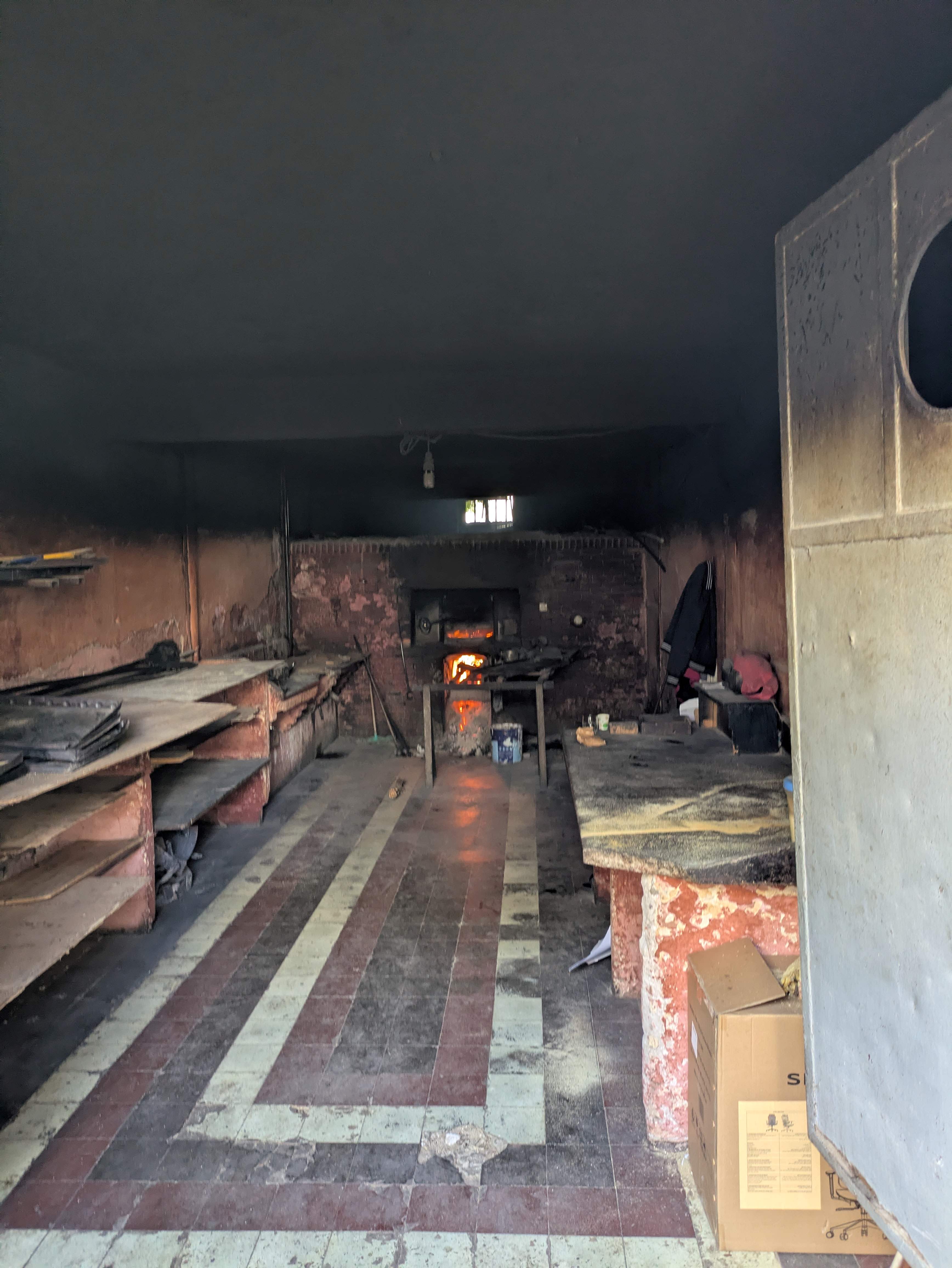
At 9:45am we left Le M Hotel for the short walk to the Amideast office. Our first taste of Morocco’s mixture of old and new was right next door. A small, squat smoke-smelling building sat behind a wooden gate. Colleen explained it was a remanent of a time when few people had in-house ovens. To enjoy fresh bread in the morning, residents would prepare the dough at home and bring it to this communal oven to be baked for a small fee. The practice is rare in today’s Morocco, especially where we stood in the cosmopolitan neighborhood of Agdal, but it persists in this small, smoke-suffused space.
Outside Amideast headquarters we met Rachid Touhtouh, the well-regarded professor who was to be our guide that afternoon. Up the stairs in a private conference room, we were briefed by Colleen on all things Morocco. Colleen has lived in Morocco over 15 years, first as a Peace Corps volunteer (much to the joy of the two Peace Corps alum in the Field Seminar Cohort), and now as an in-country Program Manager for Amideast. She answered the group’s initial questions and gave us political and historical context. Among the fun facts she gave us were:
We were also given old mobile analog phones, a blast from the past for everyone! Colleen explained this was a method of contact wherein Amideast could call us from anywhere in the country in case of emergency, without needing Wi-Fi or traditional service. After the 2023 earthquake, for instance, Amideast used these phones to account for every student in the country in less than 20 minutes.
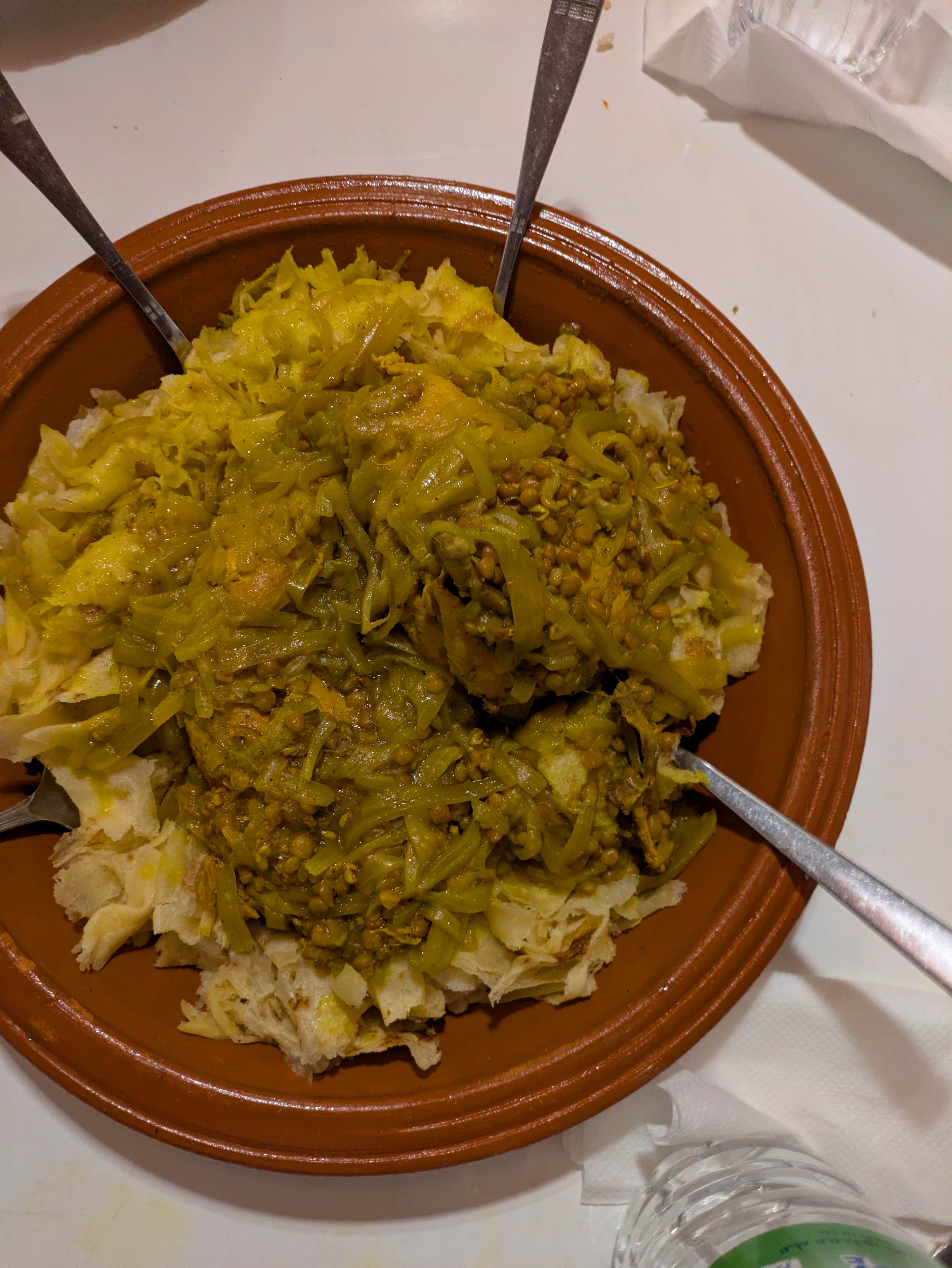
After the history lesson, the group enjoyed a long lunch at Dar Naji Agdal. Though most were still full from the welcome dinner, we feasted all the same. Various salads and dips to start, followed by bastilla, a savory-sweet pie made with phyllo dough, stuffed with chicken and topped with cinnamon. Next came rfissa, slow-cooked stewed chicken, lentils, and onion served over shredded bread and topped with a seasoned broth. Through it all were baskets of bread and we finished, of course, with mint tea.
Bastillia Rfissa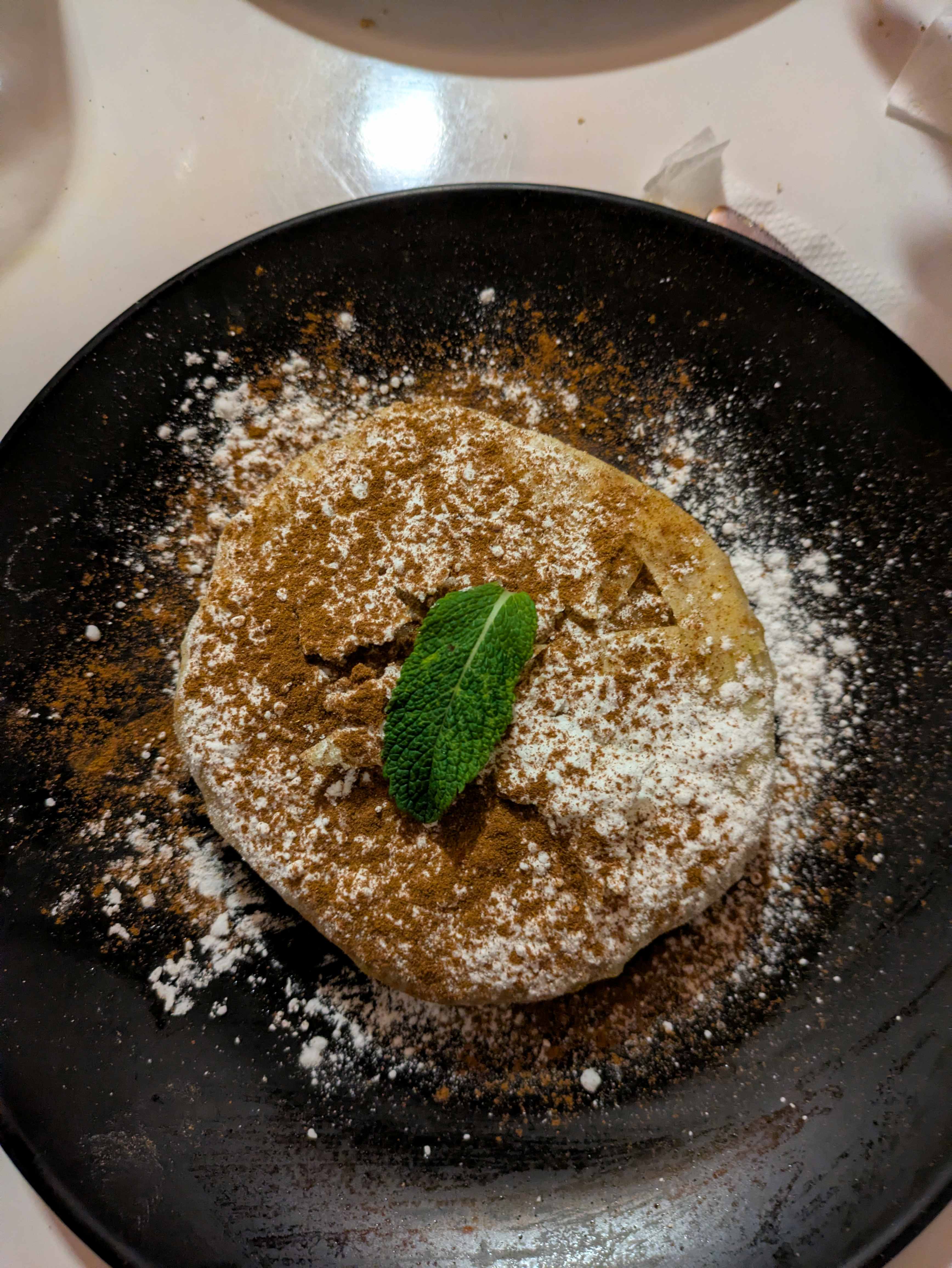
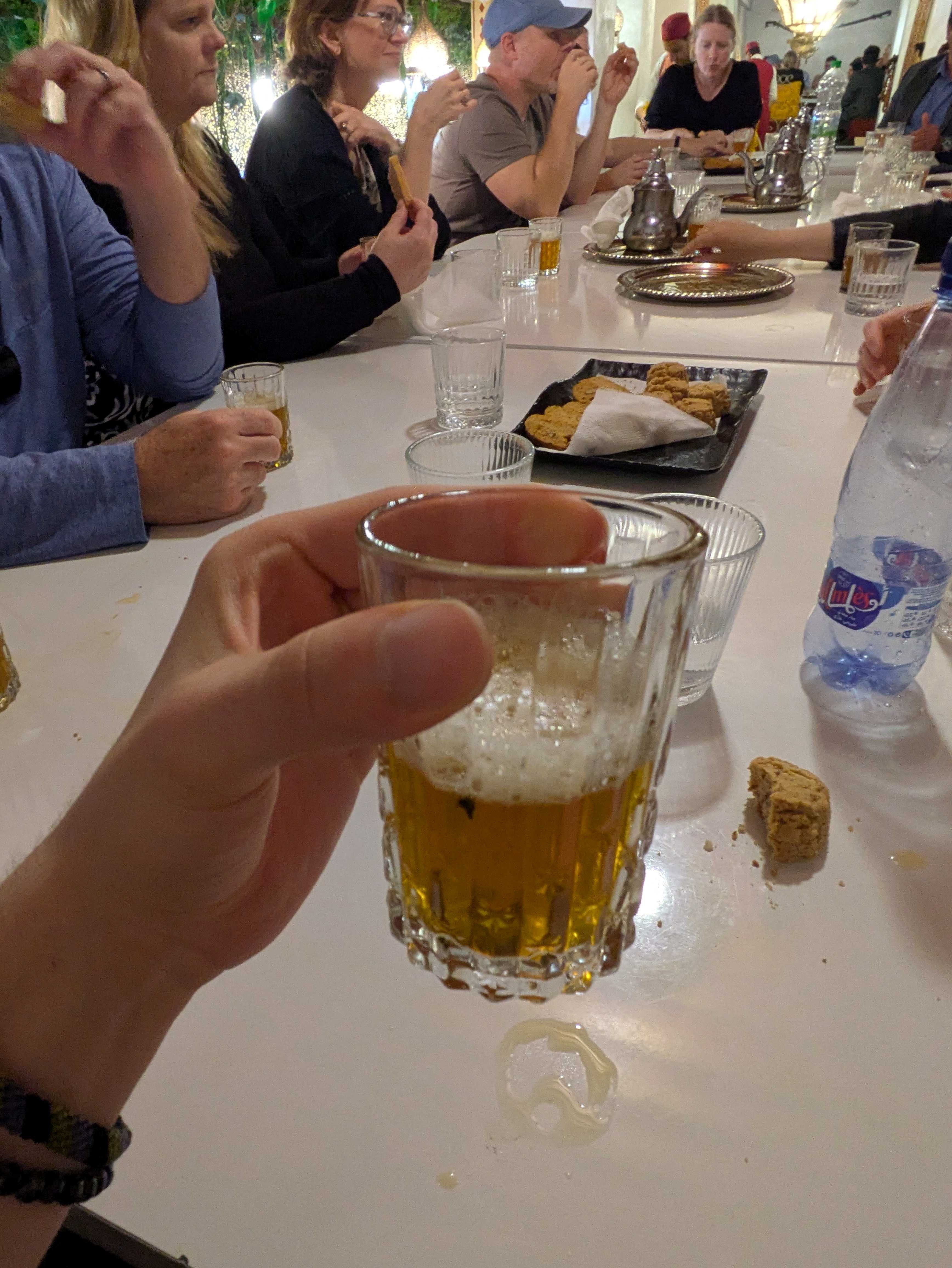
Despite it being the national drink, Morocco does not cultivate mint tea. Morocco is instead the world’s largest tea importer. The base tea is Gunpowder Green Tea (often from China) and the final product is only served after a multi-step preparation process involving fresh mint and a LOT of sugar.
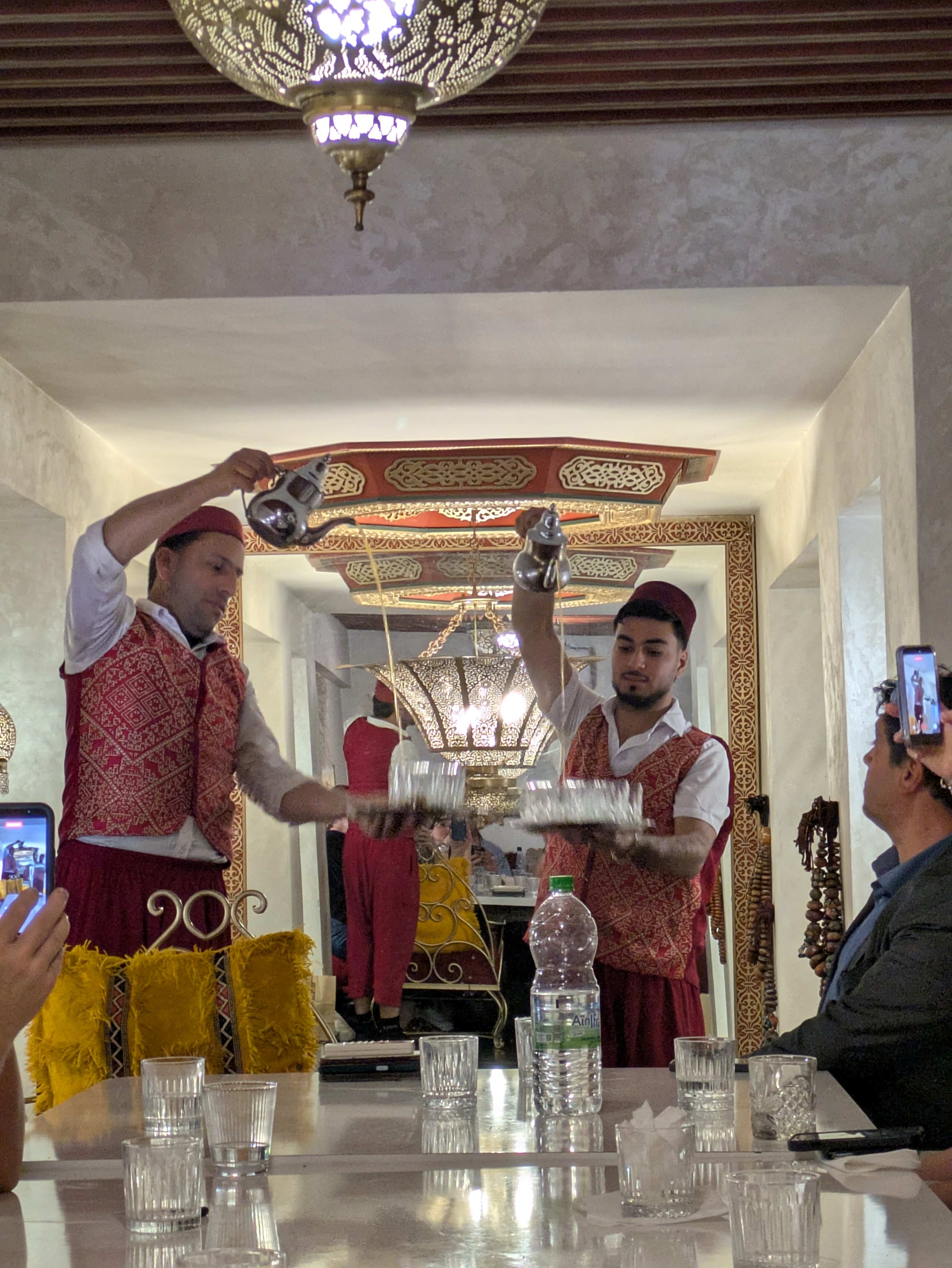
The tea is then poured from a height into small glasses, frothing notably as it goes. The Moroccans have a saying surrounding this tea and froth: “Good tea has a turban.”
At 4:30pm (yes, lunch takes that long in Morocco!) we arrived at Chellah, an ancient site emblematic of Rabat’s status as a UNESCO world heritage site. Professor Rashid guided us through the thousands of years of history. In the 7th century BC, the Phoenicians chose the site for its advantageous location on the Atlantic Ocean and the Bou Regreg River. The city grew under the Kingdom of Mauretania until the Romans annexed the region in the 3rd century BC. Now named Sala Colonia, classic Roman structures like baths, temples, and a Forum mixed in with the existing Mauritanian buildings. The Romans stayed until the fall of the Western Roman Empire in the late 5th century. It wasn’t until near the end of the Marinid dynasty eight hundred years later that the site transformed into a necropolis and garden. Tombs for the elite (including the leader of said dying dynasty) and pious were built. Islamic structures like mosques and a madrasa, an Islamic school with on-site student lodging, were also added. Lush, green Andalusian gardens were planted which still flourish today. Throughout the site large storks nest atop ancient towers and walls. Considered holy in Islam, the storks represent Chellah as much as its ancient rulers.
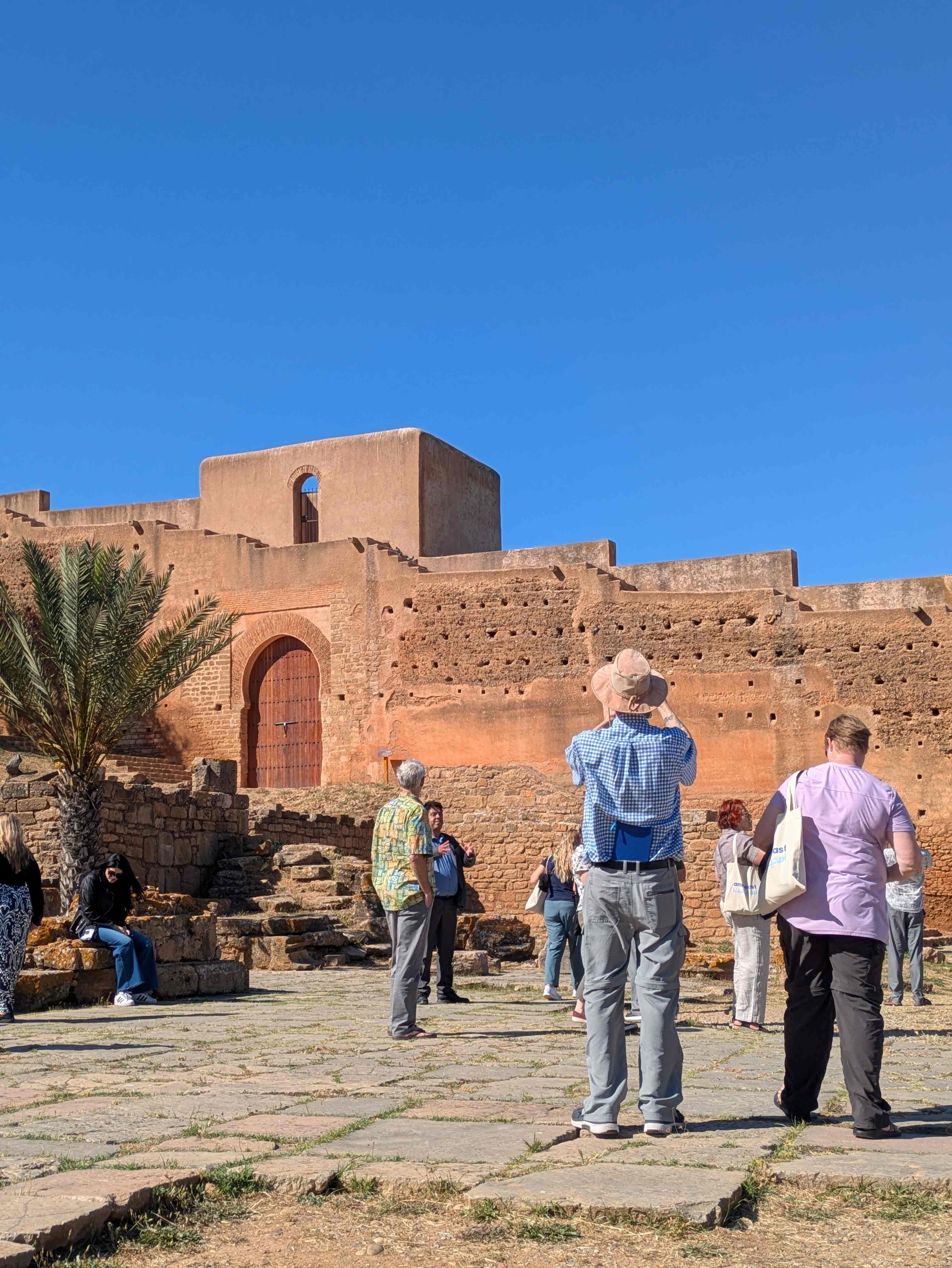
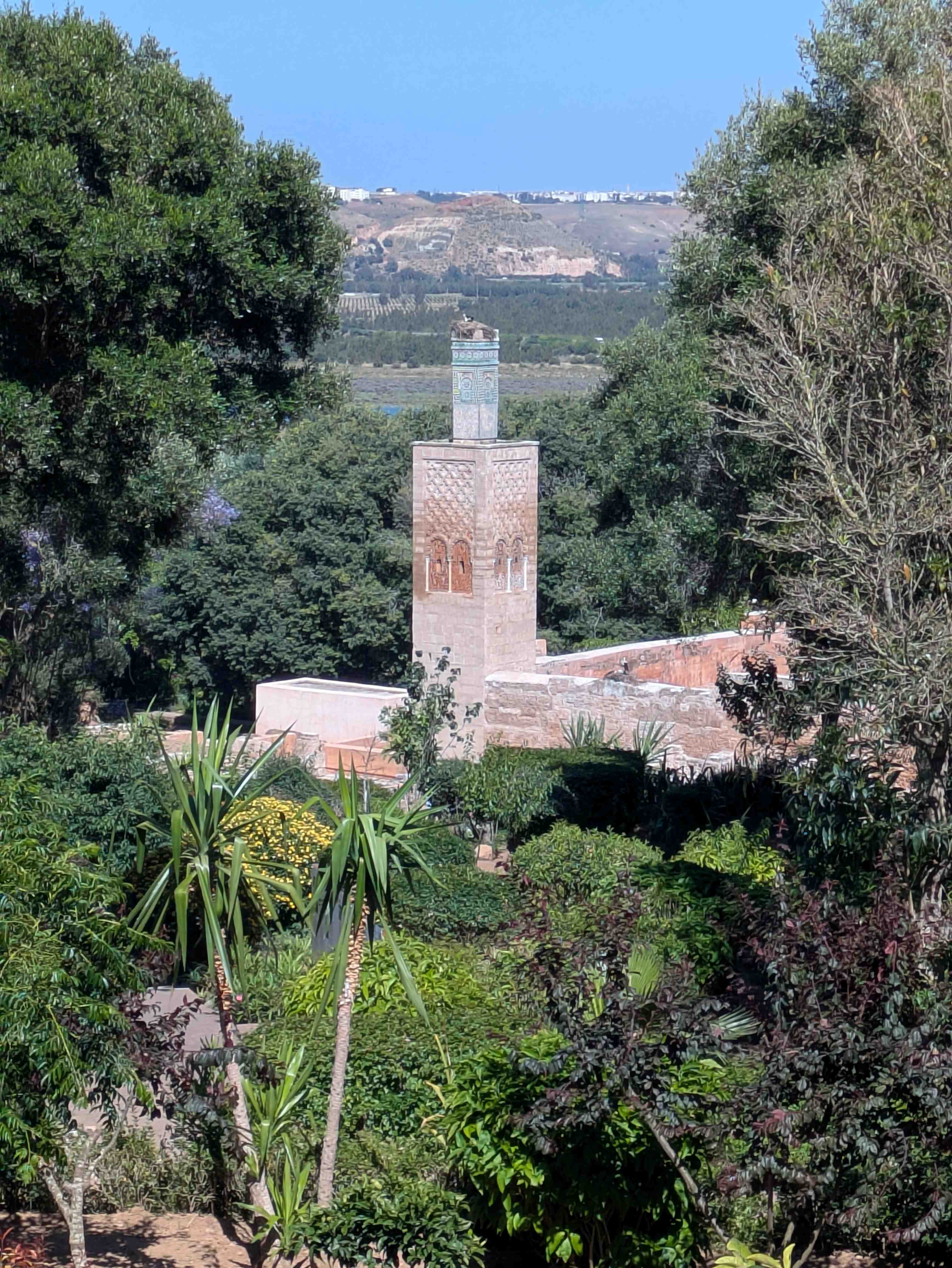
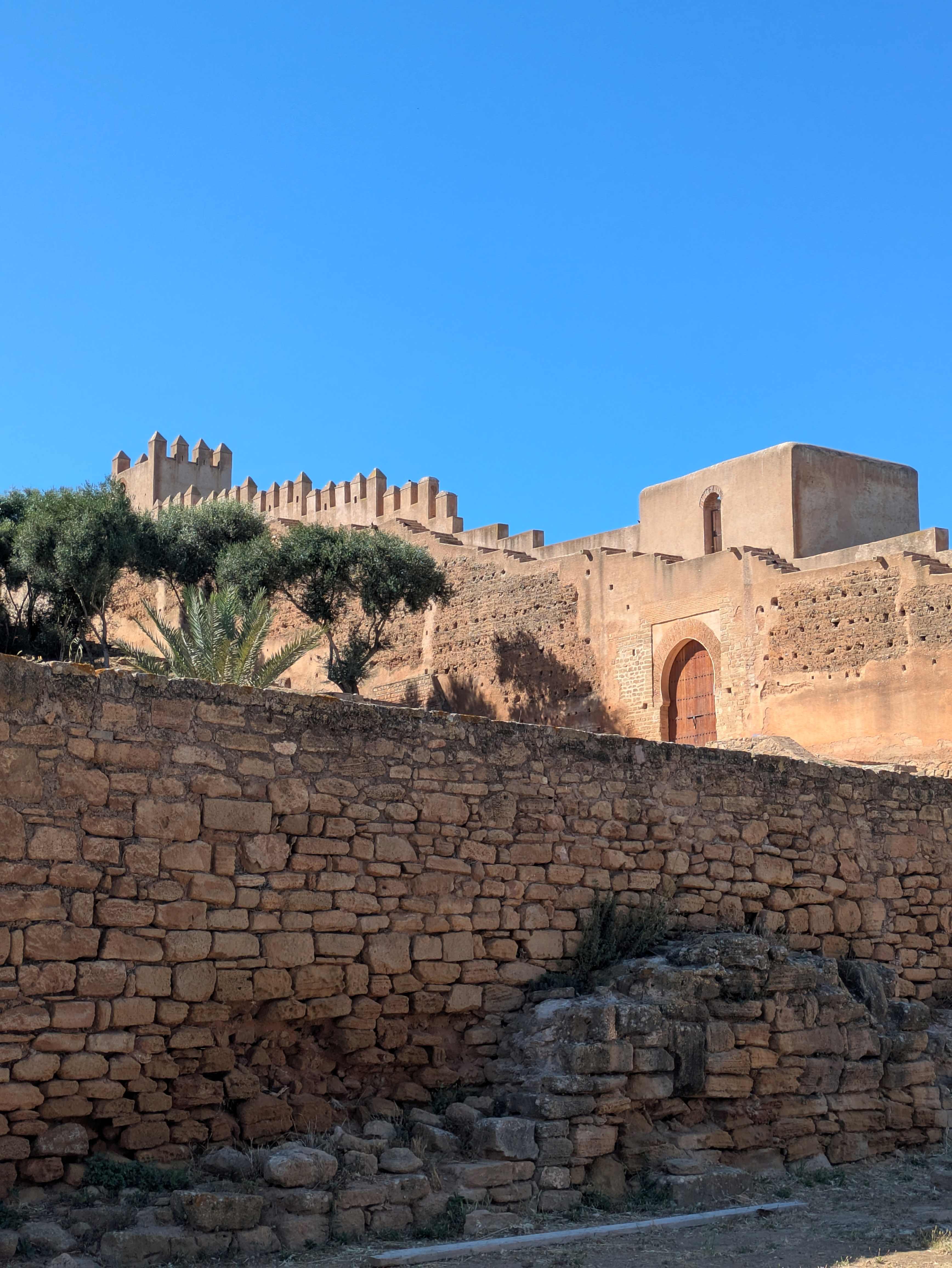
Field Seminar Cohort in the Andalusian Garden at Chella 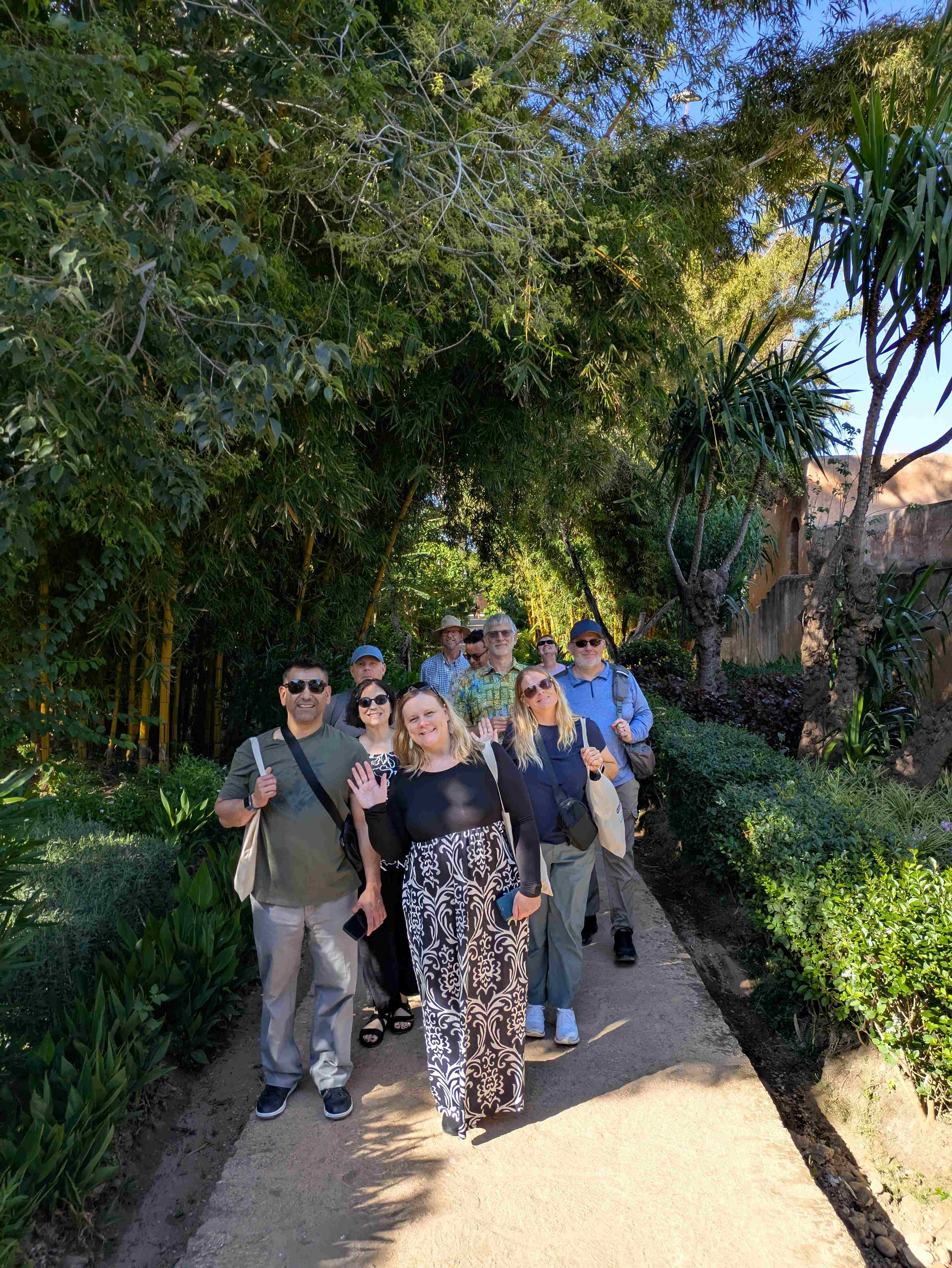
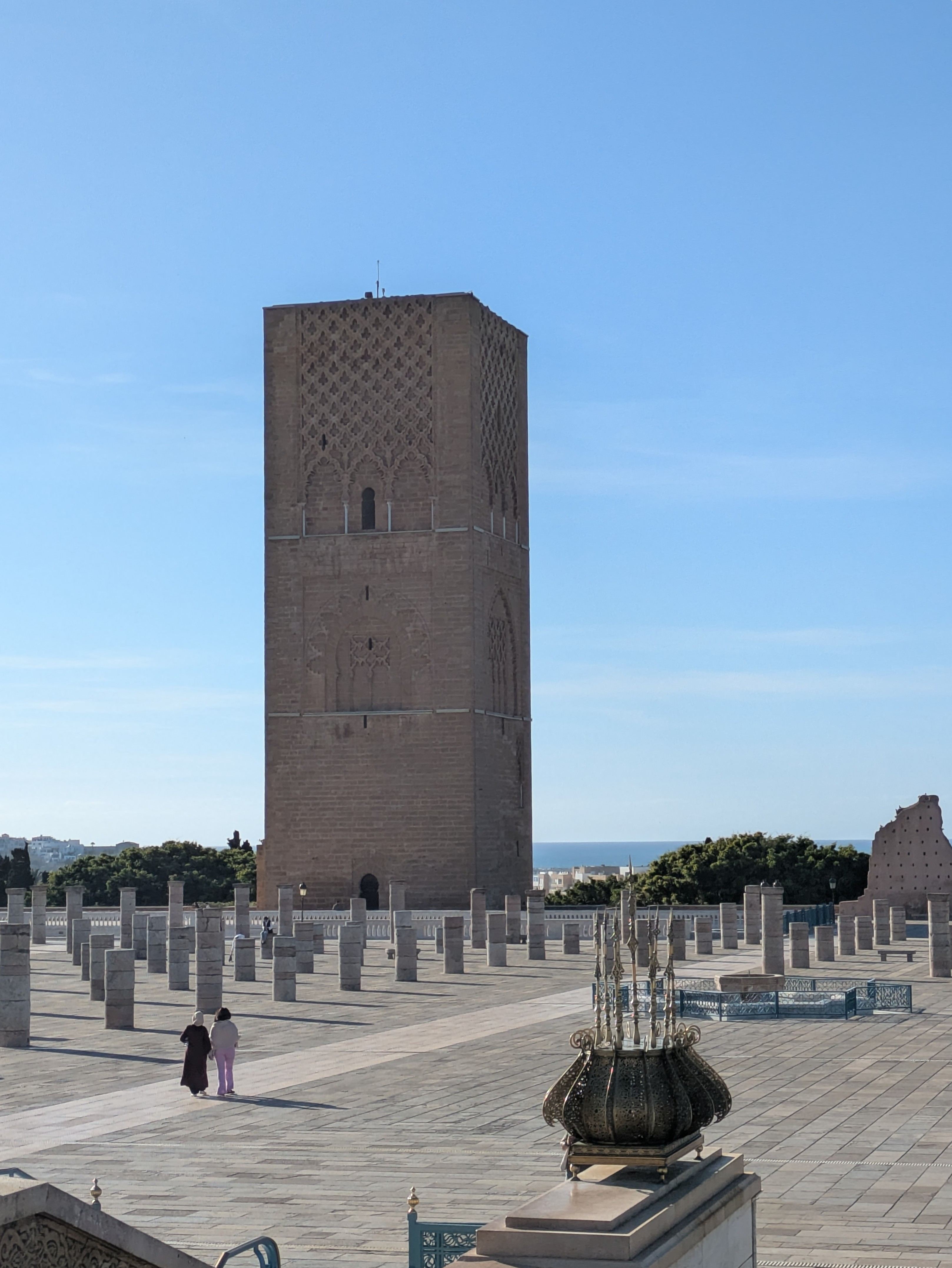
After an incredible stay at Chellah, we ended the day at Yacoub al-Mansour Square. Among the most famous spaces in Rabat, it is the site of Hassan Tower and hundreds of small columns intended for the largest mosque in Antiquity. While never completed, the site testifies to Morocco’s long-standing importance in the region and the Muslim world.
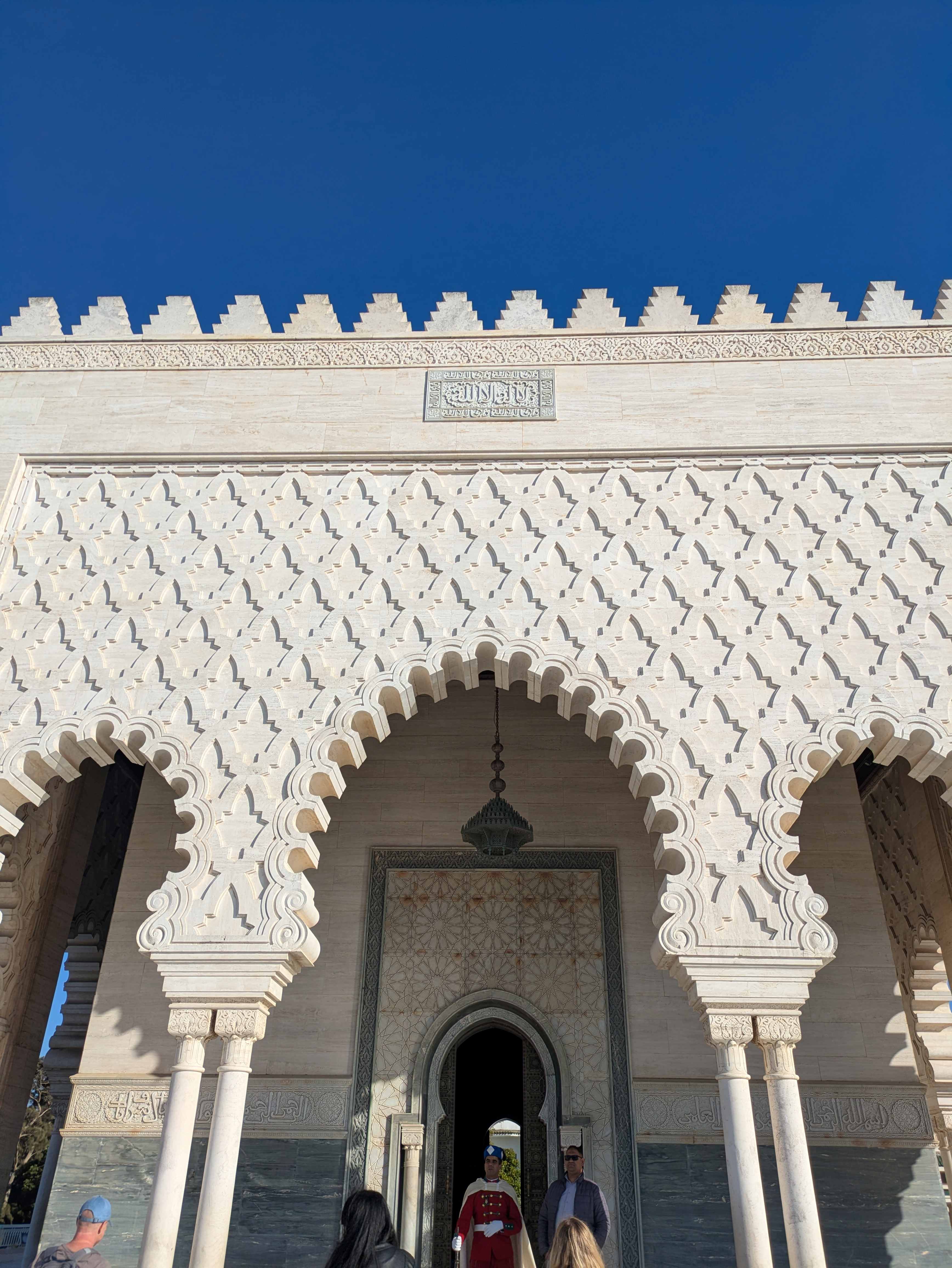
Opposite Hassan Tower sat a far more modern but equally important monument: the Mausoleum
of Mohammad V. We were told not to speak as we approached under gorgeous white arched
facades and past members of the Moroccan Royal Guard standing sentinel outside. Inside
was a somber, darkened space. We stood on a walkway above a lower chamber, the only
sound being a man sat in a corner singing Qur’anic verses. In the center of the chamber
sat the coffin of King Mohammad V, flanked by those of his sons King Hassan II and
Prince Moulay Abdallah. King Mohammad V secured Moroccan independence from France,
making his Mausoleum a symbol of Moroccan identity, unity and national pride.
Outside the Mausoleum and past Hassan Tower, one can make out the blue of the Atlantic. The wind was cold, a relief for Morocco in late May. As the day came to a close and the call to prayer rang through the streets, as we passed walls and monuments that even Ceasar would have considered ancient, as we craved the mint tea awaiting us at dinner, as families and locals emerged into the squares and streets with the setting sun, it was impossible to not be completely enchanted.