
Harper College will be closed on Monday, September 7, in observance of Labor Day.

Passepartout is an occasional newsletter of the Center for Global Education and Engagement (CGEE) at Harper College. Named after Phileas Fogg's valet Jean Passepartout in Jules Verne's novel Around the World in Eighty Days, our newsletter is your passport to the world of international education at the college.
The 2025–2026 academic year marked an exciting milestone for international education at Harper College. In January, the Office of International Education officially became the Center for Global Education and Engagement (CGEE), reflecting an expanded commitment to global learning, international student success, and intercultural engagement across the college.
Located in Building D, Room 138, CGEE serves as a hub for international education and global opportunities at Harper. From study abroad programs and international students to virtual exchanges, institutional partnerships, and campus-wide cultural events, the Center helps connect the Harper community with the world.
The CGEE team includes Richard Johnson, Director; Minhee Jyun, International Student and Outreach Specialist; Angelica Rackow, Global Mobility Coordinator; Daniel Zawadzki, Global Programs and Administrative Specialist; and David Richmond, Faculty Coordinator for Campus Internationalization.
Together, the CGEE team strives to create meaningful opportunities for students, faculty, staff, and community members to engage across cultures, broaden their perspectives, and connect with the world. While the year brought significant organizational change through the launch of CGEE, it has also been a year of remarkable progress. The team continues to support international students, expand faculty-led study abroad opportunities, strengthen global partnerships, and grow virtual exchange and campus internationalization initiatives, demonstrating that even amid transition, Harper’s commitment to global learning and engagement continues to thrive.
Most importantly, the transition to CGEE represents more than a new name. It reflects Harper's strategic commitment to preparing students for an interconnected world by expanding access to global experiences, fostering intercultural understanding, and creating partnerships that enrich teaching, learning, and engagement across campus.
As we look ahead, we are excited to continue building opportunities that bring the world to Harper and Harper to the world.
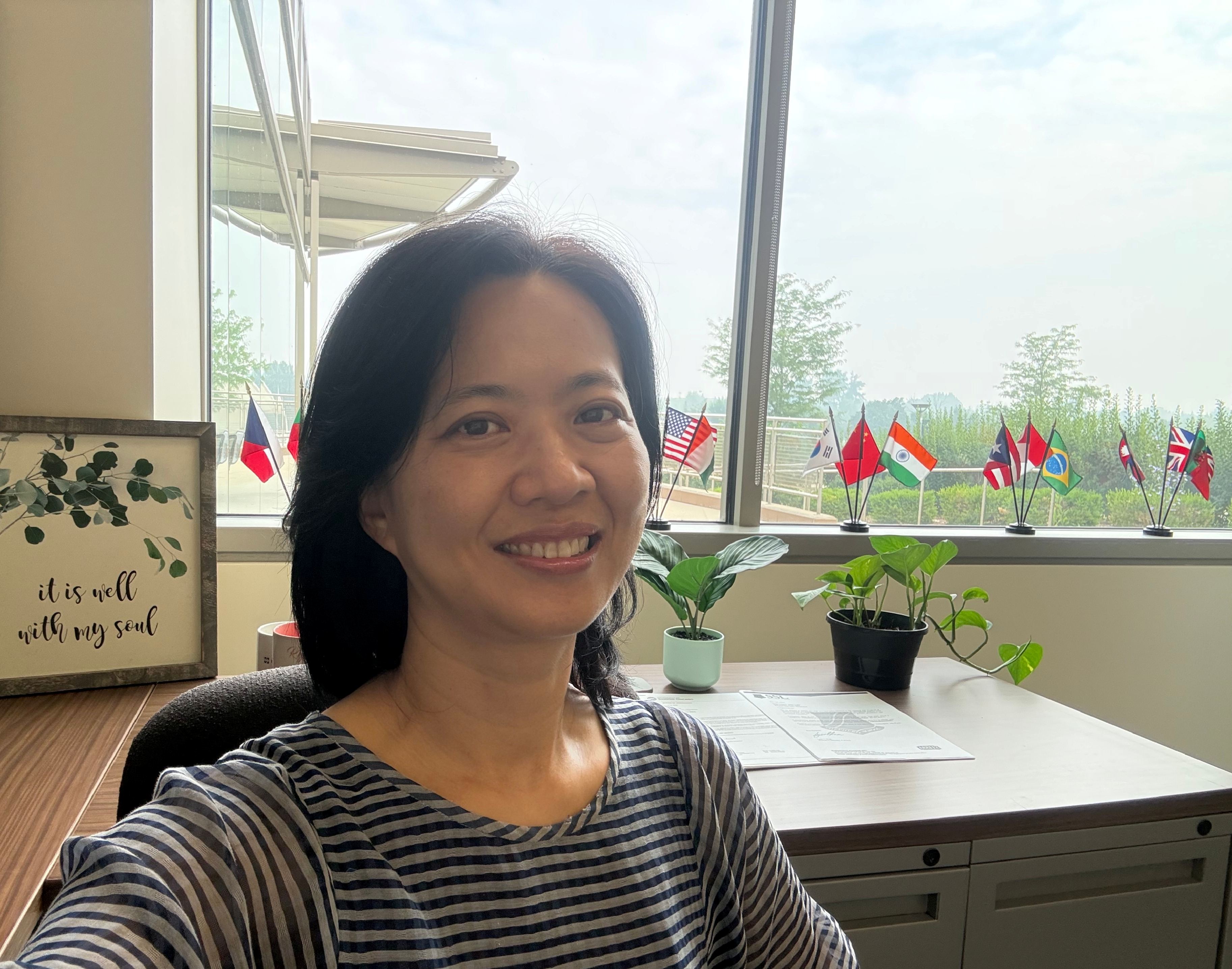
In May, CGEE welcomed Dr. Minhee Jyun as the College’s new International Student and Outreach Specialist. Dr. Jyun brings extensive experience in international student advising, immigration compliance, and enrollment support.
Her newly expanded role supports students throughout the entire international student journey, from recruitment and admissions through graduation and transfer, while helping strengthen Harper’s international enrollment initiatives.
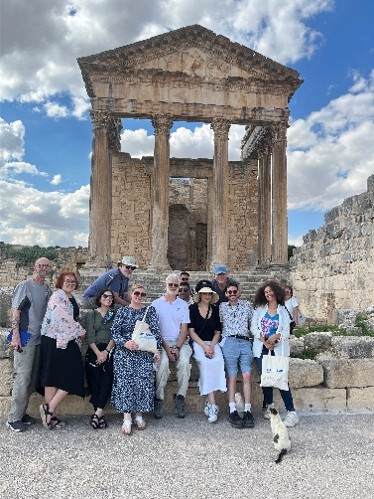
What happens when educators step outside the classroom and immerse themselves in another culture?
For thirteen Harper faculty and staff members, the answer came through a transformative journey across Morocco and Tunisia, the culminating experience of a year-long professional development initiative focused on the Middle East and North Africa (MENA) region.
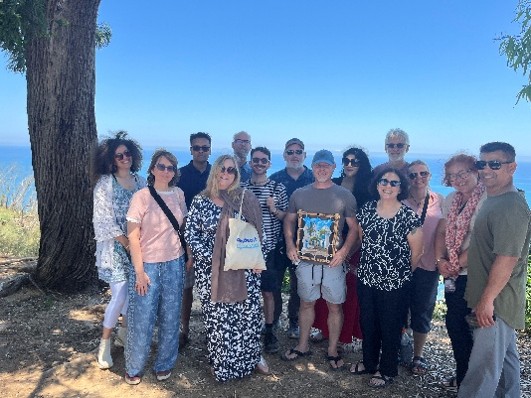
Before boarding a plane, participants spent months exploring the region through seminars, discussions, and professional learning focused on intercultural competence, inclusive pedagogy, and ethical global engagement. The field seminar brought those lessons to life.
Participants met with local scholars, community leaders, and migrant organizations. They explored historic cities and cultural landmarks while engaging in conversations about education, migration, identity, and social change. These experiences challenged assumptions, expanded perspectives, and provided first-hand insights that cannot be replicated in a textbook or webinar. Read our blog to learn more about our experiences in Morocco and Tunisia!
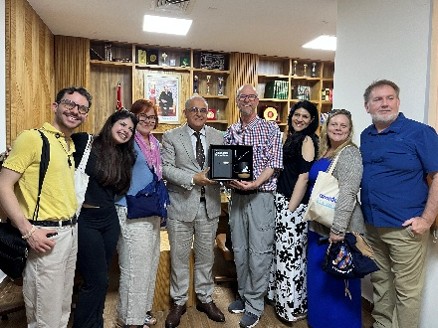
Perhaps most importantly, the impact did not end when participants returned home. Faculty are already incorporating new global perspectives into courses ranging from ESL and First-Year Seminar to Art and Humanities. Others are developing institutional resources, sharing their learning through presentations and blogs, and helping colleagues integrate global learning into their own teaching practices.
The true legacy of the Morocco-Tunisia program will be measured not by miles traveled, but by the thousands of students who will encounter richer, more globally informed learning experiences in the years ahead.
Not every student has the opportunity to study abroad. Financial constraints, work schedules, family responsibilities, and other commitments can make international travel difficult. But global learning does not require a passport.
Through Virtual Exchange, also known as Collaborative Online International Learning (COIL), Harper students are connecting directly with peers around the world without ever leaving their classrooms. During the 2025-2026 academic year, six faculty members integrated virtual exchange into thirteen courses, creating international learning opportunities for more than 195 students.
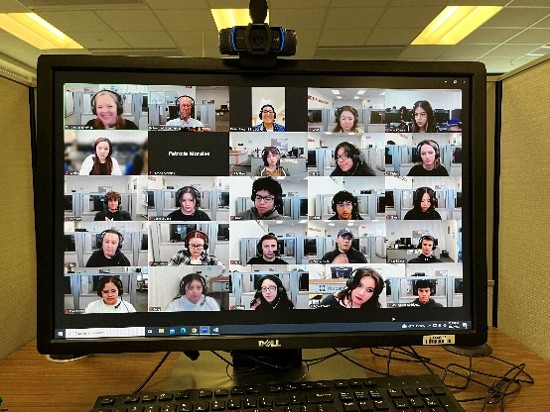
In these courses, students collaborated across borders on shared projects, explored complex global issues, and developed the communication skills needed to work effectively across cultures. Rather than learning about another culture from a textbook, students experienced intercultural communication firsthand through meaningful dialogue and collaboration.
The impact of our work is gaining national attention. Research conducted by Dr. Melissa Whatley of William & Mary’s Graduate School of Education found that Harper’s virtual exchange programs represent a scalable and equitable model for internationalizing the curriculum. Her findings suggest that well-designed virtual exchange experiences promote intercultural learning, student engagement, and experiential learning while eliminating many of the barriers associated with traditional study abroad.
And this fall, Harper’s role as a leader in virtual exchange research will continue as Dr. Whatley launches a multi-year longitudinal study examining whether participation in global learning experiences contributes to stronger civic engagement and community involvement among students.
If you are interested in learning more about how to include a virtual exchange experience in your classes, complete the following form:
Virtual Exchange Workshop Interest Form – Fill out form
Eleven students earned Harper College’s prestigious Global Scholar Distinction this spring, joining a growing community of graduates committed to understanding complex issues and engaging thoughtfully with the world around them.
Earning the distinction goes well beyond completing coursework. With the guidance of faculty mentors, students develop a capstone project that invites them to investigate an issue they care deeply about through research, reflection, and interdisciplinary inquiry.
This year’s projects demonstrate just how wide-ranging that curiosity can be. Students examined how media narratives can undermine women’s autonomy; discriminatory language through an activist lens; inequities in access to public education and the idea of education as social currency; cannabis justice and its impact on communities; and financial literacy as a tool for empowering low-income communities.
Other projects explored topics such as cultural competence in nursing education and political leadership among South Asian women. While the subjects and disciplines varied, the projects shared something important: students were asking difficult questions, examining issues from multiple perspectives, and connecting what they learn at Harper to challenges affecting people and communities locally and globally.
The Global Scholar Distinction exemplifies Harper’s commitment to an education that prepares students not only for careers, but also for informed citizenship and lifelong learning in an interconnected world. Through the program—and the faculty mentorship that helps make it possible—students develop the curiosity, critical thinking, empathy, and confidence to engage constructively with complex issues across cultures, communities, and borders.
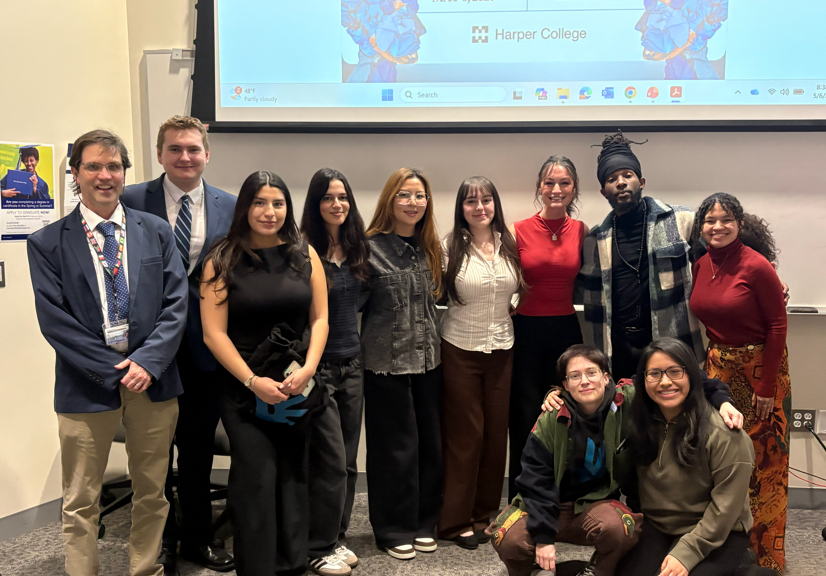
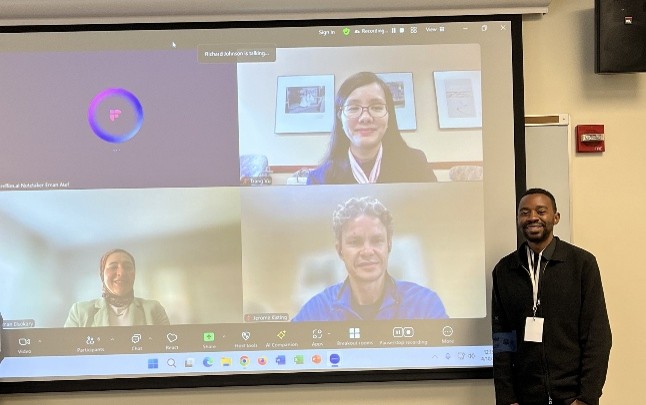
This year, Harper proudly welcomed its largest-ever cohort of Hubert H. Humphrey Fellows, hosting four distinguished international leaders through the Community College Residency Program. The fellows included Farayi Machamire (Zimbabwe), a journalism and civic engagement innovator; Dr. Eman Elsokary (Egypt), a healthcare educator and accreditation specialist; Trang Thi Quynh Vu (Vietnam), a senior leader in finance and banking; and Jerome Kisting (Namibia), a venture capital investor and economic development strategist.
During their weeklong residencies, the fellows engaged with Harper faculty, staff, administrators, students, and community partners through classroom visits, presentations, discussions, leadership meetings, and cultural activities. Their expertise sparked meaningful conversations on topics ranging from media innovation, healthcare workforce development, and financial governance to entrepreneurship, investment, and economic transformation.
More than a series of campus visits, the program created a dynamic exchange of knowledge, perspectives, and best practices that enriched the Harper community and strengthened the College’s global partnerships. The exceptional engagement across campus highlighted Harper's commitment to international education, cross-cultural learning, and the power of connecting local communities with global leaders.
In April, Jorge Manuel Angulo, director of Universidad Nacional de Costa Rica (UNA)--Campus Sarapiquí, visited Harper College in April. His goal was to understand how the College integrates workforce development, industry partnerships, and community engagement to drive regional economic growth.
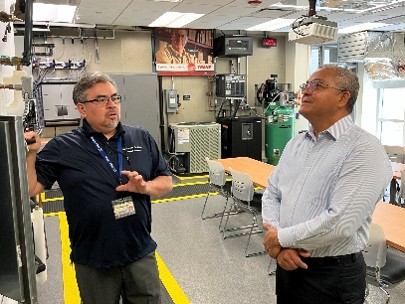
During the visit, he sought to learn about successful and replicable models, including apprenticeship programs, small business support initiatives, and customized workforce training, with the goal of exploring how similar approaches could be adapted to support workforce development, entrepreneurship, and economic opportunity in the rural region of Sarapiquí, Costa Rica.
In June, Harper College hosted two faculty members from Universidad Autónoma de Chiapas (UNACH), Yanina Díaz Figueroa and Orlando Isaí París, as part of an ongoing faculty exchange partnership. The visit strengthened intercultural understanding and academic collaboration between the two institutions through faculty engagement and the sharing of educational practices.
Through these encounters with faculty, classroom observations, professional dialogues, and the exploration of collaborative teaching opportunities, the visit also advanced discussions on future collaborative initiatives, including COIL projects, virtual exchange opportunities, joint curriculum development, and potential student mobility programs, while reinforcing the commitment by both institutions to sustained international partnership
In April, Harper College welcomed seventy international education professionals representing nineteen institutions from across the United States and abroad for the 17th Annual International Education Summit. The event achieved its highest attendance since the pandemic and reinforced Harper’s growing reputation as a regional leader in global learning and internationalization.
Attendees gathered to discuss some of the most pressing questions facing higher education today. How can colleges better support international students? What does it mean to globalize career and technical education? How can institutions create a greater sense of belonging for students from diverse backgrounds? What role should virtual exchange play in the future of higher education?
The Summit featured breakout sessions, panel discussions, and facilitated conversations designed not only to inspire participants but also to provide practical strategies they could implement immediately on their own campuses. Many attendees reported leaving with new ideas for expanding international partnerships, incorporating global perspectives into curriculum, and strengthening support systems for students.
For Harper, the Summit represents something larger than a conference. It reflects the institution’s ongoing commitment to serving as a convener, thought leader, and catalyst for innovation in international education throughout the region.
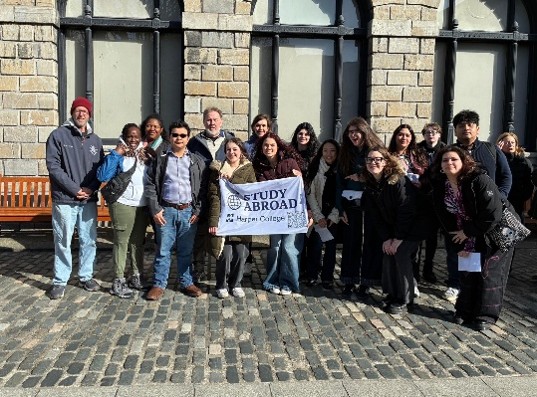
Harper students continued exploring the world through study abroad opportunities.
This year:
CGEE also invested in future growth by training faculty interested in leading study abroad programs, creating a sustainable pipeline of new global opportunities for students.
CGEE Director Richard Johnson has been selected for the 2026-2027 Fulbright-Nehru International Education Administrators Award.
As part of the Fulbright Scholar Program, the award provides U.S. higher education leaders with an opportunity to learn about India's higher education system through campus visits, meetings with university and government leaders, and discussions on international education and collaboration. Richard will participate in the two-week program in October as part of a cohort of higher education administrators from across the United States.
“Receiving a Fulbright International Education Administrators Award is a tremendous honor," Johnson said. "I am deeply grateful for the opportunity to engage with colleagues in India. I look forward to learning from their approaches to higher education and student success and bringing new ideas and partnerships back to Harper.”
The experience will provide opportunities to explore emerging trends and practices in higher education while developing connections that may support future international engagement efforts at Harper.
Bring your curiosity. We’ll bring the snacks!
The Center for Global Education and Engagement is opening its doors, in D138, for Global Office Hours on the first Wednesday of every month, from 11 am - 12 pm and 2 - 3 pm. These informal drop-in hours are spaces for faculty, staff and administrators to explore, brainstorm, and connect around global learning opportunities.
You don’t need a proposal or even an idea! Just bring your curiosity and willingness to explore ways to bring global perspectives to your classroom and the Harper community.
Stop by for refreshments, browse sample programs, contemplate destinations, flip through international education data and resources, or simply talk with our team about what’s going on. Stay for ten minutes or the full hour.
While there is no formal agenda, each month we’ll have a few extra resources and conversations starter available if inspiration is needed:
Meet Harper’s new International Student and Outreach Specialist, Dr. Min Hee Jyun, and learn about the changing landscape affecting international students. Explore the academic, cultural, and personal challenges international students may encounter, and the many ways faculty and staff can contribute to their success.
Get to know Harper’s international partners and discover what those relationships can make possible. Invite an international scholar into your classroom, find a virtual exchange partner, explore faculty collaboration, or imagine new opportunities for two-way exchange.
What happens when someone communicates, behaves, manages time, disagrees, or approaches authority very differently than you do? Try a few intercultural scenarios, compare your reactions with colleagues, and explore how culture influences the way we interpret one another.
Whether you’re interested in developing a study abroad program or bringing virtual exchange into your course, CGEE can help you get started.
Interested in an upcoming workshop?
Tell us what you’d like to explore and we’ll keep you informed about future opportunities.
Global Office Hours: first Wednesday of every month, from 11 am - 12 pm and 2 - 3 pm in D138
International Student Welcome Reception: 3 – 5 pm, Friday, September 17
Welcome Week with Library: October 12 – 16, 2026
International Education Week: October 19 – 23, 2026
18th Annual International Education Summit: Friday, April 9, 2027