
Harper College will be closed on Monday, September 7, in observance of Labor Day.

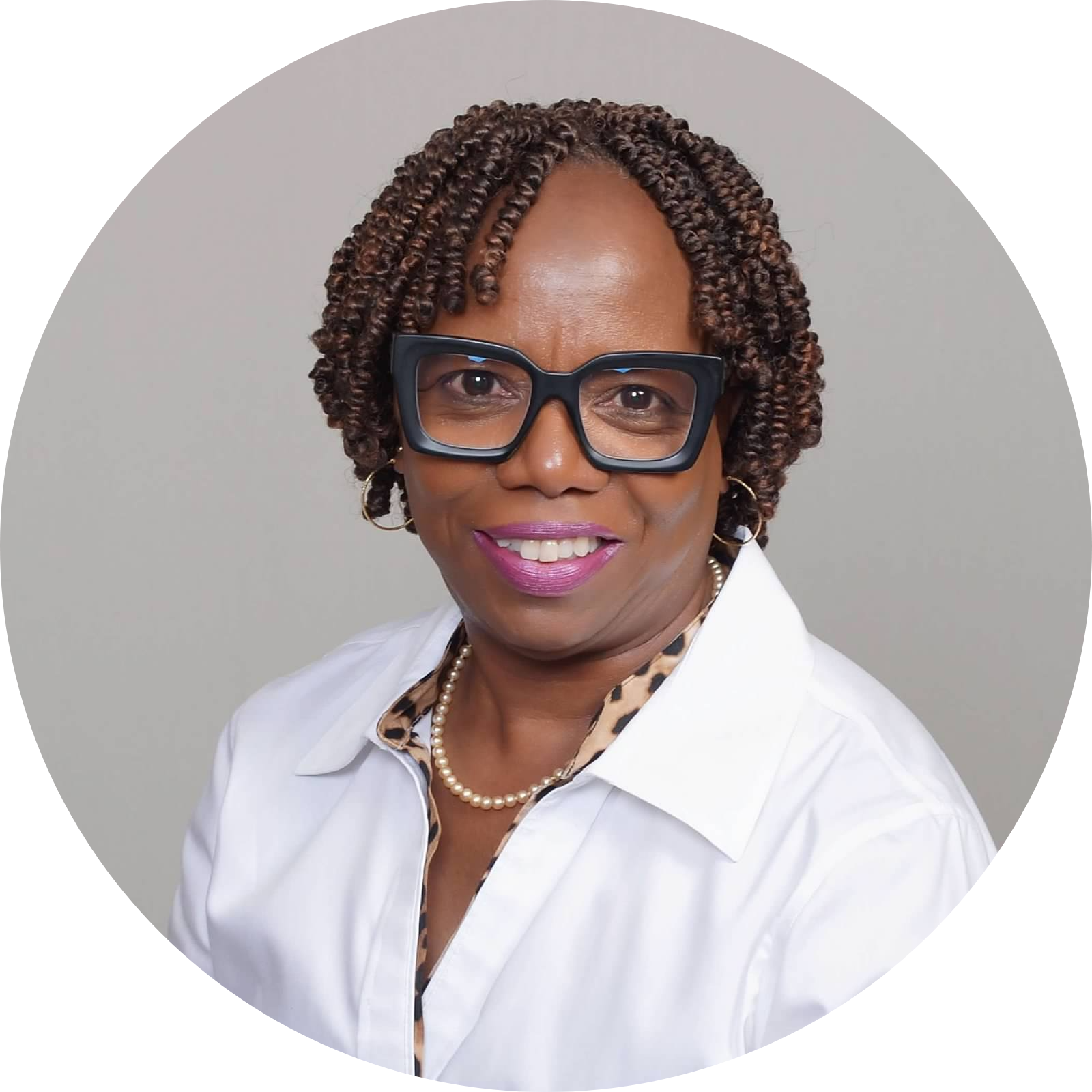 Harper Talks Episode 49 - Phyllis Higgins
US Army veteran and Harper College alumna Phyllis Higgins joins Harper Talks to share her inspiring journey from military service to corporate success. Phyllis reflects on returning to school through Harper’s Fast Track program, balancing work and family, and finding her passion in supporting others. Now an apprenticeship talent navigator at Zurich Insurance, she champions opportunities that help students and career-changers thrive. Phyllis shares a powerful reminder to take the leap, invest in yourself, and “just do it.”
[00:00:00.920] - Brian Shelton
I'm Brian Shelton, and you're listening to Harper Talks, a coproduction of Harper College Alumni Relations and Harper Radio. Today on Harper Talks, I'm excited to speak with Phyllis Higgins, a 2010 Harper College graduate. After Harper College, Phyllis attended National Louis University, where she completed a BS in management, and she's currently the apprentice talent navigator for Zurich Insurance. She joined me in the podcast studio in Building D. Thanks for being here. How are you?
[00:00:27.440] - Phyllis Higgins
I'm good, Brian. Thanks for having me.
[00:00:29.080] - Brian Shelton
Yeah, it's a gloomy day outside, looking outside the window of the podcast studio, which is an advantage we have. We don't have one at the radio station. I was going through your profile and looking at your experience. Of course, I want to talk to you about your time at Harper and your time at the different schools and what you do for work and everything. But I was really impressed. You are a sergeant in the United States Army. You're a veteran.
[00:00:56.580] - Phyllis Higgins
Yes, I'm a veteran, serve my country, and spent a little time overseas in Saudi Arabia, Desert Storm, and grateful for the opportunity to have lifelong friends as a result of that.
[00:01:07.200] - Brian Shelton
What brought you to the military?
[00:01:09.360] - Phyllis Higgins
I fell for the commercials. (laughs) Travel, see the world.
[00:01:14.920] - Brian Shelton
Did you travel and see the world?
[00:01:16.240] - Phyllis Higgins
I did a little bit, but that wasn't my version of it. But that's what really, honestly, what made me join the military, and I'm glad I did, though.
[00:01:24.630] - Brian Shelton
What did you do while you're in the military?
[00:01:26.160] - Phyllis Higgins
What was your- I was trained as transportation, but I ended up in... I trained as communications, I'm sorry, and ended up in a transportation unit. So typical of the military, they do that a lot. They train you in one thing. And then have you do something else. Have you do something else. So I made sure whatever had to move from point A to point B got there other than people.
[00:01:47.200] - Brian Shelton
Okay. Where were you deployed? You said you were deployed?
[00:01:49.980] - Phyllis Higgins
I was deployed to Saudi Arabia during a desert storm. What was that like? Served six months over there. Very hot, 120 average temperature. No, different culture from what we're used to in the United States. At that time, women could not even drive there. Very different country.
[00:02:08.900] - Brian Shelton
I don't know how to ask this. Did you get to enjoy yourself at all while you were there?
[00:02:13.420] - Phyllis Higgins
I did. We had a little off time. We had some downtime a few times. Got to go into the city and eat at restaurants that were imitations of American restaurants. Then even there, you had to sit on one side of the restaurant if you were female versus male. Oh, wow. You could not drive as a female either.
[00:02:32.800] - Brian Shelton
Cultural shock for you.
[00:02:33.980] - Phyllis Higgins
Certain clothing, you couldn't wear a V- neck T-shirt. Definitely different, but good experience.
[00:02:41.540] - Brian Shelton
A good experience, yeah. Okay. How did you How did you wind up here at Harper College as a student?
[00:02:48.000] - Phyllis Higgins
Well, I was working full-time. I had been working from a young age in corporate America. I was talking to a friend of mine who always vent with and telling her and say, Hey, I'm just so tired of training people to do this, and I can do that job, but they won't let me get the position because I don't have that silly piece of paper. She let me vent for... That day, I was really angry about something. I've been it for an unusually long time, should I say. She just said, Well, what are you going to do about it? You've been complaining about this for years, so you know what you have to do. Either you go to school and get your degree or stop complaining about it.
[00:03:30.000] - Brian Shelton
Okay.
[00:03:30.660] - Phyllis Higgins
I said, Oh, okay. She had never just said it like that. I said, Okay. I thought about it for a few days, looked into her and I'm like, How am I going to do this? Go to school. Then I put it to the side again. Then I happened to be talking to another friend, and she said, They got this fast track program at Harper College. I'm like, What's that about? She said, You have to be 25 and older. I'm like, Oh, got my attention then. Because I was in my 20s, later 20s, and I didn't want to go to school with a bunch of 18-year-olds. I saw as an opportunity, went to the information session and signed up and started that journey.
[00:04:11.600] - Brian Shelton
That's really cool. What a good friend to force you into doing something.
[00:04:14.880] - Phyllis Higgins
Yes, indeed.
[00:04:16.040] - Brian Shelton
Stop complaining. Let's go do this.
[00:04:17.280] - Phyllis Higgins
Exactly. Tough love.
[00:04:18.410] - Brian Shelton
Tough love. Tough love is what's needed sometime. Tell me about the Fast Track program. I have taught in the Fast Track program. I taught at least once over there. It's a little bit different because a lot of it now is online, but when you took it, almost all of it was not necessarily on the main campus.
[00:04:34.760] - Phyllis Higgins
Talk about that. Right. It was over in the center on golf road, I believe it was. You go over there and you're taking classes in a cohort-type fashion. You're all going through the same classes together, which is good. It helps you build those relationships, that network, and you just knock them out. It was a good experience because everybody was similar to me, either had or working full-time jobs and trying to figure out what their next step in life was going to be.
[00:05:06.060] - Brian Shelton
Are you still in contact with any of the folks that you went in classes with?
[00:05:09.900] - Phyllis Higgins
One of them I'm still friends with. We actually end up... Yes, we're still good friends. We actually I ended up in the same college for our bachelor's.
[00:05:17.700] - Brian Shelton
Were you on main campus at all during that time?
[00:05:20.880] - Phyllis Higgins
Some of the classes, but most of them were on Golf Road.
[00:05:24.520] - Brian Shelton
You didn't really get to take part in campus life while you were joining. How could I?
[00:05:29.620] - Phyllis Higgins
I was working full-time. No, I just didn't have the time, the capacity for that.
[00:05:35.000] - Brian Shelton
Yeah, it's a completely different perspective. It's I'm going to get this done, and this is what I've got to do, and I'm going to focus. I like that. Absolutely. That's one of the things I like about the Fast Track program. It's heavily focused, and people are there on a mission.
[00:05:47.080] - Phyllis Higgins
Yes, and you knew what class was coming next. You had your whole syllabus for what the classes were going to be, how long they were going to be, so you could work your family life around that.
[00:05:57.480] - Brian Shelton
What did you do after Harper? You went to National Louis.
[00:06:00.260] - Phyllis Higgins
Yes, I went to National Louis University in Wheelng. I took a few classes at that particular location. Then the last year, I would say, all of my classes were downtown, which was brutal.
[00:06:11.420] - Brian Shelton
Oh, yeah. The commute, yeah.
[00:06:13.410] - Phyllis Higgins
Get off at five o'clock, try I didn't get to a 6: 00 class, 6: 00, 6: 30 class. So had no time to play around and miss a connection on the train. Tried the train route for a while, and that started being... It backfired, let me put it that way in my face, trying to I missed the train at night after I had a question with my professor. Then I'm like, Oh, I got to get to the train, and then train's pulling off.
[00:06:38.240] - Brian Shelton
Yeah, and then you're stuck.
[00:06:39.840] - Phyllis Higgins
So I started driving. Yeah.
[00:06:41.800] - Brian Shelton
But the drive. Oh, my goodness. Yeah. Oh, I feel you. I feel you.
[00:06:46.460] - Phyllis Higgins
That's awful. But you do what you have to do.
[00:06:48.780] - Brian Shelton
Yeah.
[00:06:49.780] - Phyllis Higgins
To make it happen.
[00:06:51.040] - Brian Shelton
What was your degree there? What did you study?
[00:06:53.160] - Phyllis Higgins
Studied management there. So took a lot of classes there, and that was a good experience as well. Had cohort as well there and build good relationships from that as well.
[00:07:04.490] - Brian Shelton
Do you feel like Harper prepared you for that?
[00:07:06.600] - Phyllis Higgins
Harper definitely prepared me because I hadn't been to school in a while. That studying mode, getting in the groove of when to do homework and blocking time off, I had to do that first. I would have not been successful, I don't believe, if I had not done Harper first.
[00:07:22.570] - Brian Shelton
Yeah, you learned how to study. Yes. Which is a problem that a lot of students have.
[00:07:26.580] - Phyllis Higgins
I've heard that.
[00:07:27.580] - Brian Shelton
I'm seeing it a lot right now. And following through. Do you take notes? Did you take notes when you were a student?
[00:07:34.950] - Phyllis Higgins
Yes, and I still do.
[00:07:35.920] - Brian Shelton
She still take notes now.
[00:07:36.500] - Phyllis Higgins
I'm still a notebook person. Me too. Because something about writing it down, seeing it, helps me to study it. Yeah.
[00:07:43.820] - Brian Shelton
I was in class the other day. I'm like, You know you're supposed to be writing things down, right? They're just looking at me like, What are you talking about? Are you crazy? Yeah. That's funny. Tell me what you're doing now. You are at Zurich Insurance, which has this beautiful building building over here in Schaumburg that I admire every time I go past it there. Tell me what you're doing there.
[00:08:06.420] - Phyllis Higgins
I'm an apprenticeship talent navigator. I know that's a mouthful.
[00:08:09.360] - Brian Shelton
Yeah, what does that mean?
[00:08:10.250] - Phyllis Higgins
Basically, it means I do the marketing and sourcing for our apprenticeship program. Apprenticeship program has been around since 2016, but I've only been there for three years. I look for opportunities to market the program. Zurich is not as well known as some other companies. People see the beautiful buildings, like you say, but they don't really know what we're a commercial global insurance company, been around 150 plus years, and we insure many of the businesses you use each and every day.
[00:08:40.500] - Brian Shelton
Now, I know about the apprenticeship program because I work here, but would you tell folks... Because I think that Zurich is really unique in what they do. Would you tell us about that?
[00:08:50.370] - Phyllis Higgins
Yes. Our apprenticeship program is an earn and learn program. It's a two-year apprenticeship program where you take classes in business, major in business. We pay for your books, tuition and fees. You go to school two days a week. You work for us three days a week, and you get paid for 40 hours. I mean, that's a really good deal.
[00:09:06.820] - Brian Shelton
It's pretty amazing. Yes. How many people are enrolled in that? How many people do you take a year?
[00:09:11.360] - Phyllis Higgins
It varies every year. We're hiring right now for our next year for our 2026 cohort, and so it can vary from 60 to 30, all depending on the business unit's needs. Okay.
[00:09:21.740] - Brian Shelton
Is this something that Zurich does globally, and then they brought it here when they're-
[00:09:27.020] - Phyllis Higgins
Yes. We got the model from our parent company in Switzerland, and we tweaked it for the United States. We were one of the first in the United States to do a business apprenticeship program. Because why should manufacturing people in trades have all the fun?
[00:09:40.380] - Brian Shelton
That's right. It is really unique in that perspective because it normally is something along those lines, right? Correct. Doing a business program. Now, I guess, what is the upper mobility within the company? Once you're an apprentice, you're already working full-time for the company. But by just having your associate's degree, are you able to continue on in the company, work your way up, or do they expect you to also go on and get a bachelor's degree?
[00:10:06.000] - Phyllis Higgins
It's totally up to you. Once you get your associate's degree, you can choose to continue and get your bachelor's degree. If you choose to do that. We partner with another school to do that. Or you can go to a brick and mortar school and continue with tuition reimbursement, or we also have some grants that we give out to apprentices. But they're full-time students when they're apprentice. But then once they finish their full-time employee. Yeah.
[00:10:30.860] - Brian Shelton
What a neat thing.
[00:10:31.850] - Phyllis Higgins
Yes.
[00:10:32.210] - Brian Shelton
It's so neat.
[00:10:33.120] - Phyllis Higgins
I mean, work three days a week, go to school two days a week, and get paid for 40 hours.
[00:10:37.780] - Brian Shelton
Yeah, it's a good deal. You see, you got a good sell right there. You can't see her, but she's got her marketing face on, and I like it. How did you get into that job? How did that happen for you?
[00:10:46.680] - Phyllis Higgins
A friend of mine told me I was starting to explore opportunities when I was at my prior employer. A friend told me about this opportunity was coming up, and I looked at it and said, Oh, this has my name written all over it. This is what I like I like to do. I like to help people. I like to inform people. I was doing somewhat similar work with Career Affairs and my prior employer. So all my skills just transferred here.
[00:11:10.560] - Brian Shelton
That's fantastic.
[00:11:11.060] - Phyllis Higgins
Then I got to use my marketing background, which is where I started with the associates.
[00:11:14.920] - Brian Shelton
That's really cool. I can tell just from talking to you and seeing your face light up when you talk about it, that you love what you do. I do. And that you love working with people and helping them.
[00:11:22.390] - Phyllis Higgins
I do. I look at it this way, that, Hey, if I could do it, and I was an older student, let me put it that way when I did this journey, and I had a family and teenage kids who were trying to get away with stuff at the same time. If I could do this, then anybody can do it. No excuses.
[00:11:40.050] - Brian Shelton
Yeah, teenage kids.
[00:11:41.360] - Phyllis Higgins
You're right.
[00:11:43.080] - Brian Shelton
What are you excited about in work or play or family? What's going on with you?
[00:11:49.200] - Phyllis Higgins
I'm excited about work. I'm excited about getting this cohort filled with the help of the recruiter for next year. We have some new locations like Matlin, Florida. It's not just limited to Illinois. We have some new locations, which I'm excited about exploring organizations to reach out to, CBOs, community-based organizations, and so forth. Just the marketing program. Next year will be our 10th anniversary. That's very exciting.
[00:12:16.620] - Brian Shelton
That's really great. That's fantastic. How many people have gone? Maybe you don't know. How many apprentices have there been since it's been...I'll put you on the spot. I'm sorry.
[00:12:25.820] - Phyllis Higgins
I'm not sure of that number, but I know they're over 300, between 300 and 400 have gone through the program. We have an 82% retention rate. Most of the people are successful.
[00:12:36.980] - Brian Shelton
That's amazing. That's just a huge number of people and such a cool program because like you said, why should it just be the fun of the machining and the engineering and all those ones. It's a different program. I think that's really, really neat.
[00:12:51.640] - Phyllis Higgins
The program is also, if you think about it, it's not age bias as well because you can be 17 in your senior year applying to this. Just like you apply to college your senior year, you can apply to this program as well. Also, you can be a veteran, get out the military and do this program. You can be in your 30s, you can be in your 20s, you can be in your 40s. We've had some successful people who are older who are doing this program.
[00:13:15.240] - Brian Shelton
That's fantastic. That is a really cool thing. I ask everybody who comes in here to talk to us from the alumni to ask us what advice they would give to Harper College students. What advice would you give to Harper students?
[00:13:29.750] - Phyllis Higgins
My advice is just do it. I know that's a Nike slogan, but just do it. If you're thinking about it, procrastinating about it, if it's something that you want to do, do it. Just don't sit and do nothing. You have to move forward in your life. At some point, unless you're an entrepreneur, you're going to have to have that piece of paper if you want to keep moving up. Rarely do you see people who move up without it.
[00:13:57.430] - Brian Shelton
It's a box that has to be checked. Yes.
[00:14:00.560] - Phyllis Higgins
Why let that be the box that puts you in a box?
[00:14:03.980] - Brian Shelton
Which is a lesson you learned the hard way, right? I did.
[00:14:06.360] - Phyllis Higgins
Because there are a lot of smart people out here, and not everybody is college material. I know that. But if you want to move up and you want to work in corporate, you most likely will need that.
[00:14:19.810] - Brian Shelton
You need that piece of paper to make it happen. Yes. Thank you so much. It was so much fun talking to you.
[00:14:23.680] - Phyllis Higgins
Thank you. I appreciate you having me. It's really great.
[00:14:26.380] - Brian Shelton
Phyllis Higgens is a Harper College graduate and a US Army veteran. If you're enjoying Harper Talks, please subscribe. And while you're at it, rate and review us so that others might find us. Harper Talks is a coproduction of Harper College Alumni Relations and Harper Radio. Our show is produced by Shannon Hynes. This episode was edited by Koby Pozo. Our online content producer is Blue Bailey. Our theme music was created by Aiden Cashman. I'm Brian Shelton. Thanks for listening.