
Harper College will be closed on Monday, September 7, in observance of Labor Day.

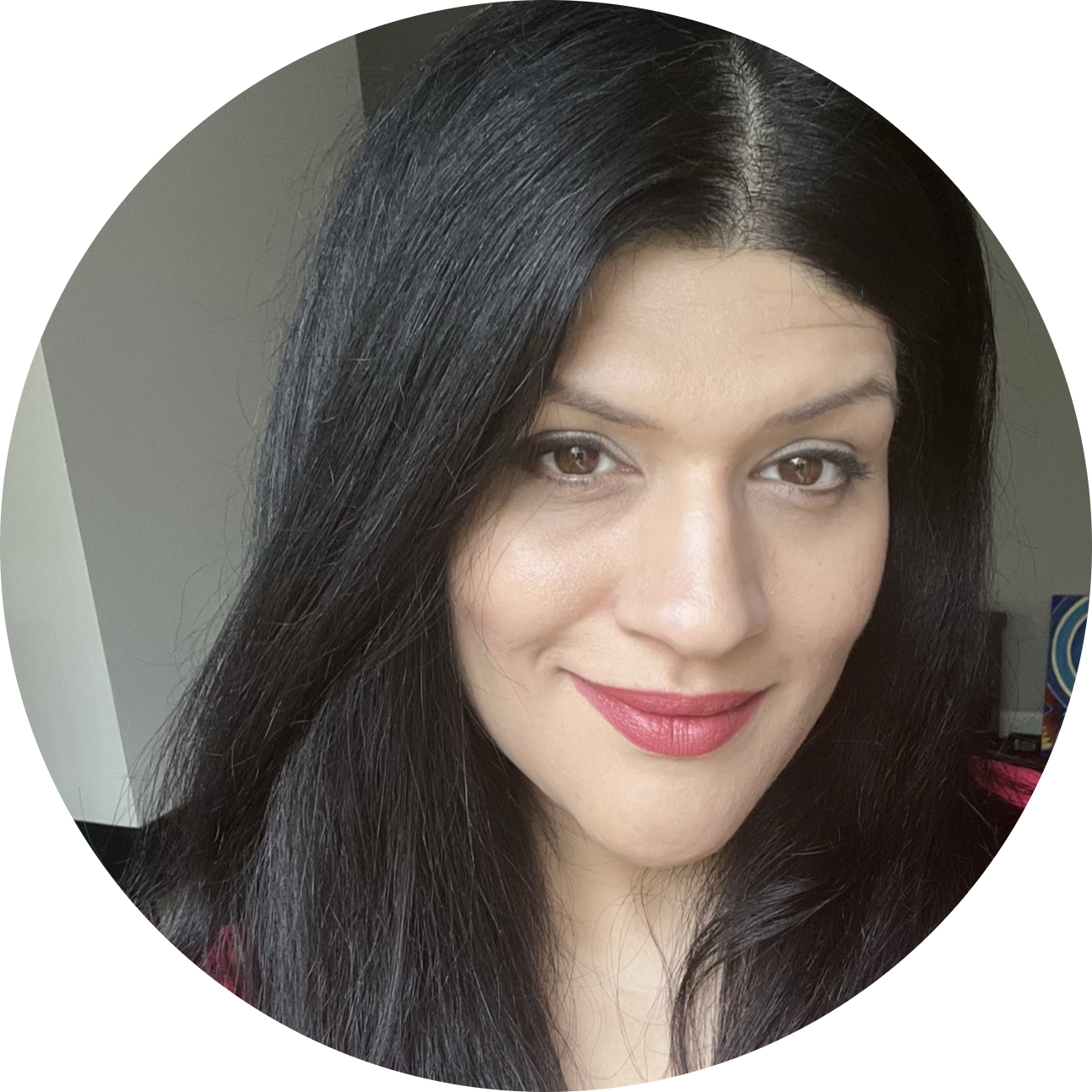
Harper Talks Episode 51 - Maham Khan
Harper alumna and current mass communication professor Maham Khan’s journey started at Harper with uncertainty—and during the tumultuous days of 9/11—and lead to her discovering her voice through leadership, speech and debate, and ultimately journalism. She reflects on overcoming stigma around community college, transferring to Northwestern, and building a career in Chicago media before returning to Harper as faculty. Maham also discusses her upcoming memoir project with a wrongfully convicted exoneree and offers meaningful advice to students about embracing growth, resilience, and self discovery.
Harper Talks: The Alumni Podcast
Show 51: -- Harper Talks -- Maham Khan
[00:00:00.380] - Brian Shelton
I'm Brian Shelton, and you're listening to Harper Talks, a coproduction of Harper College Alumni Relations and Harper Radio. Today on Harper Talks, I'm excited to speak with Maham Khan, a 2003 Harper College graduate and a current Harper professor. After Harper College, Maham attended Northwestern and De Paul, where she earned her master's in journalism. She joined me in the building D Media Lab studios on the Harper campus. Thanks for being here.
[00:00:24.840] - Maham Khan
Thank you for having me.
[00:00:26.460] - Brian Shelton
Normally, we do this on the radio, but we made you get up and do your hair and makeup and everything. I know. Also because we're doing some video today, too.
[00:00:30.900] - Maham Khan
Two hours in my life, I'll never get back.
[00:00:31.960] - Brian Shelton
Oh, come on now. I did want to get this out of the way really quick. If you're listening or watching this, and you don't know us, I'm assuming on this podcast, but Maham and I share an office wall. So it's this weird/ It's fun to sit down with you in this environment and have this conversation. But we get to help these students with their final project, so that's fun. So it's a good time. Exciting. Yeah. Hey, what brought you to Harper College? I know that you grew up in the area. You're not originally from the area, but grew up in the area. What brought you here?
[00:00:58.780] - Maham Khan
So I did grow up in Palatine. I didn't really know in high school, I was just checking off boxes, and I wasn't super motivated, I'll put it that way. My parents were really overprotective, and they're like, You don't know what you want to do. You want to spend a lot of money on college. And they were like, you know what? I think you need to stay home for two years and figure it out. And it was probably the best decision. I would say it's probably the only decision they have ever made for me that was awesome. But it was a good one. It was a good one because I did. I'm so grateful that they helped me realize I wasn't really ready to go away yet.
[00:01:42.620] - Brian Shelton
Yeah. That is such a common theme. So I think you're number 49 of podcast here on the show. And every time, without fail, when we talk to someone, it's I didn't know what I wanted to do, or my parents didn't think that maybe I was ready to do what I should do. And so I came and it wound up being the best decision that I could have made. It's a very common thing. I think that it's good for our students to see that and hear that and reflect on that because I think some of them while they're... When you were coming here first, were you like, well, I don't know that that's really what I want?
[00:02:14.980] - Maham Khan
There was some shame.
[00:02:17.310] - Brian Shelton
Yeah, that's what
[00:02:18.440] - Maham Khan
I'm- Because I did get good grades and stuff like that. I came from a family of my generation of cousins and stuff like that. Our parents didn't go to college here, but my cousin and stuff did. And they were all high achievers. And so going to Harper, there was some shame. I'm a truth teller, so I'm going to say it. But my parents sent me here as punishment because I was like, I don't know what I want to do. And they were like, well, if you have no decisiveness, you're going there. And my dad said to me, I'll let you move out of the house and I'll support you if you get into Northwestern. That was the deal. So I said yes, even though Northwestern did not take transfer students at the time, but he didn't know that. And it's interesting that the year I was graduating, they opened it up to transfer students, which was some cool synchronicity there. But it was like punishment. There was shame because it was like community college. I think we at Harper are doing a really great job about defying that notion, and it's deeply rooted and centrally in our education system, even though I was richer than all of my friends coming out of college because I didn't have debt.
[00:03:35.760] - Maham Khan
I was making a quarter of what they were making because debt bogs us down. It was such a-
[00:03:41.190] - Brian Shelton
The stigma around community colleges, it is such a deeply rooted thing.
[00:03:45.719] - Maham Khan
Yes.
[00:03:45.800] - Brian Shelton
It's so interesting to me, and that's a common thing talking to people on the podcast about this, that they experience that every single one of them, and they're like, I don't understand why, looking back at it now, why there is a stigma around it, but there is. It doesn't matter how... I mean, like, Harper is a top 20 community college in the country, but yet still it's, oh, I'm going to Harper. That's such a weird- It's particularly an American thing.
[00:04:06.400] - Maham Khan
In a lot of Europe and other places, they have this idea of college and then university. We just follow that suit. But here, it's a little bit more, I think, just competitive. There's a little more classism of where you're going to go. Where are you going to go? Yeah. There was some shame. There was bow your head going out of the house the first day. I was like, I'm on my way to harper, as if it was like, Juvy. It was so funny. But it was, like I said, it turned out to be the most beautiful experience.
[00:04:32.490] - Brian Shelton
Yeah. Well, so now your first semester on the Harper College campus was when 9/11 happened, which for younger listeners, 9/11 doesn't mean anything to them. But for us who lived through it and experienced it, what was that like as a college student, and for you in particular for that time?
[00:04:49.000] - Maham Khan
I mean, you're a month in as a freshman, you're trying to navigate. For me, it was also really difficult to get to my classes on time. I struggled with that because I used to have to catch a bus in high school. And then here I got here and it was like, okay, I got to get to 9: 30 class. That's self-management, self-regulation. Hence, one of my parents were like, you need to stay home. So I was like, I have to get to this class. She can't get to class. I always was like 9: 35 pushing it. So I show my late students a lot of grace. But it was hard. And I remember that day. It's so funny. My speech teacher, Marsha Latrenta, lover, she...she gave me an ultimatum. She was like, If you're late one more day in class, I'm dropping you a letter grade. Wow. I don't think I could say that to a student today. I don't think we could, but she did say that to me. I remember driving, and the thing I was panicked about was like, oh, my God, am I going to get there at 9: 35?
[00:05:47.630] - Maham Khan
I'm huffing and puffing, running up three flights of stairs. I was late, but nobody noticed because they were all huddled in the corner. We had televisions in the room. And of course, there was this terrifying thing unfolding in the corner. And I have the worst memory, but I will never forget every minute of that day, I remember what I ate for breakfast. I remember what I wore. I remember things that were said and the fear. The fear was so real. And that fear stayed on campus for a really long time. It was horrible. People were trying to get out of the parking lot was a chaos. People are really good at losing their mind. Am I allowed to swear on this podcast? I don't know.
[00:06:42.340] - Brian Shelton
No. (laughs)
[00:06:42.620] - Maham Khan
Okay. No good alumni would do that. But I was losing... Everybody was losing their mind.
[00:06:48.640] - Brian Shelton
Well, I remember teaching that week, and everybody was obviously shook by what happened. It's like, Okay, we're doing audio production and video production. Let's talk about all the coverage that we've seen and what that sounds like and what that looks like and how you cover a disaster. It was interesting from that perspective as well to look at that. But yeah, I think people were terrified. They didn't know what was coming next, right?
[00:07:09.200] - Maham Khan
Yeah, my dad was in the city of Chicago, and Chicago was the next place. For me, there's a layer to it, too, because I was raised Muslim. I didn't have a very strong identity, and I didn't really identify. But just, again, truth telling. I decided to put... There was no Muslim Student Association. It was completely in hibernation. I knew I wanted to get to Northwestern. So I'm like, okay, time to chalk up the leadership and all that. And I literally went and filled out some paperwork. And I'm like, I'm going to make myself President. There was no objection. There was no one to vote. I just did. And I want you to think about the irony of that. That happens, and all of a sudden, 9/11 happens, and the spotlight is on this faith group and this identity. And people are coming to me like, you're the President. What are you guys going to do? What are you going to talk about? And so it was really insane because all of a sudden, I was also having to grapple with, what does this mean for my people? So to speak, my people, and why were all these terrorists?
[00:08:10.960] - Maham Khan
Why were they Muslim? It really blew open a whole identity crisis for me in a lot of ways about this. I had to delve into self-exploration, understanding my religious identity in a way I never, ever cared to understand it. It's true.
[00:08:28.530] - Brian Shelton
But how was that for you, though? I mean, did that affect your college performance or did it affect who you were as a person?
[00:08:37.010] - Maham Khan
It was a scary time. It was a scary time. I don't think you can look at me right away and say, oh, she's Muslim. You know what I mean? It wasn't for me, but there were a lot of young women who were wearing hijab, and there were people who identified. I had to step in as a leader in a way. I had put it down thinking I wouldn't have to do anything. Then all of a sudden, I had to step up as a leader. And what surprised me about myself is that I took it on, and I embraced it, and I had to have answers. So believe it or not, there were faculty, there were DEI work has come a long way. But at the time, it was like, Yeah, we're going to put you at the mic, and you're going to answer all our questions via something. And that's literally what I was doing. And so I had to go and uncover truths and verses and things like that. And so it was... Now that I look back at it, I'm like, man, no one should have put me in that position.
[00:09:37.780] - Brian Shelton
Sure.
[00:09:39.160] - Maham Khan
No, I shouldn't have to have been answerable for an entire faith group. But it was this idea of understanding. And then a lot of horrible things were happening on campus. There was a lot of anger towards us. So there were women who were having their hijab pulled off. There was a lot of harassment. And then a lot of the Muslim students wanted to protest that. So they wanted to hold these prayer demonstrations, and the Christian groups were like, no, you can't do that. So it was a lot of... It was a lot of tension.
[00:10:09.900] - Brian Shelton
Yeah, I bet.
[00:10:10.170] - Maham Khan
It was a lot of attention. So it was like a dramatic opening year to college.
[00:10:13.500] - Brian Shelton
Yeah, for sure.
[00:10:15.560] - Maham Khan
But it formulated in me this step up and have a purpose energy. And it wasn't about the religion, even then. It just became about understanding what people need in that time and communication and curiosity and learning and problem solving, conflict resolution between groups. The little TEDx talk that I did do for Harper's 50th anniversary was all about that experience. Of two interfaith groups coming together to resolve all this tension on campus. It's probably one of the most proud moments of my life.
[00:10:52.120] - Brian Shelton
Such an interesting time to be-
[00:10:53.430] - Maham Khan
It was.
[00:10:53.800] - Brian Shelton
Yeah.
[00:10:54.240] - Maham Khan
It was.
[00:10:55.060] - Brian Shelton
Well, so you were also, not only were you the President of that organization, but you were also heavily involved with the Speech and Debate team while you were here as a student. I think you're the fourth alumni we've had from the Speech and Debate team. It's like an embarrassment of riches with that group. But tell me how you got involved with that and what that was like for you.
[00:11:11.660] - Maham Khan
I did Speech Team in high school, and I wasn't very good even in high school. I peaked my senior year and won the regional champ, and it took a lot of work. Public speaking didn't come naturally to me. I had a stutter. There were a lot of things I had to overcome, but there was something about it that pull, again, I think I had without realizing, I think I had a growth mindset, which was a big blessing. All right, I'm just going to seize this opportunity. And so we didn't have social media, and we didn't have all these things, and I wanted to make friends. I felt like this was a fresh start. And with the teetering of 9/11 and all that, I just wanted to have some fun. So I got on the speech team, and I, I sucked all season.
[00:12:01.060] - Brian Shelton
(Laughs)
[00:12:01.600] - Maham Khan
I was horrible. I was the underdog. I never won anything. People were like, What's her name again? I was such a forgotten person, and we had such a talented team that year, probably by far the most talented team we ever had. And so it was hard to be in that shadow.
[00:12:17.700] - Maham Khan
But then I just kept at it, and I kept at it. And by the end of the season, I won a gold medal. I was the underdog. And a lot of the talented people didn't win anything that year. And me, the person- You won a gold medal. I won a gold medal, and it blew my mind. It was awesome. It was such a... I'll never forget that feeling. I was in tears. I couldn't believe I had done this. I was just learning so much about myself as a person. I had a lot of self-esteem issues in high school. All of a sudden, I was really stepping into my power, and that was amazing. Then I became the captain next year, the year after that. Yeah, it was great.
[00:12:59.660] - Brian Shelton
Yeah, the team requires a lot of effort. I mean, it's a lot of practice. It's a lot of travel. It's a big commitment. How did that help you prepare, you think, for maybe transferring from Harper to someplace like Northwestern? Because you had to learn how to really manage your time and not be late. Yeah.
[00:13:17.200] - Maham Khan
And in fact, they were being on the speech team gave me the in at Northwestern. So we had tournaments that we would run into Northwestern and things like that. And my coach, who was amazing, introduced me to their coach and said, Maham is just really interested in going to Northwestern. And we know Northwestern doesn't really do transfers. I don't remember how, and I could be wrong about this, but at the time, there was no talk of transferring from a Community College. I don't know if they opened that door or what. But I remember they were like, well, let me talk to some people. And that was it. I was recruited to come compete for their team, and that was a condition of entry.
[00:13:58.460] - Brian Shelton
Oh, you competed at Northwestern as well? I did. Okay. What was that? How was that different?
[00:14:03.140] - Maham Khan
I guess. It was different because I wanted to party more when I was at Northwestern, and my parents weren't around. The work ethic dwindled a little bit because I had my... But it was... I met the most amazing people. And again, it did give me... When you come in as a transfer, you're coming in as a junior, and that could be really alienating. I was seeing other transfer students were struggling to make friends and things like that. But I had an amazing group of friends. And my debate partner, my duet partner was Gabe Gutierrez, who is like, NBC 5 anchorman in the oval office nowadays. He was an incredibly talented person, so I learned a lot from him. Yeah, but it was. It was like by senior year, I was like, I need to slow down and I needed to focus on my academics because I said, that year back was a lot of partying.
[00:15:02.360] - Brian Shelton
Yeah, sure. I mean, if you didn't go to college and party, what would it be?
[00:15:05.640] - Maham Khan
Yeah, it was. But I was working hard here so I could get to where I needed to be. And then I enjoyed that independence. But very quickly about being at a competitive school, as they will let you know, right? You need to get back on track. And so I still graduated with a 3. 6 from Northwestern.
[00:15:20.750] - Brian Shelton
We're going to check that later. We're going to make sure it's true.
[00:15:23.460] - Maham Khan
It could be off by a decimal, but it's true. It was above 3. 0, I can remember. Yeah.
[00:15:29.820] - Brian Shelton
So You did speech and debate, and obviously, you had that formative experience here with 9/11. What drew you to journalism? Because that's your career path. What got you there?
[00:15:38.870] - Maham Khan
Because Medill was so competitive, they didn't take transfer students. I ended up transferring to the School of Speech. I wanted to graduate in time. I could have stayed. At that time, I wasn't 100% sure still. Also at the time, now you have to remember this is right before the 2008 level, speech communication was actually a pretty viable career. A lot of people were doing it, and we were coming out of this luxurious time where companies were hiring speech consultants to train people and things like that. I really thought that's what I was going to do and go into a speech-related field because all of a sudden I had found all the success with my public speaking skills. And then it started to dwindle, and I was like, oh. But I was an avid traveler, and I loved traveling, and I was working a little bit. I did this project with the USA Department where I got to go overseas and was talking about what it's like to be an American at these universities. But it was then I kind of realized, man, no one's really talking about... We get the mainstream media, but no one's really talking about these moments between two conversations between a college student in Egypt versus a graduate in America, and they're talking about what it's like to be...
[00:17:02.500] - Maham Khan
So it got me interested in storytelling in that way. And that really... I worked in a comedy club. It was a public relations internship. I did that. And again, I found myself drawn more to the storytelling components of PR. I also learned how to bartend there. But it was, again, it was all of these... If the opportunity present itself, I just took it. And I allowed myself to gather all this data about who I was as a person. And I knew it. I'm like, I had this curiosity that's never-ending, and I knew I had to become a journalist. So I just went into DePaul's program, and yeah, no turning back from there. And then I went back. I became a journalist, and I worked in Chicago's media scene, a lot of different places. Yeah.
[00:17:53.360] - Brian Shelton
So you're journalism faculty now here at Harper College. You're an assistant professor of mass communication. You teach journalism, and you advise the campus newspaper. What's the... This is a big question to ask, though... What's the future of journalism? Because journalism is... It's pretty shaky right now. I will say, maybe this is too much inside baseball here, but I will say that when we were making the argument to create your position here at the college, the argument was there is no bigger need right now than for us to have high-quality journalists. That was part of the argument that we made.
[00:18:29.260] - Maham Khan
We still have that need.
[00:18:30.420] - Brian Shelton
That need is still there. But I think that journalism gets a bad wrap ... is that the right thing to say?
[00:18:36.260] - Maham Khan
People have had a falling out with it. We talk about this in my mass communication class, in my journalism class. I asked my students, why do you not trust the news anymore? We really reflect deeply. What people are not realizing is if we don't advocate and fight for journalists to continue doing what they have to do, even if we think the media is corrupt or right wing or left wing or whatever, where are we going to get credible information from? Who's going to be the gatekeeper of information? We have to keep advocating for journalism programs. But all journalism programs, everyone I talk to, we just had a conference in November, everyone is seeing this struggle of getting people into that major, of getting people through the doors to become journalists. I think in part, there's just this falling out with, it's not what it used to be. And there's this heavy reliance on social media. I want to be a content creator. So I think people still want to be journalists, but they're seeing a different pathway, which is like, I can just be a content creator. And those are two extremes, right? So I know you and I are working with the school about thinking about what's the new degree or something that we have to offer that middle ground. We're adapting.
[00:19:50.020] - Brian Shelton
I don't have a problem with the journalism through content creator. The question is, who do you trust, though? And I think that we as a society In the United States, we trusted the network news. We trusted the newspaper. I don't know that we're at a point where we can trust the content creator, because it's like, why do I believe this person? I believed Walter Cronkite because he was Walter Cronkite. Why do I believe Bethany on Instagram. I think that's the problem with not having a news organization behind that. But there's got to be a way to bridge that gap. I don't know what it is, but there's got to be.
[00:20:25.900] - Maham Khan
There has to be because it's no mistake that someone like Candice Owens can just throw a theory out. Millions of people are buying it, and the mainstream media is not talking about it. I do think we have a problem with conglomeration and ownership. That's also part of that media literacy that we're talking about, who owns our media? All things institutional, whether that's medicine or journalism or anything, you're going to have these dips in history. We look at the history of fake news. Again, we teach this in our classes. It used to be profitable to tell people aliens were invading because we wanted that entertainment. I think we're just in that same phase of yellow journalism. It's just a new version of it. We really are. I'd rather you tell me that there's a big conspiracy about who killed Charlie Kirk or things like that. People want to delve into that more than face the facts of our economy and college and whatnot. I think, and I hope, and I trust, I have to believe that there's going to be a renaissance of people just like they did after a war was broken out. We were tired of the fake news, and it was the people who said, no, we want the truth.
[00:21:41.643] - Brian Shelton
Yeah.
[00:21:41.940] - Maham Khan
It really did come from the people who rebelled against that lying. And so I think that will happen again. I think there will be a renaissance where people will be like, what has happened to our information? And they're going to demand better, cleaner information again.
[00:21:55.770] - Brian Shelton
Yeah. This is used to be a generational gap, too. I think you have the people who they'll I watch cable news all day, or I just spent a week with my parents in their 70s, and they'll put on the local news channel that repeats all day long. And so they see the same story, the same tiny little story about a very complicated issue over and over and over and over again, but never dive deeper into what the rest of the story is. So conversations with my dad this weekend about what was really going on with the ICE immigration raids in Chicago. And he was totally shocked about what was happening, because he didn't hear any of that. He didn't hear about them going into people's houses and ripping them out of their homes and then finding out two or three days later, they weren't the people who they thought they were and that thing, because that's not getting covered in these little things. And so I think there's a big generational gap there as well. And there's certainly also seem to be more susceptible to believing whatever they see on social media, too.
[00:22:50.120] - Maham Khan
There are journalists still doing really important things and really good things, but they're not... They're being overshadowed by the bias, right? And the... It's the Jerry Springer news era. That's what I call it, lighting each other up. We are barbarians by nature. If you look at the history of the world, we enjoy watching a lion tear up a human being in an arena. That's our ancestry. So we're just intellectual now. And so we just do it intellectually. We're taking punches and whatever. And so, again, I think there will be a renaissance. I'm hoping that people will come to their senses in my lifetime and realize how we have to reestablish credible news sources. I think independent journalism will take over again. We'll find ways.
[00:23:35.640] - Brian Shelton
I was sitting with some students yesterday. We were talking that The Onion is no longer funny. It's the truth, and that's the problem. It's all right. It's just the headline. That's all negative stuff. What are you excited about, personally, professionally? What's going on?
[00:23:49.440] - Maham Khan
I'm excited. I'm writing a book right now about, or I'm starting to write a book. I'm going to be taking a sabbatical next year, hopefully. Well, I have my sabbatical interview tomorrow, so I I hope they give it to me. They're not going. I think they will, though. But it's a writing about an exoneree who served 29 years in prison for wrongful conviction. And he just won a $15 million lawsuit with the City of Chicago. And I am helping him write his memoir. And that's actually one of the things I love about being a teacher in this job, is that my days are never the same. If you get a tough semester, it'll be over and there's a fresh new start, right? There's new people. No day is ever the same. And I love that. And so I'm excited about delving back into my own journalism skills to really fact check, dig up, look. And a lot of students do come to me. They are creative writers. They want to be creative writers. They love that storytelling component I once fell in love with. And they're like, how do I bridge that? I want to be a journalist, but I really want to be a storyteller. So I think this is giving me the opportunity to really do this, where I get to become a storyteller, help them write this memoir, and also really use hardcore journalism skills.
[00:25:08.140] - Brian Shelton
Yeah, I'm excited for you. That's really cool.
[00:25:09.600] - Maham Khan
I'm excited, too. It's hard work. It's going to be a long process, but I think I have to model for my students what that looks like. No gain without pain. Isn't that what they say, the athletes?
[00:25:21.720] - Brian Shelton
Something like that. Yeah, that's really cool, though. That's awesome. I look forward to seeing what you do with that. So we ask everybody who comes on what advice that they might have for Harper College students, either current or future. What do you got?
[00:25:34.320] - Maham Khan
How long do I have? Okay, just kidding. I think everything I just shared with everybody is I can't stress enough what an opportunity college is. And I get that it's harder than ever to be a student because I think this generation is dealing with more financial obstacles, more isolation because of social media, and they don't have a lot of healthy friendships and stuff. It's all like it's a different... But the human spirit doesn't change. We come into college, and it's like, I see it with my students every time. I just got to pass this class. I just got to get this done. We're checking boxes to get the outcome, which is a certificate or a degree or whatever. And there's no joy in that. So reframing our mindset mindset to a growth mindset. Coming into college to actually be like, I want to learn about who I am. What data can I collect on who I am? What am I good at? What do I stink at? And if I stink at something, it's not, I can't do this. I see students all the time take what limits them, and it just stops them.
[00:26:48.700] - Brian Shelton
Yeah.
[00:26:49.220] - Maham Khan
But what limits you can be an opportunity to figure out how to overcome it. So I would really ask students to step in more to a growth mindset and realize how lucky they are be able to be here and explore this time in your life is yours, it will never be again. So be selfish. Explore, do things, even if you don't see it aligning with your track. I know advisors today are also like, this is your, this is your track, this is your track. That makes me sad. It's like-
[00:27:18.520] - Brian Shelton
Yeah, I get why we do it, but at the same time, it's like, no, leave people alone, let them explore.
[00:27:22.360] - Maham Khan
Yeah, there's efficiency and cost of that. But there is this beautiful component to college, which is self-exploration. And lean into your resiliency, please. I'm worried about students not knowing exactly what triggers them and what limits them and knowing I can't do this and I can't do that. And instead reframing that to: How can I do this? What is this teaching me about myself? Why do I keep struggling with this? For me, it was time management, getting to class on time.
[00:27:53.580] - Brian Shelton
Sure.
[00:27:55.860] - Maham Khan
But how can I be better and not being afraid to struggle. Find the resilience because while college might give you a degree, it's all of the soft skills of collaboration, problem solving, taking feedback and becoming better, and all of those things that are going to determine how successful you are with whatever degree you get.
[00:28:21.840] - Brian Shelton
Yeah. You got to grow as a person.
[00:28:23.300] - Maham Khan
You have to. Otherwise, you're dead. If you stop growing, you might as well..
[00:28:30.140] - Brian Shelton
Well, also, it's the chance to experiment and try stuff. I mean, I tell students all the time, I majored in Environmental and Hazardous Materials Management. But I was working at the college radio station at the time. That totally changed my life. That changed my career, my degree, everything that I wanted to do with my life that I thought I wanted to do changed because I went to work at the college radio station.
[00:28:48.190] - Maham Khan
I really thought I was going to be a career journalist and all of these things. And there were a lot of different factors going on. I was teaching speech classes here because of my history with the speech team. I had a master's degree, so I could do that. But And then a job popped up. And that job description, I've saved it. It literally is like someone took my life and wrote a job description. And so I do believe in fate and destiny, those type of things. And my high school teacher told me, you're going to be a teacher. I'm telling you right now, you're going to end up being a teacher one day. And I was like, well, I was ticked. I'm like, no, I don't want to be a teacher. I want to be a correspondent. But as I watched people during COVID and stuff, all these journalists lose their job, and I was still getting to work in a journalism environment and all of those things. I was so grateful. And yeah, most mornings, I absolutely love what I do, most mornings. So I do think I'm grateful for life working out that way.
[00:29:44.100] - Brian Shelton
Most mornings.
[00:29:44.520] - Maham Khan
Most mornings, yeah.
[00:29:45.420] - Brian Shelton
No, we all have that.
[00:29:46.620] - Maham Khan
It's usually the snowy ones, like today, where I'm like, you know. Most morning, and around finals time is not my favorite.
[00:29:55.020] - Brian Shelton
I know. I'm doing a lot of grading right now at finals time, and I'm not thrilled.
[00:29:58.400] - Maham Khan
I don't know if you know this, but, finals time in college is the leading cause for grandparent deaths.
[00:30:06.320] - Brian Shelton
Oh, yeah. Well, not with AI now, though. No grandmother has died since ChatGPT was released to the public. Have you had a grandmother died since ChatGPT was released to the public? I haven't. You're thinking about it now, aren't you?
[00:30:20.180] - Maham Khan
I still had maybe less grandparents dying.
[00:30:24.320] - Brian Shelton
Yeah, I haven't had a single one in 18 months. Yeah, it's been interesting. What a great... Look at the lives saved.
[00:30:32.690] - Maham Khan
Look at the lives saved. Ai is saving lives. There we go.
[00:30:35.540] - Brian Shelton
Now we're being mean. Oh, well, anyway. Thanks so much for coming and doing this. We tried to do it last year and it didn't work out. I'm so glad that we were able to do it this time. I'll just knock on your wall next door.
[00:30:47.100] - Maham Khan
I just feel so lucky, and I'm really thankful for being here. This is like full circle story for me. I'm really grateful I could share it.
[00:30:52.970] - Brian Shelton
It's really cool. You are one of... There are several, and this is a common thing. Another institution I taught at as well, students who graduated from the community college, went on, had a career, and came back and taught there. And there are several here at the college at Harper and at other institutions as well. And I always think that's fun. It's a neat thing to see people want to come back and be a part of it.
[00:31:12.640] - Maham Khan
Yeah, because I believe in the magic of this place. It worked for me. So I really want to be able to do that for our students. Yeah, that's awesome.
[00:31:18.280] - Brian Shelton
Maham Khan is a Harper College graduate and a Harper Assistant Professor of Mass Communication. If you're enjoying Harper Talks, please subscribe. And while you're at it, rate and review us so that others might find us. Harper Talks is a coproduction of Harper College Alumni Relations and Harper Radio. Our show is produced by Shannon Hynes. This episode was edited by Coby Pozo. Our entire online content producer is Blue Bailey, and our theme music was created by Aidan Cashman. I'm Brian Shelton. Thanks for listening, or in this case, watching.