
Harper College will be closed on Monday, September 7, in observance of Labor Day.

Norm Bemis, coordinator of Harper’s Fire Science Technology program (from left); James
Meyer, trustee; Bill Kelley, board chair; Dr. Avis Proctor, Harper College president;
Scott Mackeben, chief of the Palatine Fire Department; Walt Mundt, trustee; Pat Stack,
trustee; and Dr. Joanne Ivory, dean of Career and Technical Programs; celebrated the
opening of Harper's new Emergency Services Training Center.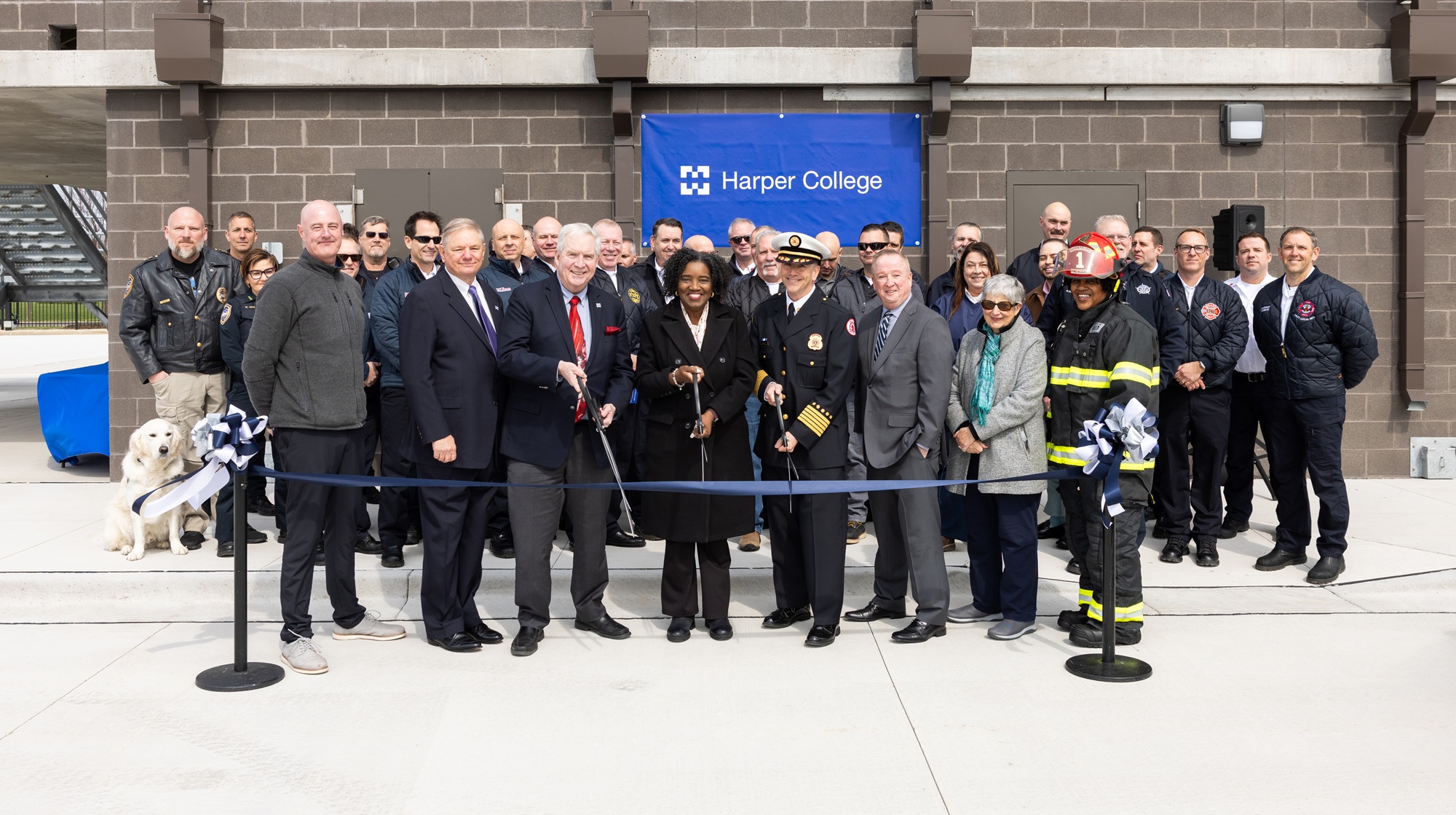
Years of collaboration between Harper College and local fire departments came to fruition April 8 with the opening of the Emergency Services Training Center, a facility designed to meet the region’s growing need for accessible, hands-on training.
The $9.3 million facility, which was completed on time and on budget, includes 9,040 square feet of indoor training space and 3,270 square feet of outdoor training areas. Located on the northwest side of Harper’s Palatine campus, the center brings advanced simulation capabilities to the college, allowing students and area first responders to train close to home.
“To the firefighters, paramedics and emergency professionals with us today: Your work is defined by readiness, resilience, service and saving lives,” said Dr. Avis Proctor, Harper president, to the dozens of first responders at the ribbon-cutting ceremony. “It is our job, as an institution, to ensure you are equipped with the highest level of training and preparation. This facility expands our capacity, strengthens our programs, and ensures that Harper continues to be a place where first responders receive the hands-on, real-world training that their roles demand.”
Harper’s Fire Science Technology program has long been recognized as a top academic program for firefighters. The new center builds on that foundation, responding directly to needs identified by local fire departments and training officers who sought a centrally located facility for recruit training, certification and career development.
The heart of the Emergency Services Training Center is a four-story fire tower designed to replicate real-world environments. Each level of the facility, which visitors toured during the opening event, simulates a different setting, from a single-family home to an apartment corridor and high-rise office space, allowing firefighters to practice rescue techniques, roof access and coordinated response.
Additional training scenarios include hazardous materials response, vehicle extrication, below-grade rescues and multi-agency coordination exercises. A separate classroom building supports preparation and post-training debriefs, reinforcing both technical skills and critical decision-making.
Harper's new Emergency Services Training Center includes 9,040 square feet of indoor
training space, spread across four floors that are able to simulate a wide range of
emergency situations.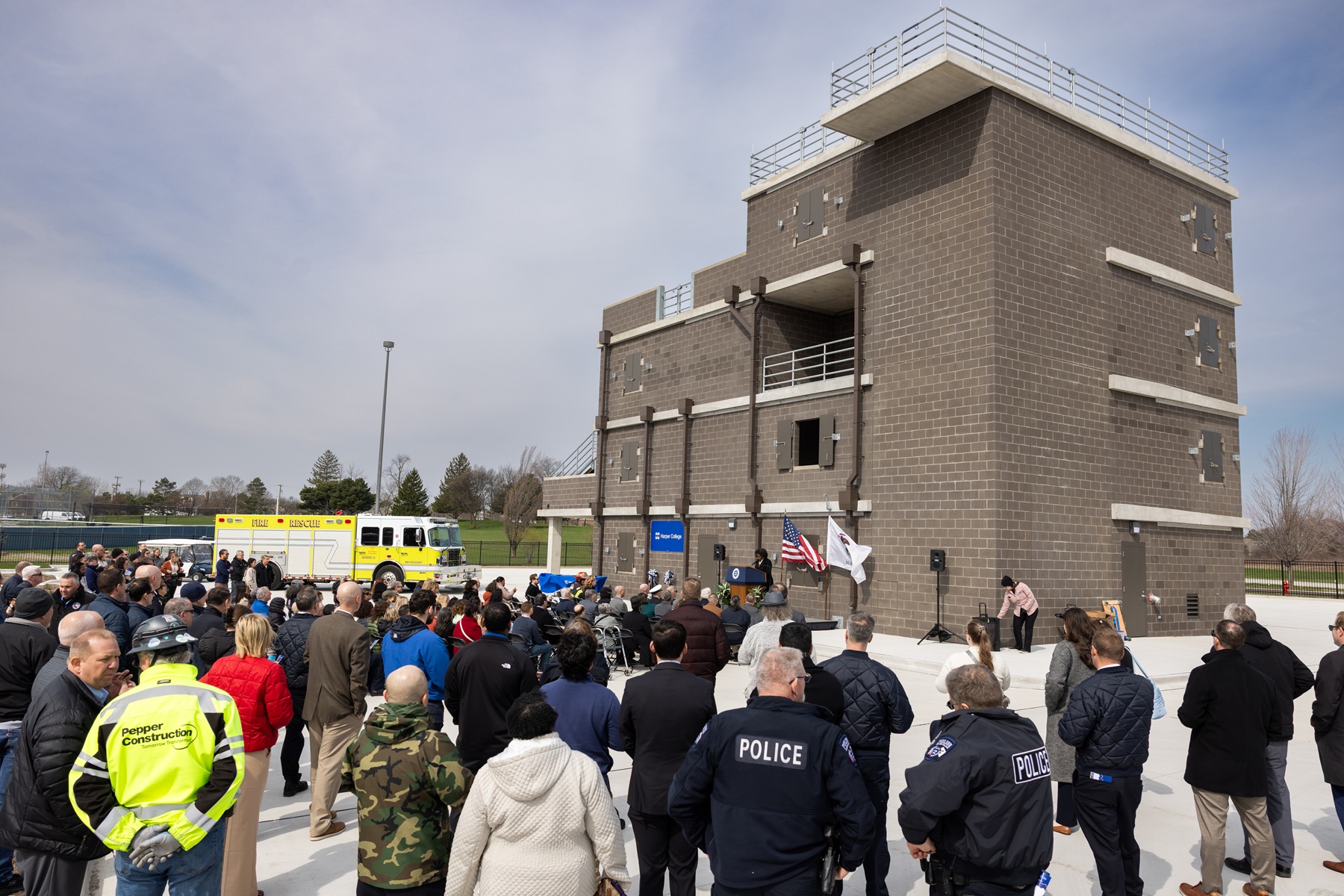
To accompany the new center, area fire departments, municipalities and organizations donated crucial equipment and vehicles to Harper’s Fire Science Technology program. The Mount Prospect Fire Department donated a fire engine and the Village of Schaumburg and the Schaumburg Fire Department donated a ladder truck.
“Today, as we cut this ribbon, we are not just opening a facility. We are creating opportunity. We are strengthening our partnerships. We are building the future of the fire service,” said Norm Bemis, coordinator of Harper’s Fire Science Technology program. “And more importantly, we are realizing the vision of a Fire Academy right here on Harper’s campus.”
Indeed, the facility will serve as the home of Harper’s Basic Operations Fire Academy, which provides structured training pathways for new and aspiring firefighters. During an intensive, eight-week course, students gain foundational, practical and theoretical knowledge, preparing them to become certified fire professionals in Illinois. Harper’s first Fire Academy cohort is set to begin this summer.
The Emergency Services Training Center is built to support a range of programs, including Fire Science Technology, Emergency Medical Services, Emergency and Disaster Management and Public Safety Dispatcher training. By integrating classroom instruction with realistic, hands-on experiences, Harper is preparing students to enter the workforce with both credentials and practical skills. The facility also offers continuing education and advanced credentials for professionals already in the field, further strengthening Harper’s role as a regional hub for public safety training and workforce development.
Most of the college’s fire science instructors are current or retired firefighters and emergency services professionals, bringing firsthand knowledge into the classroom and training environment. The new facility allows them to translate that experience into immersive learning opportunities that reflect real-world challenges.
The Emergency Services Training Center is designed to replicate real-world environments,
including a bedroom in a single-family home (pictured), a kitchen, an apartment corridor
and a high-rise building. The facility features modern training props, live fire areas
and simulation technology.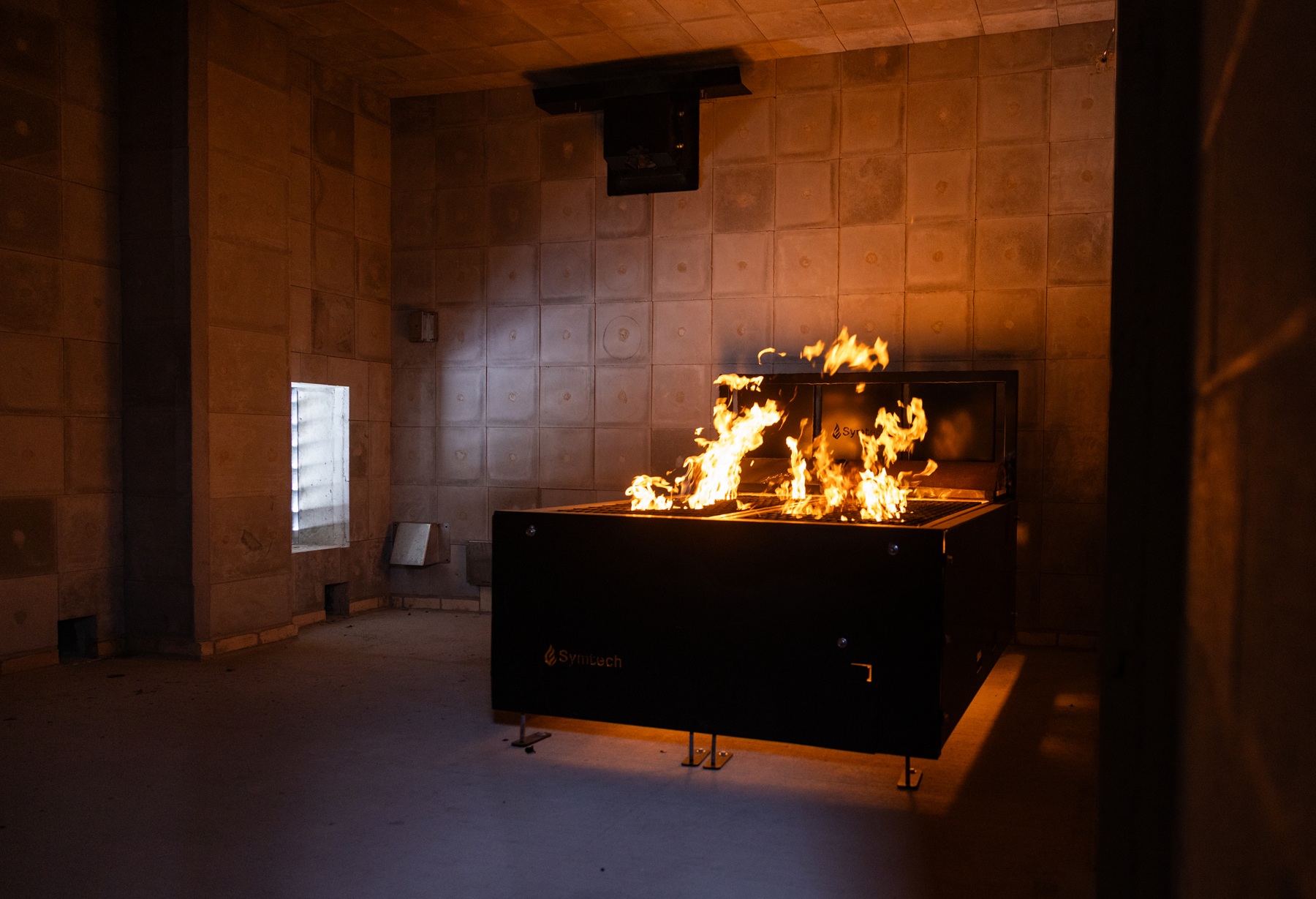
“To our students, this facility was built for you. It will challenge you, prepare you and help you succeed in a profession defined by service, discipline and responsibility,” said Dr. Joanne Ivory, dean of Career and Technical Programs. “This facility positions Harper as a regional hub for fire and emergency services training, serving both new recruits and incumbent professionals seeking advanced skills.”
The center strengthens Harper’s partnerships with local fire departments and the broader community. Area agencies can now conduct required training on campus, while the facility provides opportunities for outreach and education. Local school groups and community members can gain insight into careers in public safety and the skills required to serve.
The project was funded through the college’s Operations and Maintenance Fund, along with a $1 million SAFE Tech Federal Grant and $500,000 in state capital funding.
“I often say Harper College is the community’s college. And community colleges are conveners sitting at the center of many conversations – bringing together educators, employers, public servants, and policymakers to solve real challenges,” Dr. Proctor said. “This Emergency Services Training Center is the result of exactly that kind of collaboration. It reflects what’s possible when we align around a shared goal: preparing individuals to serve, protect and respond when our communities need them most.”