
Harper College will be closed on Monday, September 7, in observance of Labor Day.

Harper College’s Virtual Exchange program uses technology to connect Chicago-area
students with learners from around the world. More than 1,000 students have participated
in the program since it began in 2021.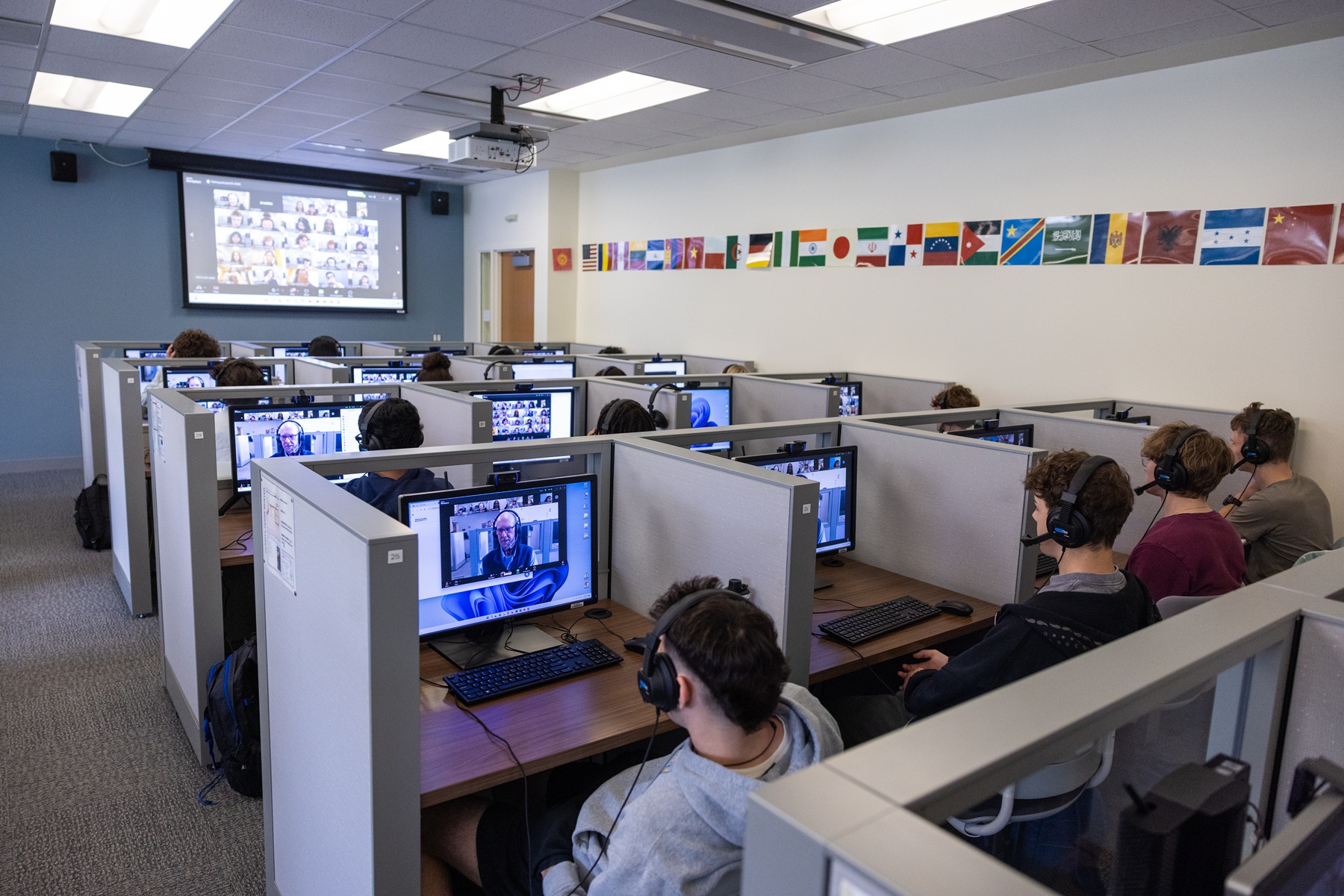
It took a little while for Austin Brenke to figure out what he wanted to study. He enrolled at Harper College, then quit to go to trade school. Not long after, the 22-year-old Elk Grove Village resident realized he wanted to turn his interest in finance into a career.
He re-enrolled at Harper and landed in an English 101 course that is part of the college’s Virtual Exchange program, which uses technology to connect Chicago-area students with learners from around the world. The course was linked as a learning community with Harper's First Year Seminar (FYS), which teaches students how to navigate the college experience. Learning Communities at Harper connect courses across disciplines under a common theme. Students enroll in both course sections for a unique cohort learning experience.
Austin’s cohort spent the semester completing a project with students studying to teach English at Universidad Autónoma de Chiapas in Chiapas, Mexico. He said he believes the experience will help him with future business ventures.
“If you’re able to clearly communicate with people from another country, that gives you access to another market in a sense,” he said. “It definitely helps with time management, too, because everybody has to be able to plan and coordinate.”
More than 1,000 students have participated in Harper’s Virtual Exchange program as part of their German, Spanish, French, English, FYS, ESL and Adult Learning classes since it began in 2021. The program fosters collaborative learning, enabling students from different cultures to build meaningful relationships and share their own perspectives.
Students connect using Zoom, WhatsApp and social media and learn intercultural communication skills, flexibility, problem-solving, cross cultural collaboration and critical thinking in addition to their core subject.
Through the Virtual Exchange program, Harper students connect with students studying
to teach English at Universidad Autónoma de Chiapas in Chiapas, Mexico.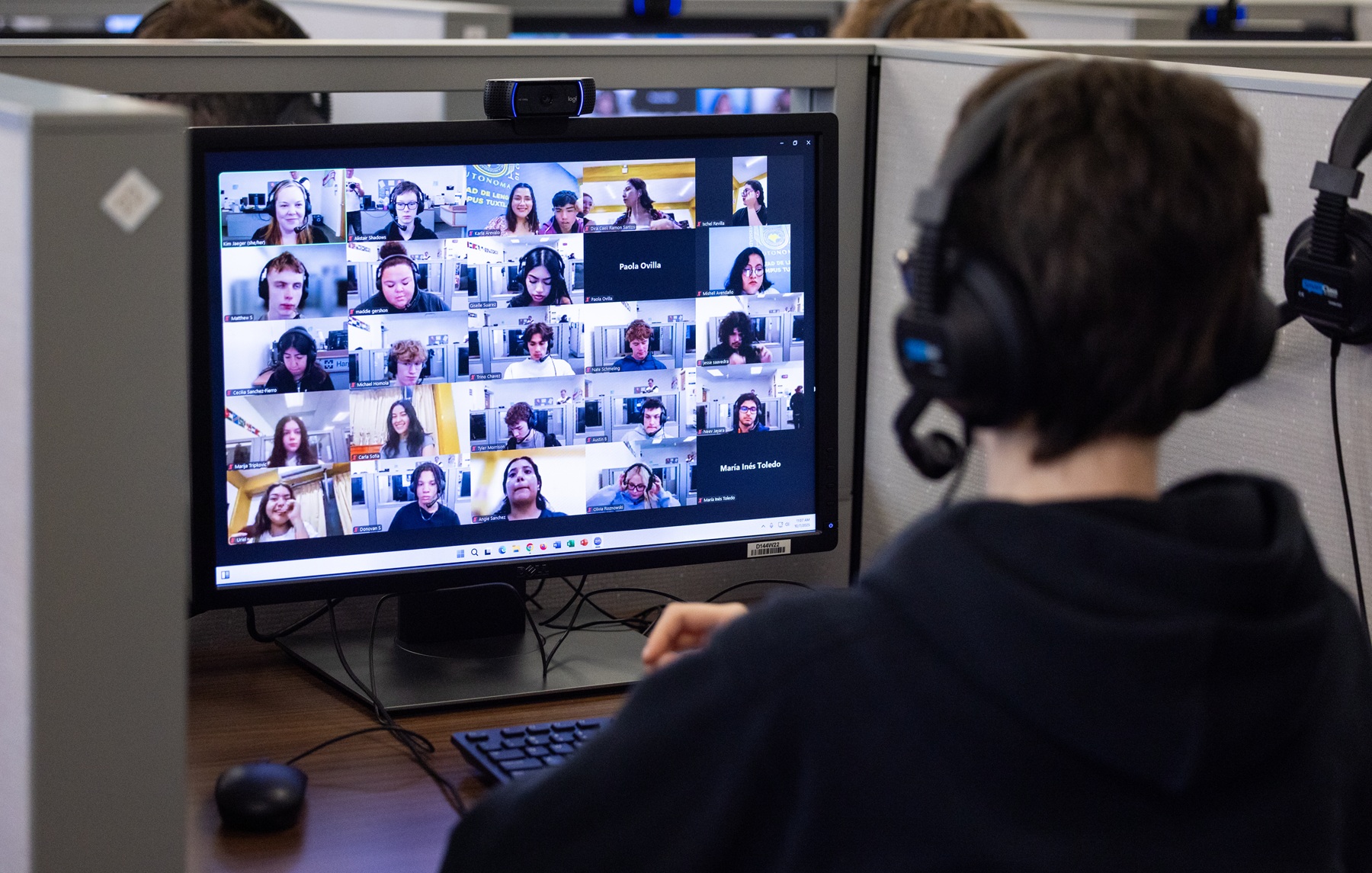
Virtual Exchange is part of Harper’s newly created Center for Global Education and Engagement, which merges the college’s former Office of International Education with International Student Services.
As director of the Center for Global Education and Engagement, Dr. Richard Johnson brought Virtual Exchange to Harper with the goal of allowing students to study abroad who otherwise would not have the opportunity and to expose students to the world beyond their college experience.
“What I want to do as director of the Center for Global Education and Engagement is bring the world to our classrooms,” he said. “Technology proves to be a really powerful tool to make that happen. The way we’ve been able to connect with students in a half-dozen countries across time zones and continents has proven to be really powerful.”
Johnson co-taught Austin’s class. He said for the past few years, students in the English 101 and FYS learning community have worked on social transformation projects that explore societal challenges in the U.S. and Mexico. Students must complete a presentation and propose action steps they can take on their own campuses.
“The traditional way of thinking about that is to go overseas,” Johnson said, “but here, in a standard general education curriculum, we are infusing it with global perspectives by leveraging technology to our advantage.”
Harper professors Kim Jaeger (left) and Richard Johnson collaborate to connect students
from other countries. “Technology proves to be a really powerful tool to make that
happen," Johnson said.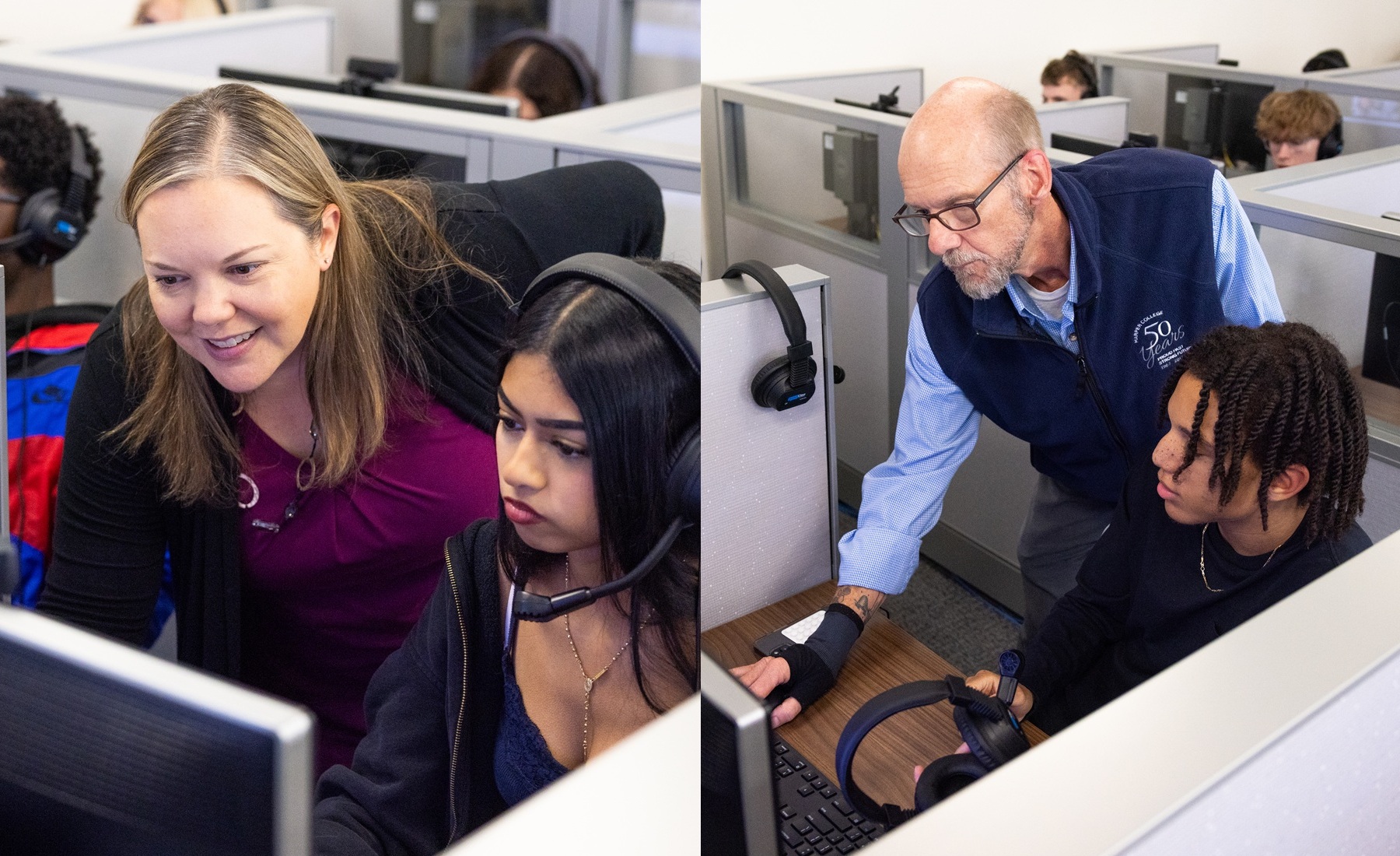
Kim Jaeger co-teaches this Intercultural Dialogue and Exchange English 101 and FYS cohort. She also teaches FYS 101, German and English as a Second Language at Harper.
“I really like to show students that there’s this whole world out there besides what they might have been exposed to so far,” she said. “It’s really important for students to understand and interact with other cultures in appropriate ways.”
Jaeger also serves as a German club advisor and coordinates the Congress-Bundestag Youth Exchange Program (CBYX), which hosts students from Germany. She said Virtual Exchange benefits students in a variety of ways.
“It can provide students with a sense of confidence once they participate in this exchange,” she said. “They can say that they’ve successfully completed an international project with someone. So when they’re in job interviews later or when they’re possibly looking to transfer to a four-year institution, this experience is something they can talk about.”