
Harper College will be closed on Monday, September 7, in observance of Labor Day.

Professor Jeff Przybylo is retiring at the end of the 2025-26 academic year. He has
led the Harper College Speech and Debate Team to widespread success for the past three
decades.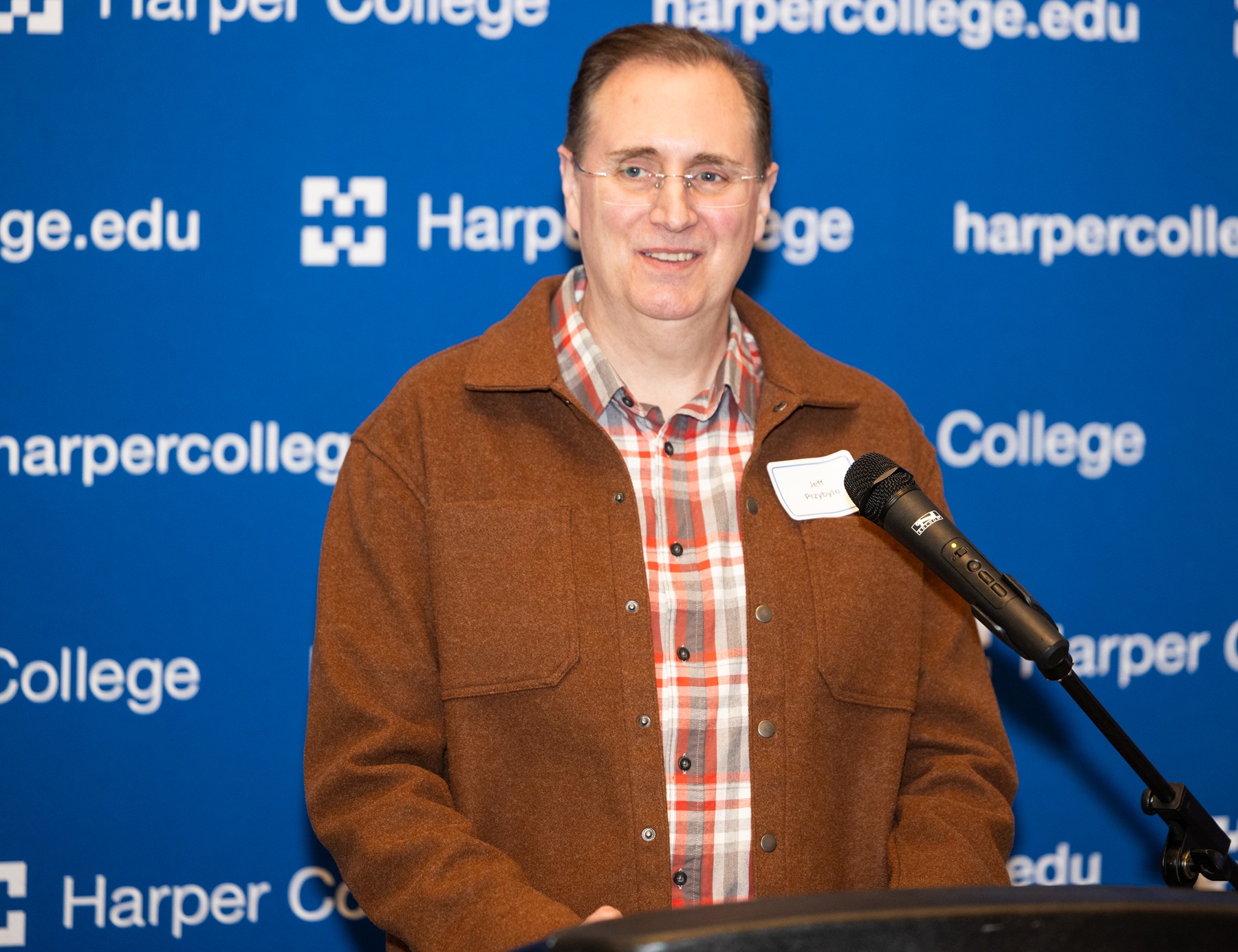
Jeff Przybylo has a classroom named after him at Harper College and a reputation that extends far beyond campus. Described by a colleague as a “founding father of forensics” in Illinois, he has spent 30 years guiding Harper students, building speech and debate teams and shaping a program that continues to resonate long after students leave.
After leading Harper’s Speech and Debate team and teaching communications courses for three decades, Przybylo, 57, is retiring at the end of this academic year. He will continue teaching as an adjunct and remain involved with the program, but no longer as its leader. The transition marks the end of an era defined not just by competitive success, but by relationships that have endured for decades.
Under Przybylo’s leadership, Harper’s team won local, state and nationwide acclaim (including national championships in 2023 and 2024) while building a network of alumni who remain deeply connected to the program and one another. He said the results have always been secondary to something more lasting.
“We’re here to catch students and build a family for them,” he said. “Everything happens with that philosophy. We want to build good people, not just good speakers.”
Earlier this year, dozens of alumni who participated in the Harper College Speech
and Debate team during the past few decades gathered at a reunion and to honor Jeff
Przybylo, their former professor and coach who is retiring this year.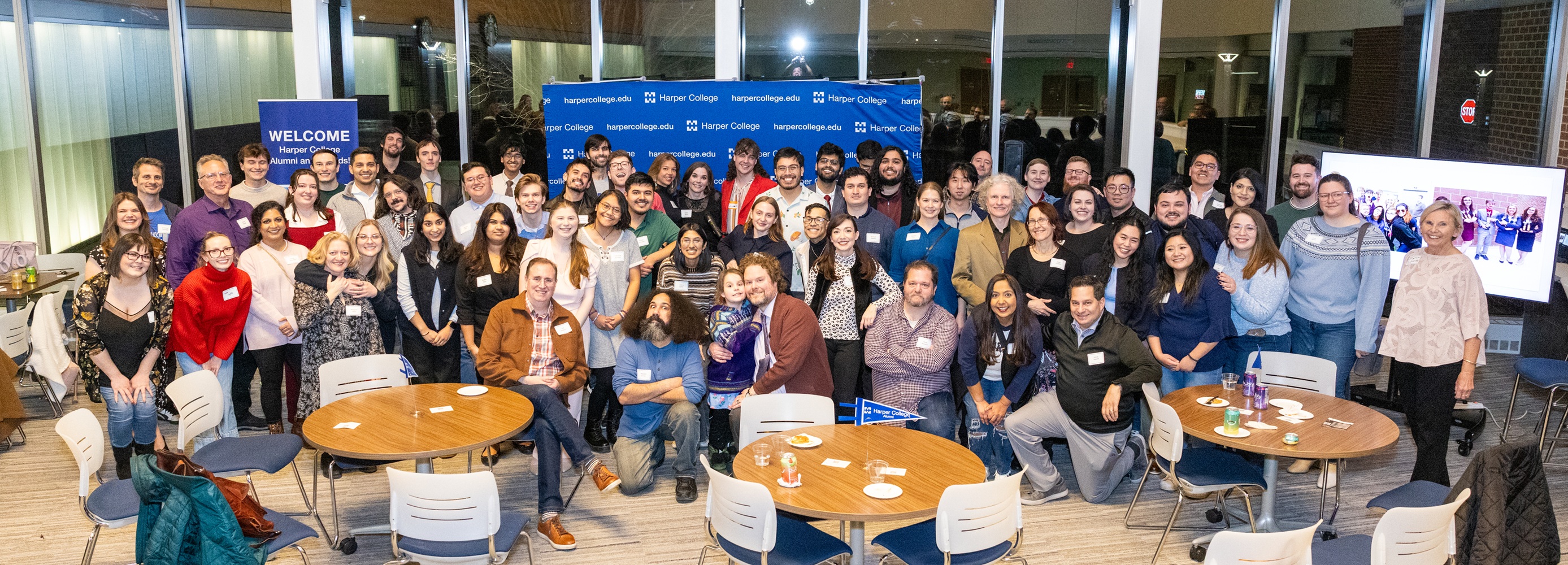
Przybylo is not the only one who talks about family when discussing Harper’s speech team. Gee Baldino, of Arlington Heights, was on the team from 2022-24 and shared their initial surprise at how students and coaches related to one another.
“The culture Jeff cultivated is so different,” Baldino said. “My team was small. We bonded and became so close. We became a family.”
That approach isn’t as surprising when you learn that Przybylo was the oldest of two boys being raised by a young, divorced mother in the northwest suburbs. He describes long Saturdays at the library listening to comedy records with his brother while his mother worked restaurant shifts to support them. Comedy became a refuge. Przybylo would memorize LPs by Bob Newhart and Saturday Night Live sketches, then repeat the routines for his classmates. He liked to perform magic too.
At Forest View High School in Arlington Heights, he found that he excelled in public speaking. After Przybylo performed a passage from Tales of a Fourth Grade Nothing, Oral Communication teacher Dave Good encouraged him to join the speech team. He became a state finalist. The team became his second home.
“My mom was always working. As a server, Saturday is when my mom made her money,” he said. “I just loved speech and debate. I worked hard; I listened to my coaches.”
A speech scholarship brought him to Northern Illinois University, where he majored in public speaking and found another mentor in Judy Santacaterina, and another family.
“Judy, my coach – like a mom to me to this day,” he said.
Teaching hadn’t factored into his career plans until he realized that there weren’t many job listings for public speakers. Drawing on his ability to perform, as well as his interests in comedy and magic, he took to teaching (and coaching) as a graduate student at Illinois State University.
“I saw that I had an audience in front of me twice a week. I started to see teaching as a magic trick,” he said. “Preparation is everything.”
That’s a mindset he brought to Harper in 1996, when Przybylo was in his late 20s. While his focus on preparation helped him teach thousands of Speech 101 classes, his familial outlook enhanced his leadership as a speech team coach. Just as Judy and Dave had been so important to his progress, he saw himself as a surrogate parent to the students on his Harper teams. Many of the team members saw things the same way.
“You’re going to see your team more than your own family sometimes,” said Baldino, who also worked with Przybylo as the team’s student aide. “I can’t believe how close we got.”
Jeff Przybylo (back row, third from right) coached his first Harper Speech and Debate
Team to Nationals in 1997. He is flanked by then-students Jake Sadoff, co-founder
of RESTORE Hair of Chicago (to the left), and Ilknür Ozgür, Harper theatre instructor
(to the right).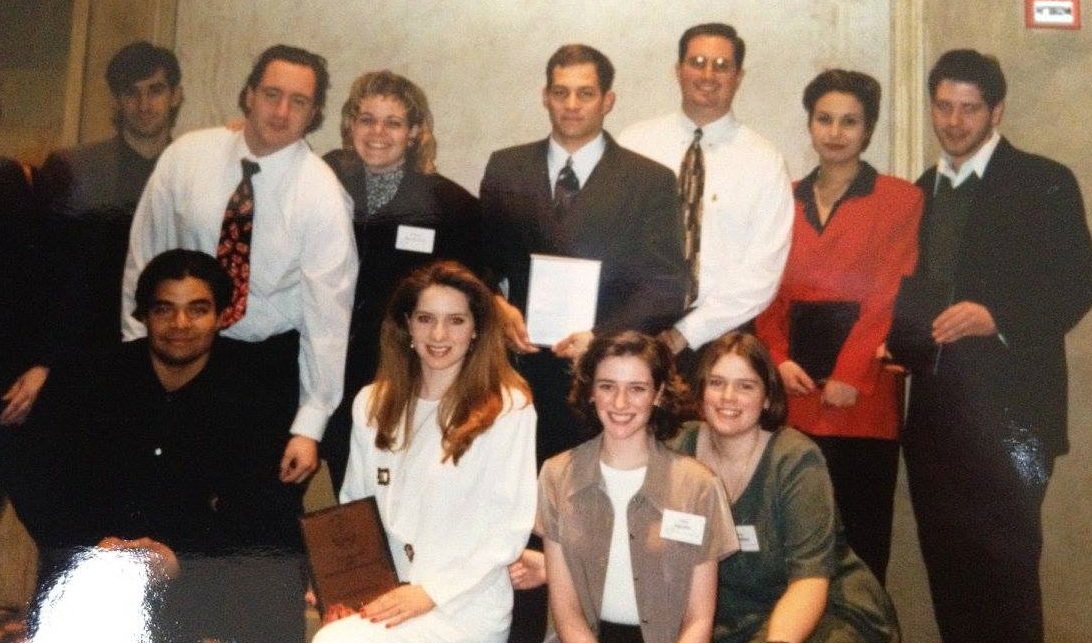
That closeness was on full display in February of this year when Harper hosted a reunion for speech and debate team alumni on campus. With Przybylo’s upcoming retirement as a centerpiece, the event was attended by dozens, including recent Harper graduates like Baldino and speech team alumni-turned-faculty such as Theatre Instructor Ilknür Ozgür and Assistant Professor Maham Khan.
Alumnus Jake Sadoff was on Przybylo’s first Harper team and spoke about his former coach at the event. Sadoff, who went on to co-found RESTORE Hair of Chicago with his brother (and fellow Harper alumnus) Jordan, remembers the moment he first realized what made Przybylo different. The Hoffman Estates native had joined the team before Przybylo arrived, but wasn’t a standout competitor. His new coach saw something worth investing in.
“He sat down with me and had an individual meeting,” Sadoff said. “No one had paid that much attention to me before that. I was like, ‘This guy cares!’ He saw something in me and I’ve never forgotten it.”
That meeting stuck with Przybylo too, who fondly recalls the two of them hitting it off over lunch in the cafeteria. They’ve since become close friends, with Sadoff returning to help advise the team over the years and Przybylo consulting for his former student’s businesses.
Sadoff said that the team was essential to him at a formative time.
“It gave me an identity. You’re 18, 19… you’re trying to find your way. It gave me something to succeed in,” he said. “It taught me how to deal with nerves and speak to groups. Thirty years later, I’m still using that.”
Harper College Distinguished Alumnus Jake Sadoff paid tribute to former coach, and
good friend, Jeff Pryzbylo at the Harper Speech and Debate Team alumni reunion.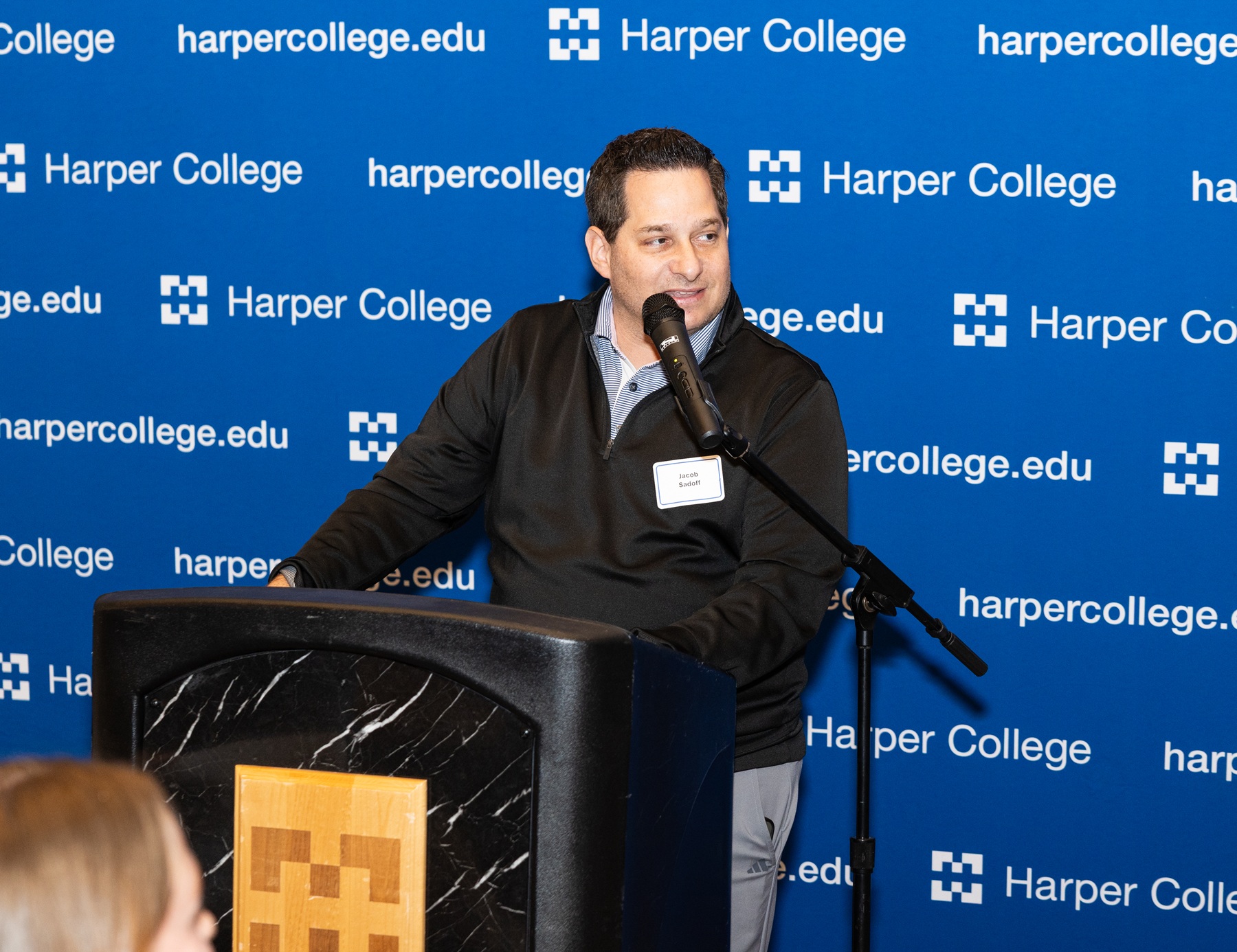
One of the most distinctive aspects of Harper’s program is the way alumni remain involved long after graduation.
Przybylo has encouraged former competitors to return as volunteer coaches, mentors and supporters – a practice that has become a defining feature of the team.
“Jeff created the ability for former students to come back and volunteer,” Sadoff said. “He built a program out of how much he loves this activity.”
Sadoff, with his brother, established a scholarship for speech and debate students, inspired in part by a $300 scholarship he received from Przybylo as a student.
That tradition continues with students such as Baldino, who received the scholarship from the Sadoff brothers and remains connected to the program as they are about to graduate from DePaul University, via Harper’s University Center, with a bachelor’s degree in communication and media studies.
“There’s a shared camaraderie,” Baldino said. “Even though I’m not on the team anymore, I feel proud when I see how well they’re doing.”
Harper alumni Emily Luethy (left) and Gee Baldino were part of the 2024 Harper Speech
and Debate Team that become national champions.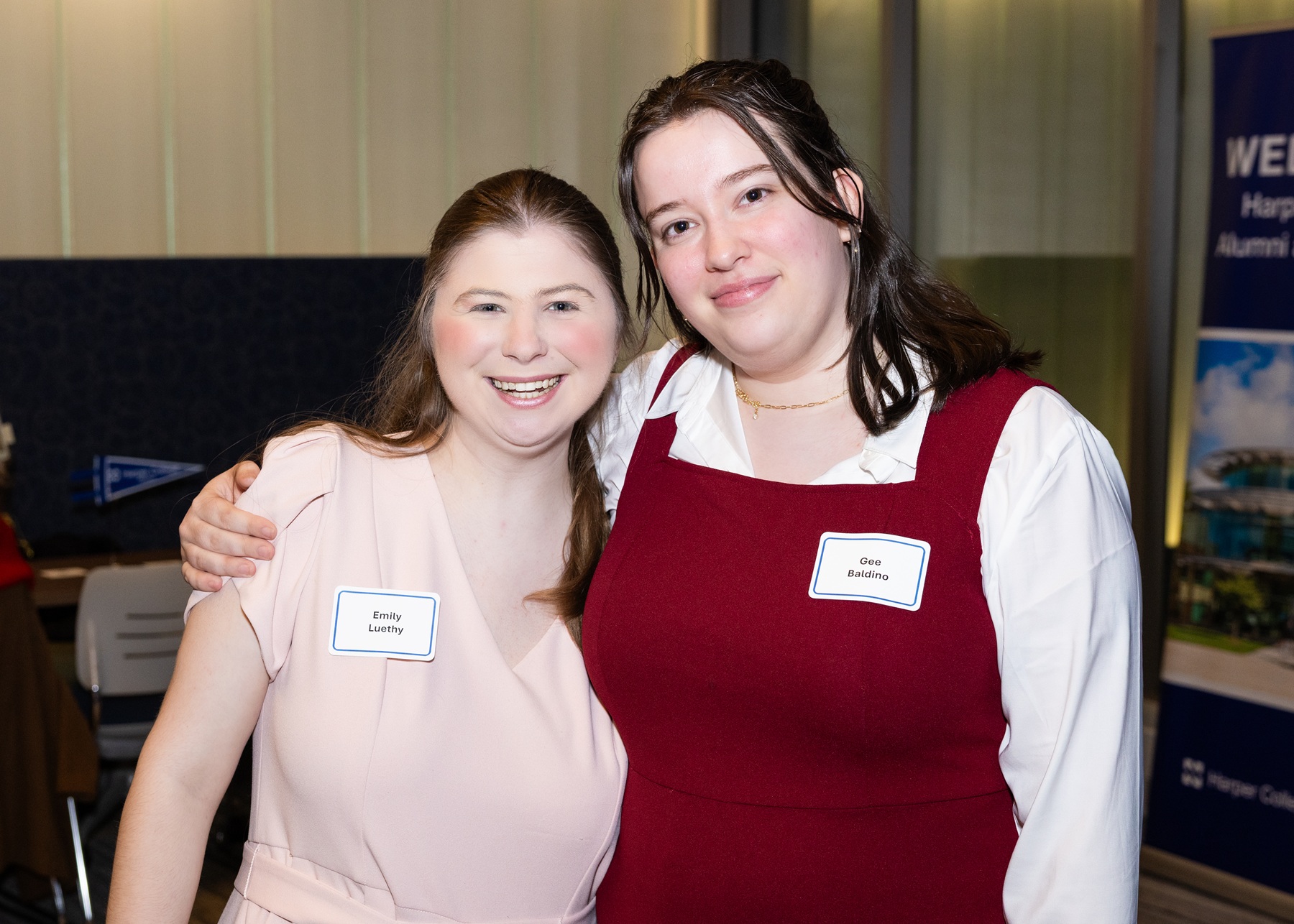
For Przybylo, speech and debate has never been merely an activity. It is another space for students to learn, whether those spaces were on buses, in hotel ballrooms or in front of judges.
“Coaching speech and debate is just a different kind of classroom,” he said. “We’re going on the road. They’re highly motivated. It’s a different reward.”
The students’ motivation is equaled by Przybylo’s commitment to the team, said Assistant Professor Bill Lucio, who also coaches the team.
“He refuses to take no for an answer,” Lucio said. “No matter what’s going on, Jeff finds a way to make sure students are succeeding and using their voice.”
He shared an example: During the Covid-19 pandemic when competitions were disrupted nationwide, Przybylo worked with other Illinois coaches to create new formats so students could continue competing and learning virtually. Those methods are still in place now.
His enterprising nature extends to Harper’s curriculum. About eight years ago, he developed a new course after being prompted by Professor Kathi Hock, Harper’s Dental Hygiene program coordinator. Titled Intercultural Communication, the class blends Speech 101 with training in cultural awareness – skills critical for students entering health care fields. Przybylo said he was proud that leaders in Harper’s health careers programs subsequently integrated the class into pathways for lab technicians, nurses and others.
“He sees what people are capable of in a way a lot of people can’t,” said Professor Margaret Bilos, a longtime colleague and fellow coach. “The students are always his priority.”
That shows up in smaller, everyday moments – marathon practices, one-on-one coaching sessions and a willingness to invest time well beyond what the job requires. Bilos said her relationship with Przybylo comes down to one word: Trust.
“I trust that he’s doing what’s best for the students and best for the program,” she reflected.
Harper's Speech and Debate Team won back-to-back Phi Rho Pi National Tournament titles
in 2023 and 2024. Pictured is the team in 2024, including coach Margaret Bilos (front
row, left), then-student Gee Baldino (front row, second from left), coach Bill Lucio
(front row, right) and coach Jeff Przybylo (back row, right). A national award was
recently named for Przybylo in honor of his three decades of service to the national
organization.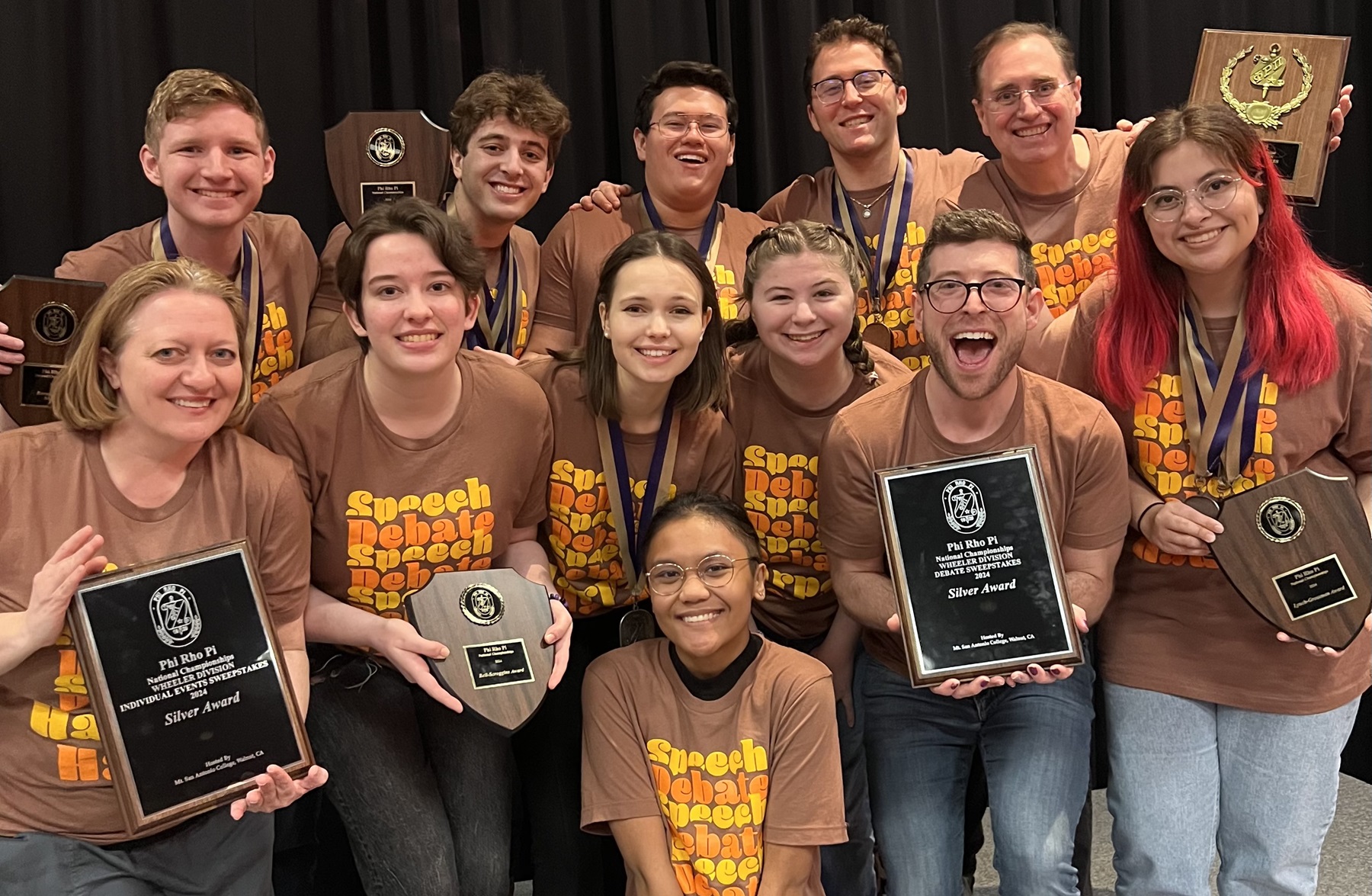
As Przybylo steps back, coaches Bilos and Lucio have already begun guiding the program forward.
“It’s exciting and scary. I mean, the man never stops. I’ve never known Harper Speech and Debate in the absence of Jeff,” Lucio said. “I’m going to have to find a way to keep the Przybylo legacy, but also to make a Bilos and Lucio legacy and whoever comes after us. I think it’s going to help us grow.”
Bilos speaks about the transition in more personal terms. Her friendship with Przybylo dates to before his time at Harper, when he would judge her performances on the collegiate speech and debate circuit. As with other Harper professors – and Liberal Arts Dean Jaime Riewerts – Przybylo recruited Bilos to come to Harper.
“When you have a friendship with somebody the way we have a friendship, I don’t see a world where he’s not on my speed dial,” she said. “I talk to him more than I talk to my own husband for nine months at a time. He and I shared an office for 10 years. Not being able to see him, like, every day – that is going to be hard.”
Though Przybylo won’t be on campus day to day, he won’t be far.
“I don’t want to be in charge anymore,” he said, smiling. “But I’ll be around.”
Przybylo has been cleaning out his office, filled with Bruce Springsteen memorabilia and photos of him as a young stand-up comic opening for Adam Sandler and Sam Kinison, and thinking back on three decades of Harper Speech and Debate teams. If he had to pick a highlight, it would be in 2016 when the team earned the Mariner Award, the most prestigious honor at the community college level because the points accumulate year over year.
The accolades have also accumulated – championships, awards and individual honors. Now, one is even named for him. The Phi Rho Pi National Tournament recently designated an award the Wheeler-Przybylo Division Team Sweepstakes Award. An honor that the Harper team has won more than 20 times, it was named after Przybylo because of his three decades of service to the national organization, including roles as tabulation staff, governor, vice president and president.
“30 years of nationals in a row,” he reflected. “I’ve never missed one.”
But he said that the real measure of success is in the students who found direction, connection and community – and who continue to carry those lessons beyond classrooms and competitions.
“He helped me regain my confidence,” said Baldino, remembering a time when they were feeling overwhelmed as a student aide. “He sat with me for a second and said, ‘I need you to remember how awesome you are.’ When I’m really doubting myself, I think about that.”